


Introduction
2026 is when we count the days till the year is over, and brace for the worst, depreciating service standards, fare revisions going up, meanwhile some of us may be counting the days till we can move onto the next stage of life (such as me writing this in Camp)
In a similar parallel, we can also countdown the many things that have gone right, or in this case, gone top down Jarkatian in the transport landscape within Singapore. Here are the STC team’s top rated blunders LTA has committed this year.
#5 E-Bus Architecture 101
(Technically not 2026 specific, but given the problem hasn’t been fixed today, it belongs here)
In an ideal world, e-buses were supposed to be the desired vehicle of the future, the quieter noises, the lower maintenance costs, and the energy independence of moving away from fossil fuels in this oil crisis year.
Instead, a series of side-questing we find online sentiment of people preferring the older “outdated” diesel buses. All thanks to LTA and their twisted specs they forced manufacturers to shoehorn at all costs.
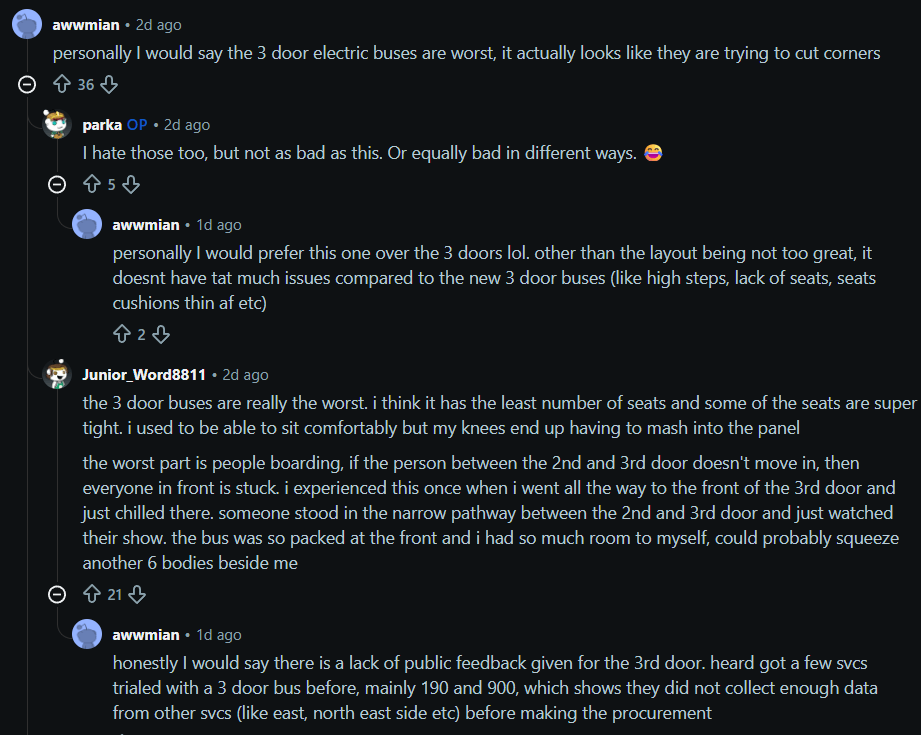
To put in some context, when it comes to bus procurement, the LTA is in charge of setting regulations and specifications of the vehicles ordered. And for some unfathomable reasons, during the tendering period. On top of the 3rd door, they put in a requirement that all buses must be of low-floor specifications. Which was documented by LTG beforehand.
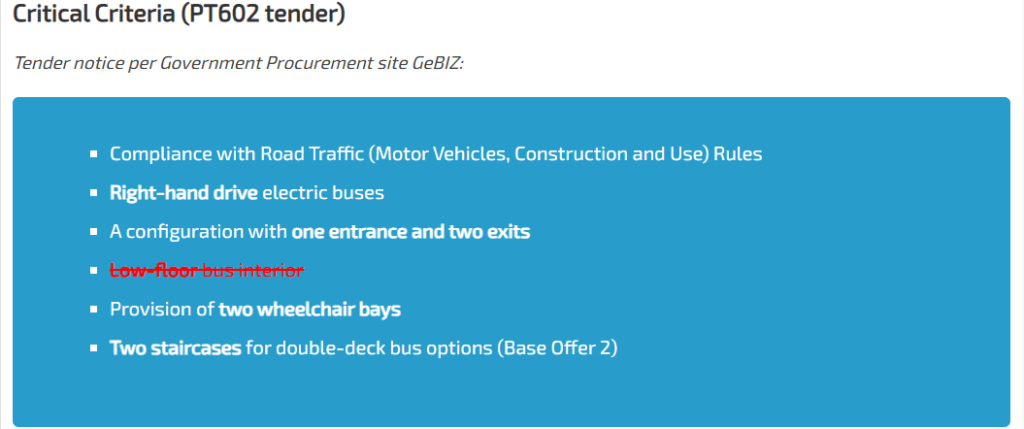
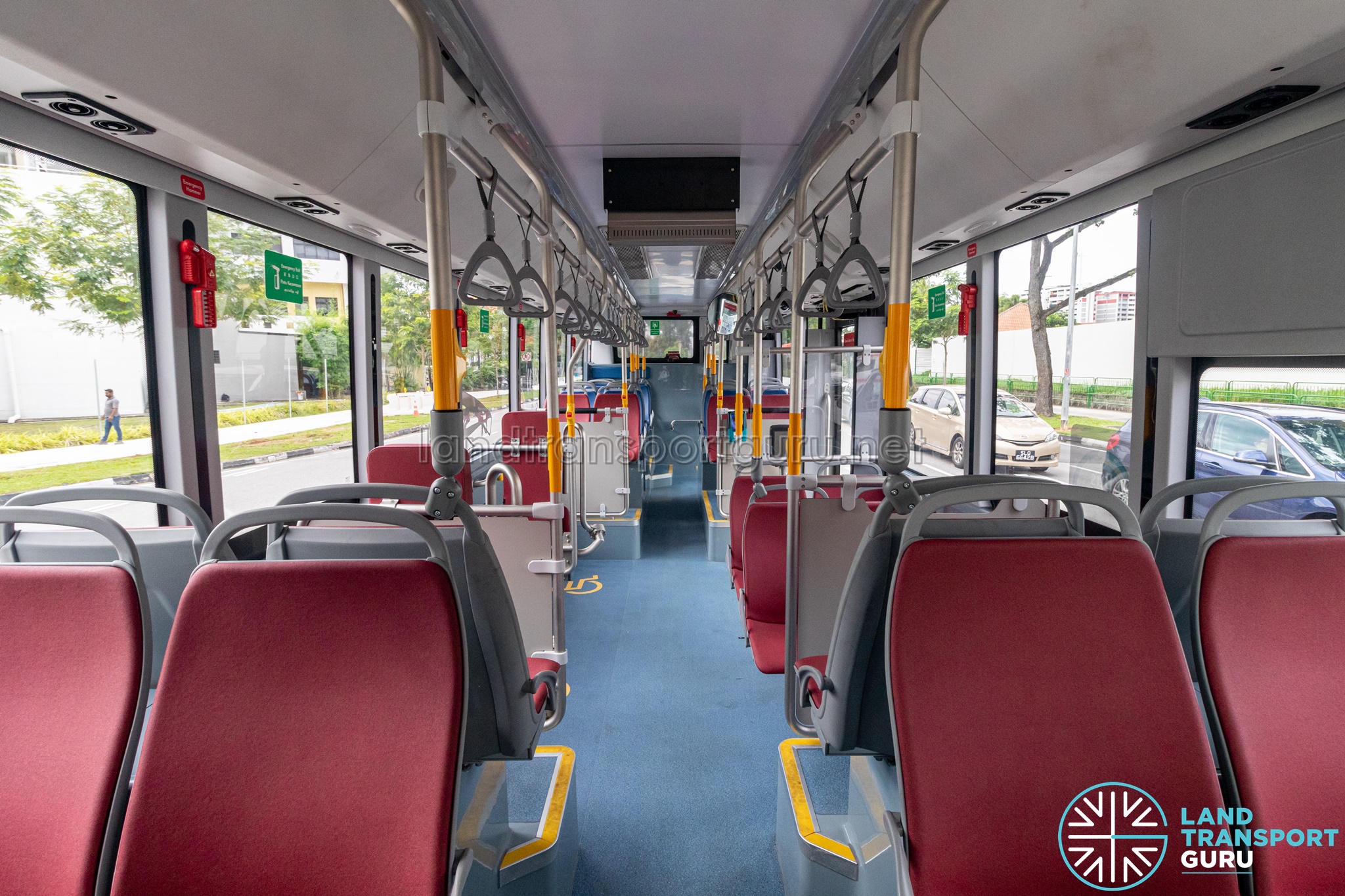
Without elaborating too far, the combination of low-floor designs and the 3rd door forced not so pleasant bus interior designs, be it the absurdly high step to the seats, one too many backwards facing seats, and cramped spaces for the standing corridors.
Failure rating: 1/10, with LTA at least taking retroactive action to mitigate the issue, as well as preventing new bus orders from suffering the same fate, it isn’t too terrible of a fail. One can only wish they did the same for the other issues on the list.
#4 BCEP
What was first touted as the evolution of the older Bus Service Enhancement Programme (BSEP), the BCEP (Bus Connectivity Enhancement Programme) in practice, goes down a different path. In comparison to the BSEP’s objective of improving bus service KPIs, the BCEP instead partially focuses on connectivity (and allegedly, coverage) and mostly wasting precious funding.
What happens when you try and make miracles without expanding your resources? You fall flat on your face. The programme tries too hard to emulate the BSEP, that it falls flat on its face from lacking the supports that made the BSEP ultimately successful. For instance, the total fleet count did not increase from the 5,800 buses we have on the roads previously. And when that finite fleet is further fragmented due to the new routes (more city directs? Tai Seng Expresses?), it simply strained existing routes of their starved buses..
I highly recommend catching up on the CDS blog posts made this year for further details.
The nail in the coffin came when the ridership did not reach the desired numbers, direct subsidies via the Travel Smart Journeys were introducted. But as the data broke down in our above posts show, it did not make a meaningful dent, and barely a scratch on rail ridership it was attempting to alleviate.
Failure rating: 4/10, what happened to the whole ethos of “financial prudence“? So much funding pushed, a whopping $900 million mind you, for peak hour services that barely offer a service improvement over rail, even 2 years after it was established.
#3 Delayed Construction Windows
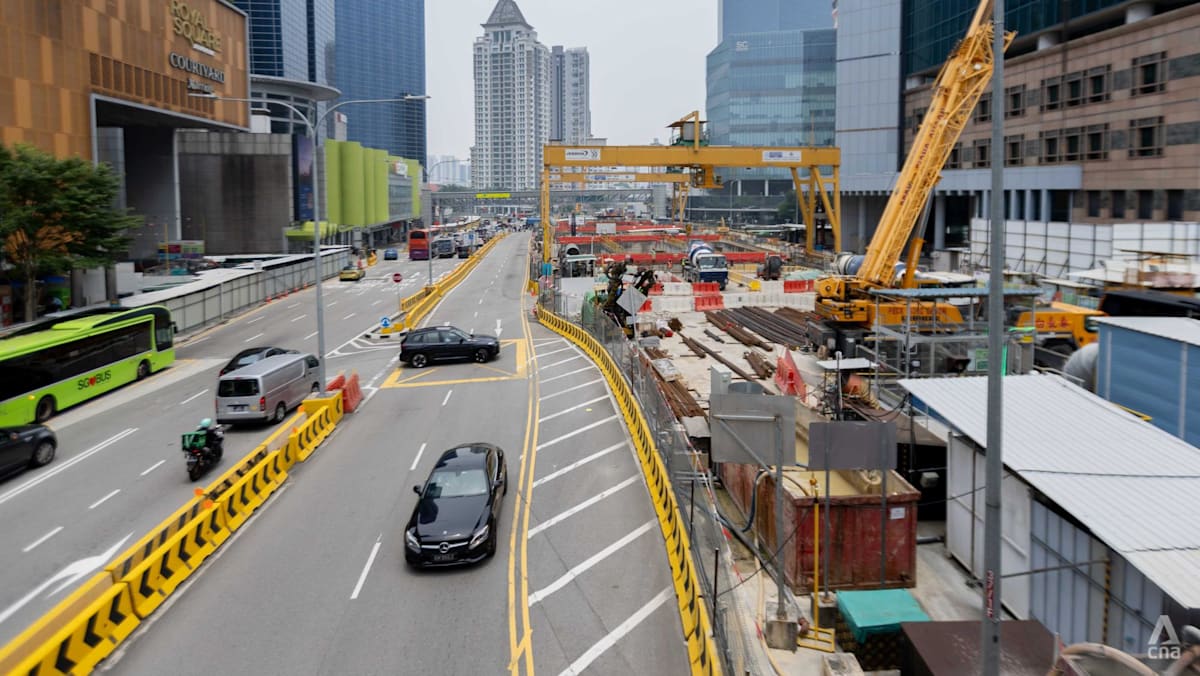
As brought up by @transporttakes.you, one really has to wonder what has been taking the newer lines and construction projects ages to open. There is COVID to blame, but for projects with completion dates set after the pandemic, sneakily moving the goalposts without a record has been commonplace.
CCL6 comes to mind, it was originally envisioned for opening in Q2 2026, it instead opened on July the same year. What is with the delay? No one knows, the ST article covering this did not state the official reason behind the delay either.
Coincidentally, not too long before, a CCL6 Station, Cantonment, became the venue for the LASALLE graduation ceremony. Which sparked some questions if the opening delay was related to this planned event.
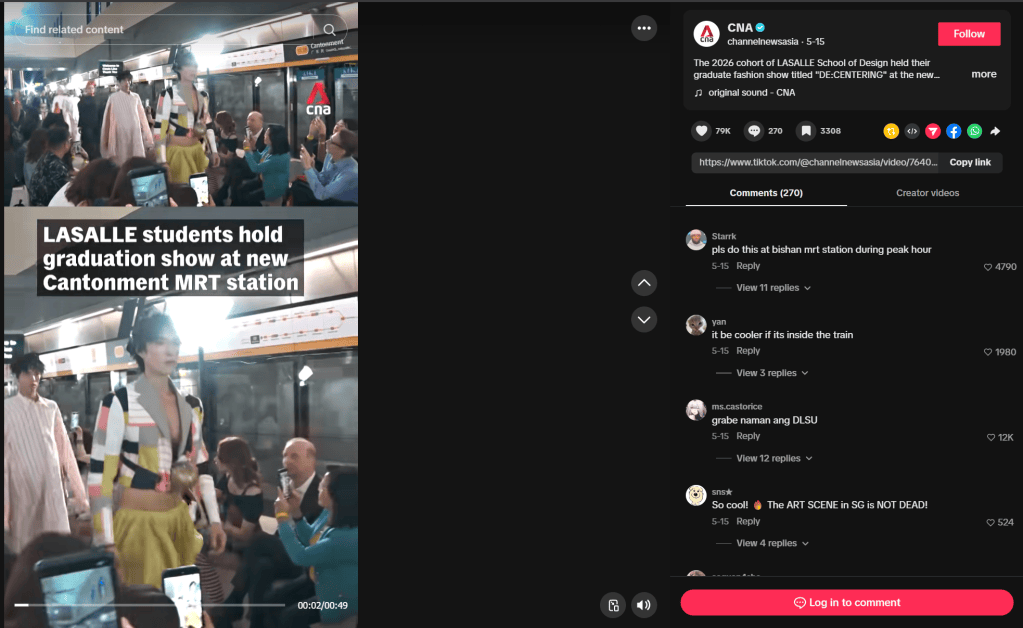
Meanwhile, the other projects need no introduction, as seen below, they have also faced similar delays with vague promises of actual opening dates.
| project/dates | Original | Actual | Proof |
| CCL6 | ~2025 | 12 July 2026 Reason: unknown | https://www.straitstimes.com/singapore/transport/keppel-cantonment-prince-edward-road-mrt-stations-on-circle-line-to-open-on-july-1 |
| NSC | ~2027 | 2029-2031, in stages Reason: COVID? | https://www.straitstimes.com/singapore/transport/north-south-corridor-opening-delayed-two-years-amid-construction-challenges |
| TEL5 + DTL Extension | ~2nd half of 2026 | Who knows? No exact date found. | https://www.lta.gov.sg/content/ltagov/en/newsroom/2026/4/news-releases/train-service-adjustments-tel-and-dtl-to-facilitate-rail-expansion-works.html |
| RTS | End 2026 | Jan 2027, then Feb 2027 (After CNY, before Hari Raya) Reason: Further Certification and Testing works. Note that even the dates are vague | https://www.straitstimes.com/singapore/developments-in-rts-link-project |
Failure rating: 4/10, the precedent of this many delayed projects, without any substitution services, is disturbing. Couple that with the ambiguity of opening dates, and you end up with people frustrated they cannot use the connections. Time is money, and the opportunity costs from trips not made add up to something significant.
#2 Gedong has no demand
Raise your hand if you are an NSF. Raise both your hands if you are posted to Gedong! For literally decades, the sole service of those remote roads, 975, always faces overcrowding issues. The most notably every NSF and their fathers know, is on Sunday evenings. That is when the NSF booking-in timings and the migrant workers from Lim Chu Kang return to their dormitories clash. Turning the queue of both parties into the clash of titans, fighting to board first, without getting left behind.
One may wonder what business it has on the list, as it’s not a phenomenon that only started this year. Well, earlier in August, our viewers and team took the liberty to push for better frequencies, more double decks, or any way to lessen the suffering. Instead, we were met with rejection, rebutted by doctored metrics allegedly used to determine crowd levels, comfort and expected level of service.
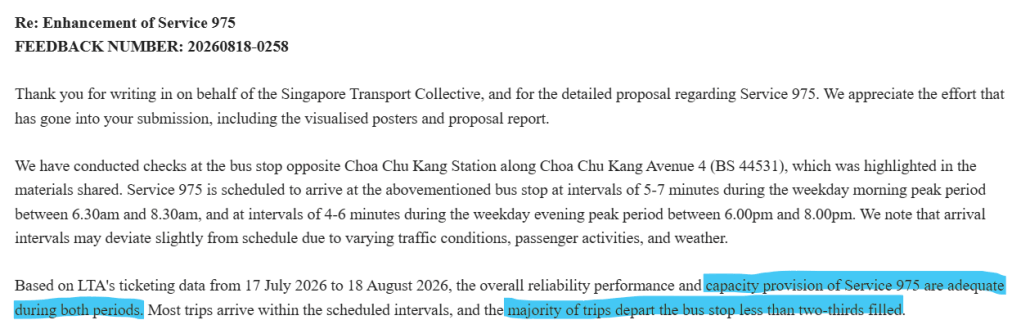
What do you mean the service is often less than 2/3 filled? Anyone whom has tried doing an on-site view (Let’s face it, on a Sunday no LTA employee would be arsed to do so) can easily tell otherwise.
Failure rating: 6/10, extremely poor crowd management skills…or awareness from LTA in general. An easily high score from how out-of-touch the are to this. And the worst takeaway is that LTA likely uses the same useless goalposts to measure service standards for other services. Highlighting incompetency from the core that may mean this issue, alongside similar overcrowding ones, will NEVER be resolved. I’ll recommend reading the full STC write-up listed above.
However, nothing can compare to the shitshow that is…..
#1 Go-30 Minute Frequency Singapore
Ah yes, Go-Ahead Singapore? You’ll be going backwards with whatever witchcraft this company employed. It is almost as if they run to specially make you regret not owning a car.
Back during the early Loyang times, the company faced extreme scrutiny from the public for their questionable operations. Be it terrible frequencies, unacceptable maintenance, clumsy execution of procedures like CLOWBus, that made most of their staff quit on launch day (reminder, they ha to temporarily sub-contract manpower from SBST and SMRT back then!).
Little did we know, it would be a bad omen for the next package they received: the Tampines Bus Package. It would be more of the same bullshit Loyang faced on their maiden days. LTA had decided to go for GAS, which was the most expensive bid out of the potential candidates.
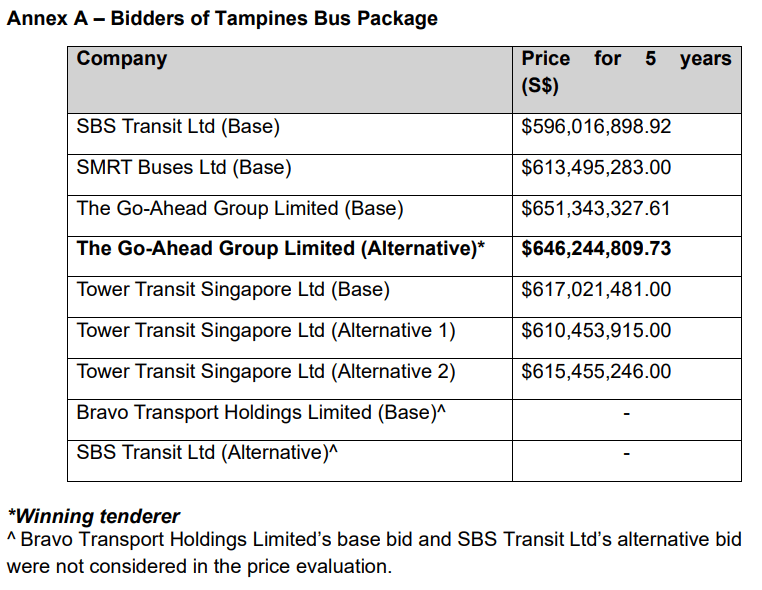
The reason? LTA mentioned in their press statement, “GAS’ proposal also offered cost savings for LTA compared to the current contract.” quoting GAS’ overseas operations involving e-buses, making them the best fit for Singapore’s first bus package that will go heavy with e-buses, whenever they come, thanks to their expertise which they will share with the other operators. Suspiciously, one of the terms also included the use of “AI-driven tools” to handle frequencies and deployments.
When July 5th rolled around, it started hell and spread like a virus. Abd as a resident of Tampines, there was little you could do. Unlike general elections, you don’t choose whom to represent your district. In the BCM, LTA does on metrics you may agree or object against. And clearly, whatever the AI gas developed for Tampines’ services, did not work! Only the opposite played out, the frequencies were so bad, many residents brought it up to their local MPs, and became a topic of contention in Parliament sittings. Be it the rational behind GAS getting extension contracts for Loyang, somehow scoring Tampines with their absurdly most expensive bid, and scrutiny if LTA had not done their due diligence in selecting the GeBiz tenders.
Regardless of the stance of Parliament and the stautory boards, the GAS service failures quickly evolved into a shitstorm of memes, complaints, feedback. All but answered to, take a look at a handful of the complaints seen below:
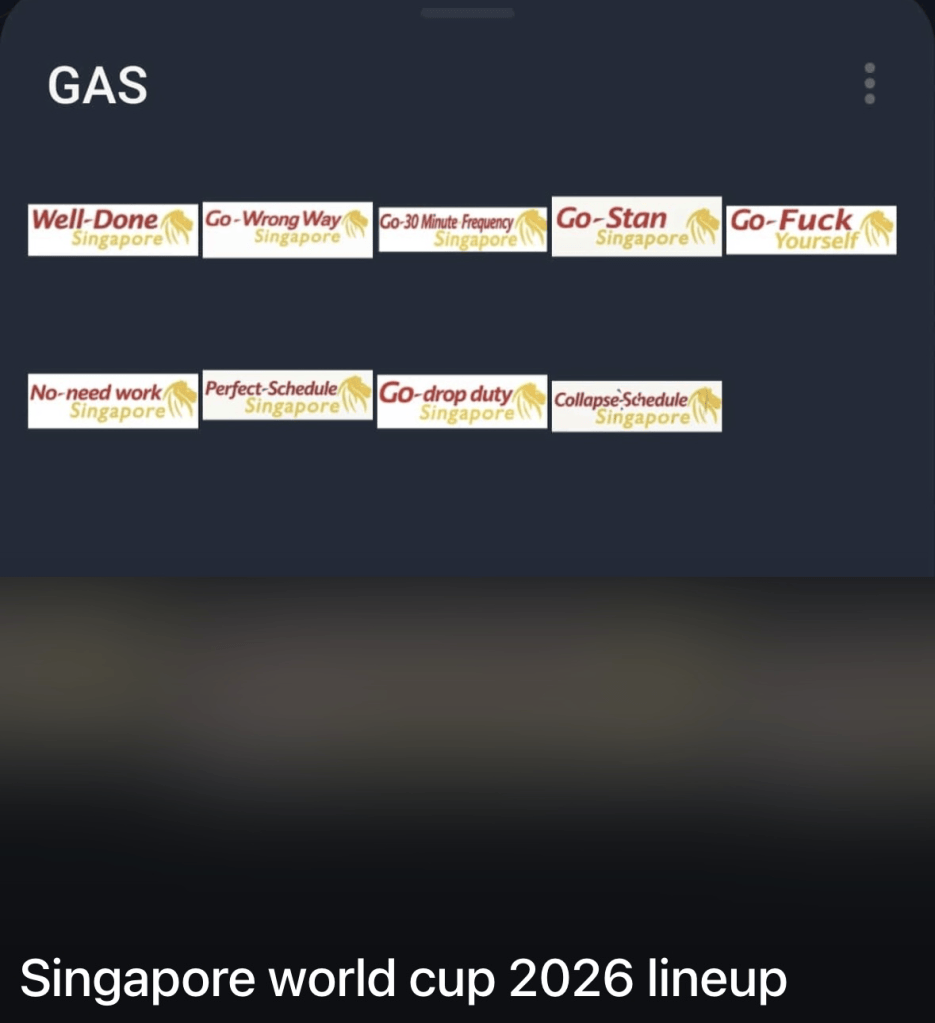
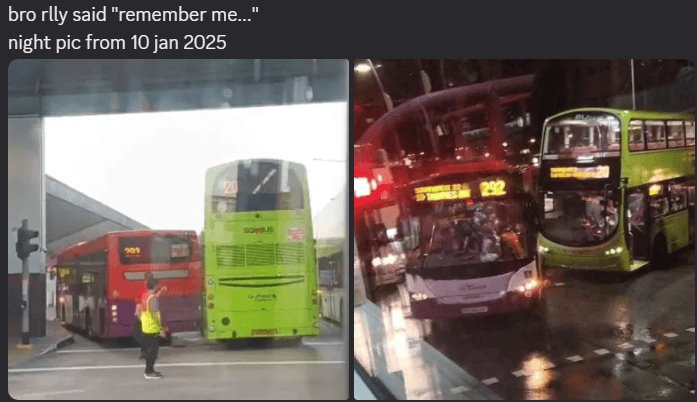
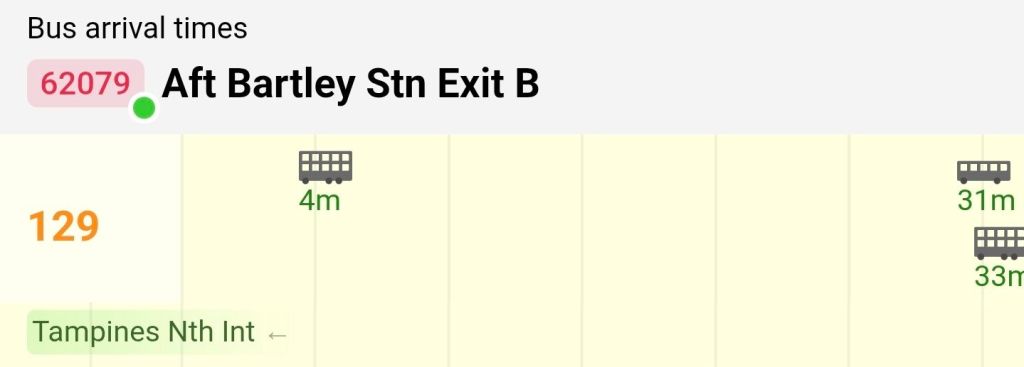
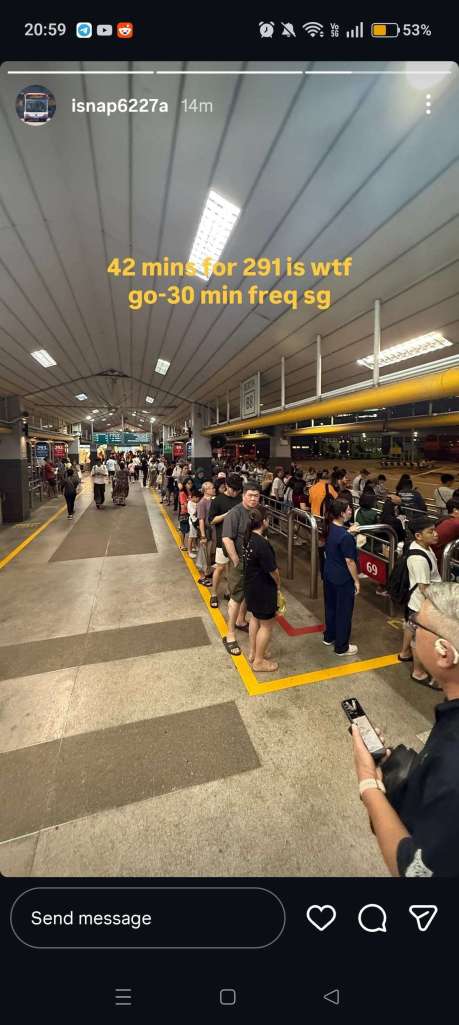
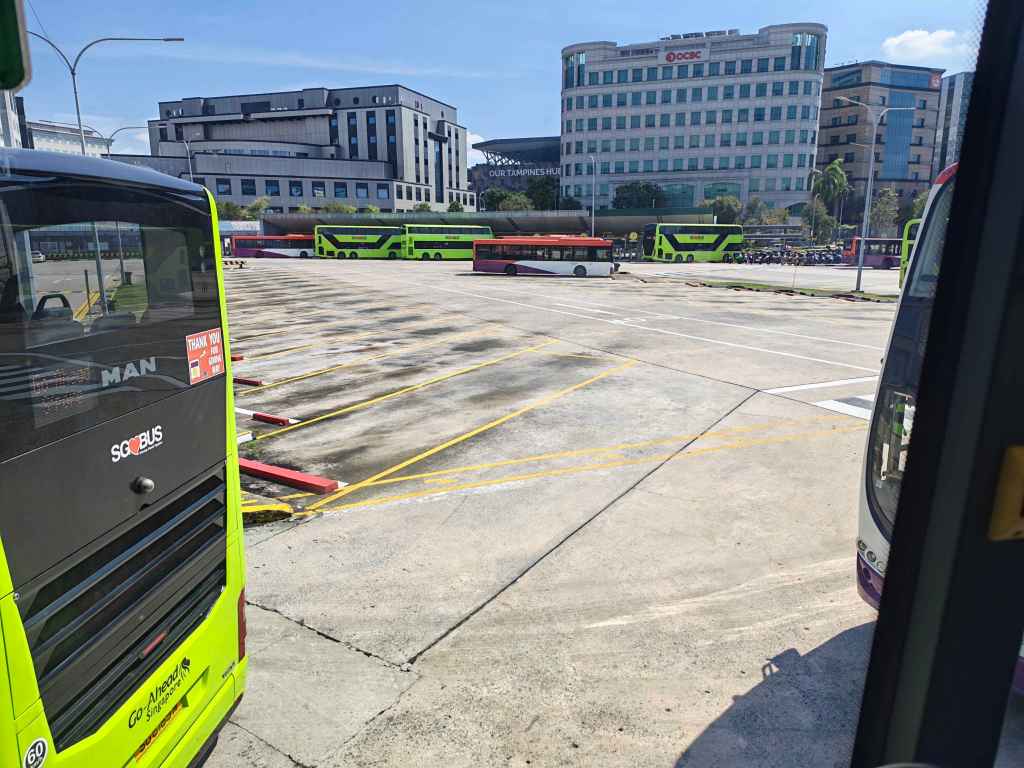
If the pictures need explaining, the pictures highlight the shortfall of services provided to the common folk, with frequent >30 minute wait times compounding the already long queues Tampines faced, the unskilled staff also resulted in plenty of vehicular crashes, and fleet voids as Tampines Interchange often ran dry on buses. These screw-ups spawned a slew of memes for the enthusiasts. Most strikingly It got so bad for too many bus riders, they voiced out their frustrations on any channel they could, prompting the local MP cum Minister of State for Transport, Baey Yam Keng, to step in for damage control. The opposition political parties also had a field day during the Parliamentary Sitting of October.
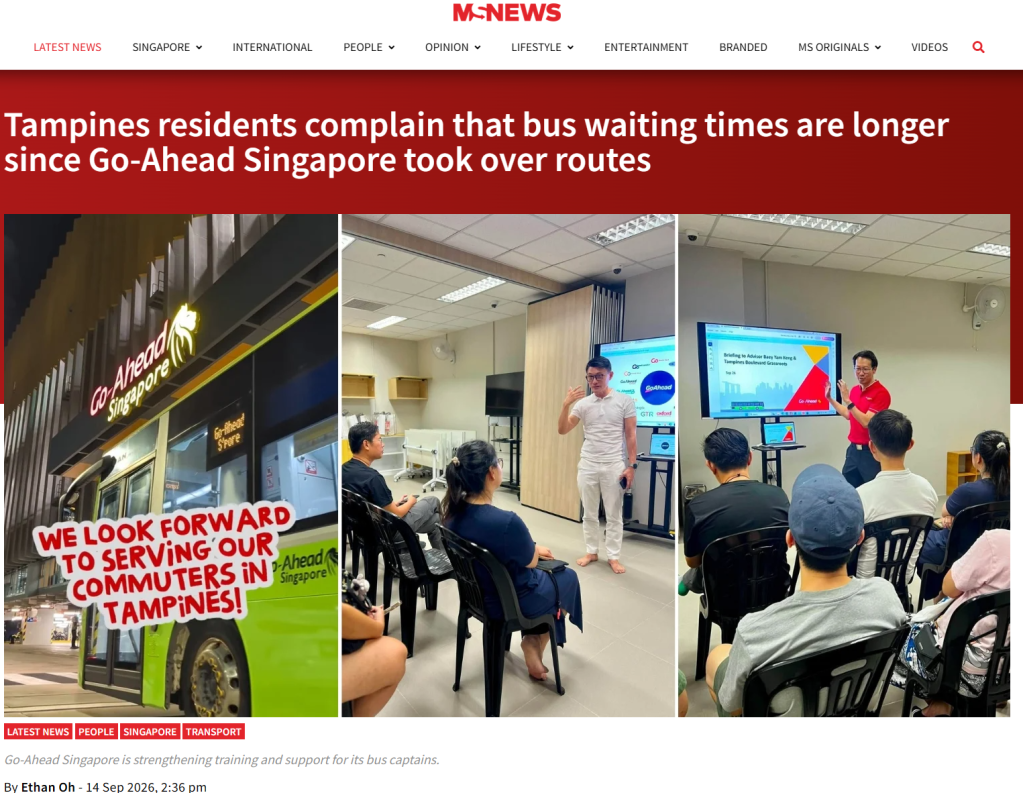
Until we see tangible service improvements, the only few ways to escape the shitshow, is to purchase a car or move out of Tampines, neither good options in this terrible economy.
Failure rating: 8/10 For ignoring the telltale signs from the past, and turn ingpassengers into scientific experiments for the AI. Go-30 Minute frequency is forever burned into GAS’ reputation. And LTA has a lot to answer for with their decisions behind supporting them. And I, am ashamed report to witness one of my older posts’ all but becoming relevant. I also would like to point out an irony, despite e-buses being part of the rational for contracting GAS, no e-buses were used since launch date.
Outro
Now, this post was not made to gloat on the “LTA bad, STC good” rhetoric. Rather, it serves as a reminder that mishaps in the ideation/ planning stages can happen, making them key lessons to learn from; you have to fall off a bicycle before you learn to cycle. We can hope that such mistakes will be learnt from for future decision-making. I hope you had some laughs reading, but also come out informed.
Interested in building a better future for Singapore’s transport? Join the STC community on Discord today!


Leave a Reply