


Right after I published the Basics post on the relationship between fleet size, cycle time and operating frequency some while ago, it seems like that article had stirred a bit of… sentiment, to say the least, because less than 24 hours after I hit publish, so come the angry rants accusing us of a whole boatload of things that are frankly, surreal to look at. I’ll let his thumbnail speak for itself, because the actual content (which is 58 minutes long) is similarly entertaining, but I wouldn’t recommend watching for other purposes beyond comedic relief.
On a further side note, he should probably be levelling those accusations at the math behind how public transport works if he’s really that riffed about the idea that transport planning needs some math to translate things from conceptual crayons into real-world operations. Don’t shoot the messenger, after all.
Though it’s pretty rich coming from a channel that’s been attacking us nonstop over the past 7 months over concepts and proposals (bus-related) in our Transport Manifesto 2050, let’s still try to engage with his argument in good faith to be the bigger person here. This particular video of his for instance, while not being able to offer a sufficient rebuttal to the idea of using math to aid transit planning, does however shed light on the a particular strain of fallacy that plagues local public transport discourse, including and all the way up to the operational level within bus operators and LTA. For all the memes around this specific creator being all about “doorstep” and “anti rapid buses“, this could be the reason why a form of thinking violently allergic to any serious reform can be the result, even within local bus enthusiast circles who probably should be the most well-informed about how public transport works.
For some reason most of the aforementioned video did not even bother to touch the topic mentioned in the thumbnail, which was the fundamental fleet management formula I shared about earlier last month, or what I also term the “magic triangle” in public transport operations planning. Somehow the video managed to segue into all sorts of irrelevant discourse that’s talking about unrelated ideas such as rapid buses and what he describes as “trunk eat feeder” (the formal STC term for this is feeder integration, which we gave a small teaser of in a previous post on smartly conserving fuel resources amidst impending uncertainty in oil supplies. That’s an entire topic in itself worth exploring in a separate post!). It’s hard to tell how he made the logical leap there from an innocuous mathematical formula, but the closest guess would be that if one is unable to refute the core argument, then the next best alternative would be to deny its practical implementation aspect. Clearly, mentioning that making bus routes faster to reduce resources required and enhance service, struck the wrong chord among some.
There’s two responses to be made to such a rambling, lengthy response that invariably veers off tangent. The first, and more important one to note, is that theoretical frameworks in discussing and planning transit ultimately serve a neutral role in and of themselves, with no inherent prescriptive purpose attached. The magic triangle itself doesn’t dictate what a transit planner should or should not do — it is ultimately a tool that’s used (compulsory, because planners cannot escape the geometry and math that define operations) to translate planning concepts into real-world buses and trains running on the ground. Any policy recommendations made with reference to these theoretical frameworks are the combination of these factual axioms and the planner’s own interpretation, based upon their desired goals and their communities’ values. Objectivity is not a singular universal truth, but a system from which differing interpretations and angles of perception ultimately give rise to a fuller holistic understanding of the intangible laws governing the physical world.
Like what was mentioned in the post introducing cyclical and cumulative ridership profiles on transit lines, these theoretical concepts are not introduced to force you to think a certain way about how public transport works, but rather to explain various observable phenomena on our public transport.
IMPORTANT NOTE: This is not a value judgement between routes with cyclical or cumulative demand — while cyclical demand routes perform better both in ridership and fare revenue, this post is not about promoting one form of route design over another. Both cyclical and cumulative demand services play equally important roles in our network, and their value to commuters should be judged by the access to jobs and amenities they offer.
Likewise, the purpose of introducing the magic triangle is simply to explain the relationship between route design, service provisions, and how it affects the resources required to operate certain particular public transport services. I’ve also included strategies that could be possibly be employed, mostly to push service outcomes in a certain direction — higher frequency, lower resource requirement (and yes, in that sense you could call the article biased towards a certain set of outcomes) — but always remember that the reverse also holds true, if different principles govern bus planning for a different group of individuals. It’s pointless to force a particular worldview on anyone, but fundamentally regardless of one’s position on public transport planning matters, we’re all subject to the same math, and what’s more productive is to use said math to engineer our desired outcomes, with the real-world trade-offs in mind.
The second bit is where it gets more interesting. Why does the suggestion to introduce faster types of bus service (regardless of the larger intent) elicit such a violent response, almost on a knee-jerk basis? Almost as if in the worldviews of some, it was a cardinal sin for buses to be faster!
Belief check
This section is targeted at Singaporean readers accustomed to Singapore-based bus operations, but the underlying logical assumption being discussed may also apply to foreign readers as well with slightly different contexts.
Here’s a quick question: Based on your understanding of Singapore buses, what does it mean to be an express service?
I’ll leave two buffer images here while you ponder this question. Scroll down when you’ve found a satisfactory answer containing everything you can think of.
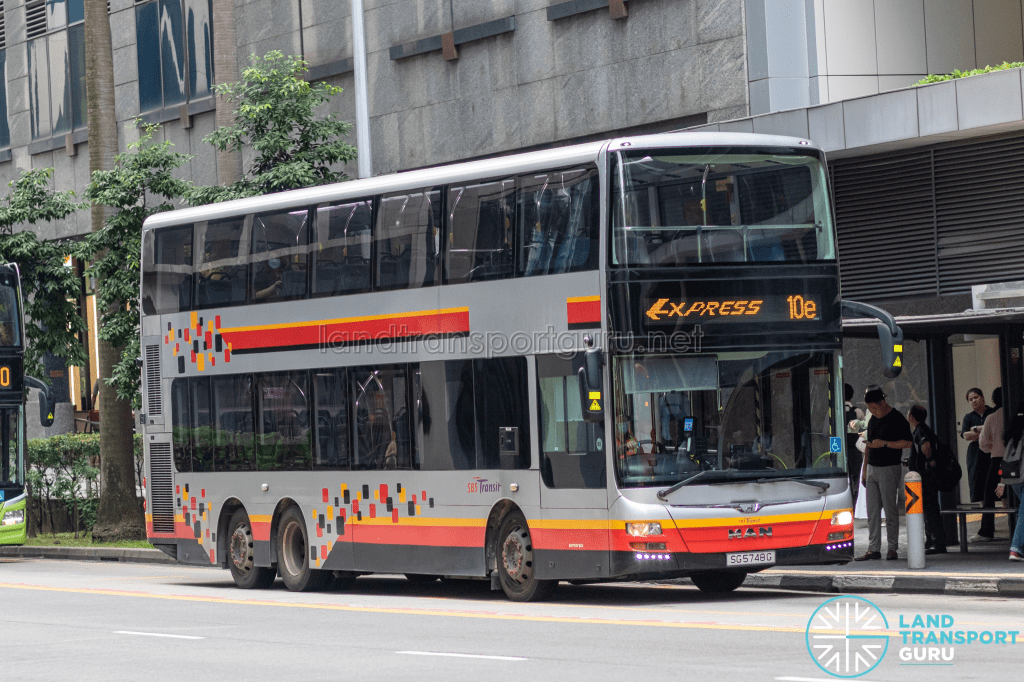
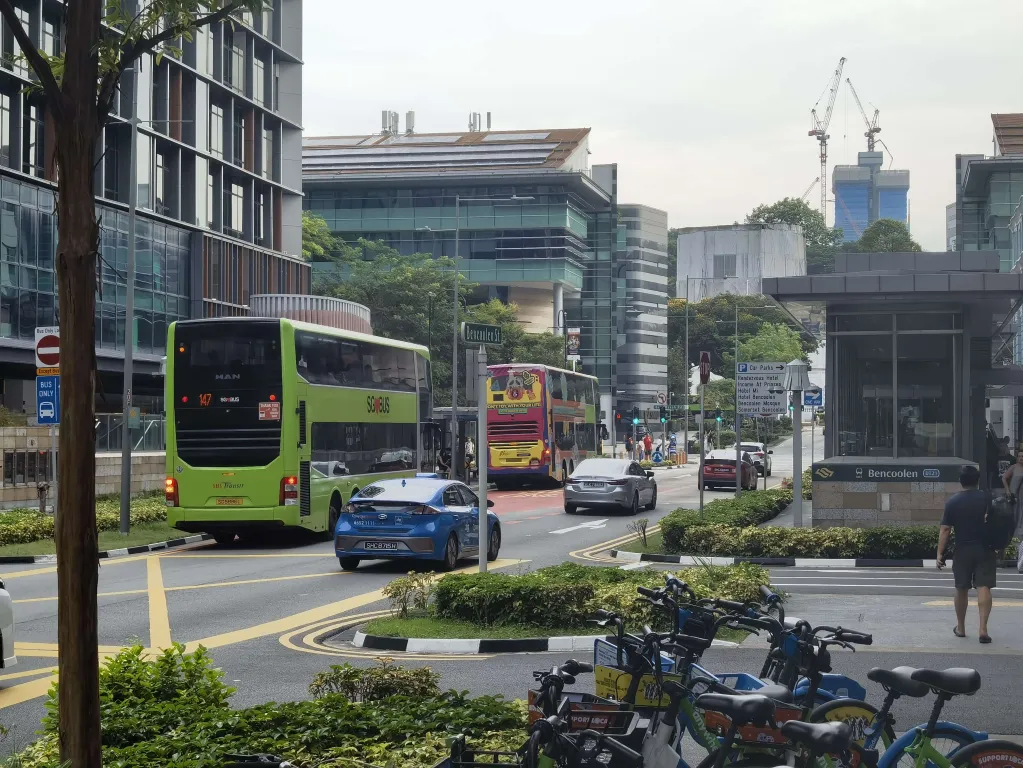
If your answer contained anything other than “a bus service containing long, non-stopping sectors along its route”, count yourself unfortunately wrong. Chances are however, your answer would contain a whole boatload of other answers, including but not limited to:
- Managed under OTA (schedule-based performance management, instead of headway-based EWT under BSRF)
- $1 express fare surcharge
- Infrequent service and/or;
- Peak-only service
- Focused upon the Central Business District
- Low ridership
- Use expressways^
- Utilises double-decker buses (???)
- Operated by a particular bus company (???)
(Entries marked with (???) are flat out wrong, but I nonetheless hear them being thrown around anyway)
Even bus enthusiasts who would know better about these operational details are susceptible to the same category error misconceptions, if not more so because of their increased familiarity with the same systems that attach these additional connotations to the basic idea of express bus services themselves. However, there’s no reason why an express bus service must inherently carry these additional characteristics. Within the Singapore transit discourse, the very definition of what an express service constitutes has been perverted by years of marrying the conceptual term to a particular product branding, of which the latter is tacked on with further policy definitions. At the end of it all, Singaporean bus enthusiasts by and large are mostly unable to distinguish express from Express. One is a planning concept involving buses and trains serving fewer stops to travel faster; the other is a service brand introduced by SBS in 1997.
Here’s a quick policy redpill for you: nothing about express services inherently means that buses must be evaluated by schedule instead of headway.
Nothing about express services states that they cannot run frequently.
Nor does being an express mean that a fare surcharge must be imposed.
Nothing states that express services must be radial in nature;
Nor must they inherently be of low ridership.
In fact, many of these self-perceived “characteristics” of express services are directly disproven by the existence of trunk-branded expressway bus services, which are no less express than their branded counterparts, but exhibit none of the aforementioned characteristics many associate with the idea of “Express” services. As a society, we’re massively adept at loading otherwise neutral and simple concepts with a ton of semantic baggage, and woefully incapable of separating them when needed in studying the issues plaguing our public transport. And the worst of it all, as exemplified by the above-featured video creator, is the substitution of serious analysis for such loaded talking points.
The worst enemy of positive reforms in public transport and elsewhere, is the confusion of status quo for factual reality, and using buzzwords in place of a sound theoretical framework. Unfortunately, this lack of clear thinking rampant in the Singaporean, unless addressed, will continue to make discourse around improving our public transport very difficult. When “the Singapore way” is all that people have been exposed to in their lives, it might even feel counterproductive to engage in discussion that is already cognitively pre-framed by the baggage that we have assigned to the keywords used in discussing the very same issues we’ve set out to solve.
We can run the same exercise with a couple of other buzzwords in public transportation too. Are feeder services inherently more frequent than trunk services, or more reliable? Does high speed rail necessarily mean skipping over non-focus cities? Can bus rationalisation result in increased, and more useful bus service? Should “light rail” be contrasted against “rapid transit”? This could go on all day and we wouldn’t even scratch the surface of the many assumptions deeply embedded in our thinking about public transport.
Abstracting characteristics and parameters
At the core of every category label used to describe things in the real world is the idea of abstraction, where objects with common characteristics are grouped under a label, not because the label truly reflects what it is, but rather because it’s a convenient simplification of the complex world around us. Having to understand every unique individual idea or object down to the most minute level would simply be too overwhelming for our limited brains to process, that’s why. The error being addressed today, simply put, is the act of using the label as a catch-all descriptor for details unrelated to the original label, and basing analysis as such. In transport planning, doing that lands one with some pretty silly conclusions, with the video at the start of this article being a good example of the resulting logical incoherence.
Take for instance the image below. Older readers may recognise them as Poofer and Floof from the Floof family, which I featured quite a bit in older posts on the previous website. It should be obvious that both of them are intended to be plush cats in one way or another, and some may even recognise the base characters from which they were derived from.

As can be obviously seen, both Floof and Poofer look very different in many different aspects (eg size, shape, colour, body etc), but nobody aware of their origins would say that both are not cats. The shared presence of general feline features such whiskers, triangular ears and w-shaped mouths lends one to be able to classify both as “cats” (albeit plush versions). Here, “cat” is the general category, and Floof and Poofer are instances of the category for possessing selected characteristics deemed relevant to the general understanding of cats.
Other properties not relevant to the central understanding of the “cat” abstraction are parameters, that identify and distinguish specific instances of a category. Floof’s pink scarf and a brown top hat or Poofer’s yellow coat, as they are not essential characteristics of the “cat” classification, are hence merely parameters that offer secondary distinction of unique members of each category. Tweaking these properties has does not make them any more or less befitting the “cat” label.
Back to the express vs Express example earlier. The core characteristic of express services is simply the act of incorporating non-stop sectors to speed up the journey from end to end. What fares are charged, what bus types are deployed, which number series the route takes on — these properties are secondary, and are hence parameters that can be adjusted with no impact on the express nature of the route! Just because a route number doesn’t start with 5 or end with the “e” suffix doesn’t negate its qualification as an express service, but it certainly cannot be an Express service. See the difference?
The panic not needed
Once characteristics and parameters are clearly identified, the basis of moral panic in the above-attached video falls apart. The aforementioned Basics post carried a slight bias in favour of faster bus services, but the agenda ends there. Fares, which do not affect the cycle time formula, are an independent parameter that can and should be separately adjusted to further improve the public transport experience. But it needs to be acknowledged as an entirely separate variable, and discussed as such separately.
Reject turnkey mentality
We would have much clearer conversations about public transport if we refused to be held captive by a turnkey mindset that bundled planning and operational concepts into fixed packages, thus assuming the extra burden of irrelevant parameters upon the definition of critical policy keywords. It’s convenient, but horribly intellectually lazy! Always ask about the specifications and how they can be tweaked to suit your needs, or adapt to a different environment from which they came from! Ask yourself what exactly requires adjustment and what doesn’t! The intellectual discount of pre-packaged concepts, like with anything that appears too convenient, carries significant hidden cognitive cost. Thinking “a la carte” is the smarter way, particularly for multi-factorial systems like complex systemic behemoths like our public transport systems.
Trigger warning up ahead: you probably won’t expect what is going to be said next given STC’s position on certain policy matters relating to buses!
Bus rationalisation can be a good thing! BUT-
MASSIVE DISCLAIMER: READ TO END BEFORE PROCEEDING WITH JUDGEMENT (<– Particularly for the crowd historically violently opposed to any form of “bus rationalisation” due to recent memory, whom I still stand with today)
2026 will mark the seventh year in a row that I write publicly about issues in Singapore transport since I founded STC in 2020. In the early days our site’s stance was particularly defined by the tumultuous issue of sweeping bus rationalisation exercises targeting the bus network around newer-opened lines like the DTL and TEL. Particularly in the case of the 167 TEL rationalisation, these events continue to leave a sour aftertaste in the public perception. So much so that the word “rationalisation” has been permanently tainted, and there have been zero rationalisation exercises since the Jeffery Siow MOT administration commenced since last year’s election.
I will admit, that stating the above facts on the distinction between characteristic and parameter in abstract classification shall not stand unless an important fact about another key transport policy buzzword is addressed.
None other than bus rationalisation itself, whose manifestations from 2020 through 2023 targeting the DTL heartland areas and the TEL3 downtown fringe zone drew sharp criticism and pushback to varying extents of success across multiple iterations. I likewise continue to maintain that these exercises were conducted in utterly poor taste and judgement, and planned with the greatest contempt of the social value these bus services bring to the communities they serve.
Turn back the clock however, and this shoddy approach to “streamline” the bus network wasn’t always the case. Recall the predecessor to the sweeping 2003 NEL service cuts: operator-led Initial System (NSEWL) rationalisations from 1988 to 1990, followed by the TransitLink-led Network Integration Exercise (TLNIE) from 1991 to 1993. The disruptive nature of the MRT’s first entrance into the local transport scene meant that the first rationalisations far exceeded their modern-day counterparts in scale and scope, with far more routes getting shortened and axed. Had they happened today, one can imagine political backlash so severe that “parliamentary routes” would have been the approach henceforth.
Some will say it was a more authoritarian era of Singapore’s history back then (with the elder Lee still in power), leaving the people with fewer recourse for unfavourable transport policies. Some will say the MRT was just so good people cared not if buses were getting axed left right and center. I want to push forth another proposition rooted in firm evidence listed above: backlash against the NSEWL rationalisations was less severe because while the scale of service cuts far exceeded today’s imagination, the IS rationalisations / TLNIE also brought about a massive addition of bus service in areas that previously were not served, or the addition of stronger orbital bus connectivity that was a defining feature of these network adjustments.
As mentioned in the post on long feeders, prior to the introduction of the MRT the Singapore bus network was predominantly arranged in a radial fashion with almost all routes pointed towards (or passing through) the CBD and fringe areas. Orbital connectivity around the outer heartland towns of Singapore was much more scant (and even more so before TIBS launched intertown expressway bus services in the 1980s). This design wasn’t by choice: the relative lower capacity of buses meant that a rapidly-increasing population meant that they committed almost all their resources towards ultra-high frequency radial corridors serving the downtown area, leaving very little available for orbital connectivity or service to areas off main radial corridors. Opening the MRT meant massively freeing up limited bus resources in that era to operate routes that served orbital (heartland inter-town) functions, or massively increasing service (eg improved frequency) along areas further from main trunk corridors.
Many bus routes today that connect residential and industrial towns outside the downtown area were only launched during the NSEWL rationalisation. Likewise, many of the long feeders that that residents (especially students or blue-collar workers) today extensively rely on were either byproducts of the NSEWL rationalisation, or newly introduced during that period using resources freed up from radial routes whose roles in long-haul city-bound travel could be replaced with the much higher capacity NSEWL.
It might come across as unfathomable that a bus rationalisation exercise resulted in vastly expanded bus service, which commuters even in the present day continue to benefit from. A stark contrast indeed, to the 2020s conception of “bus rationalisation” as a term to get a blank check for reducing bus service with no compensation. The truth is just that the name of bus rationalisation has been sufficiently tainted by its maliciously poor execution in very recent years, so much so that LTA turned towards using “service adjustment” starting from the 167 rationalisation. If it continues to mean the same thing, expect the same fate to befall this even more neutral-sounding term as well.
Blasting the keyword “bus rationalisation” as I did in 2020 (700, 171), 2022 (22, 66, 506) and 2023 (75, 162, 167), was admittedly a misdirected attack, as much as it was rightfully justified to call out the wanton destruction to the public transport network. As shown in vastly different planning philosophies exhibited in 1990 and 2020, whether new service gets added (or enhancing remaining routes) are independent parameters under the “bus rationalisation” category, determined by the prevailing planner philosophy of the era. Could we execute a proper bus rationalisation exercise that offered a visible improvement to the public transport system despite the initial reduction in service? Absolutely, and it’s not to say that mature areas don’t have connectivity gaps that could be filled using resources freed up from otherwise duplicating routes in the same area.
Has that ever happened though in recent years? Take the case of the 66 rationalisation, which axed the critical link between Bedok Reservoir Road and Bedok town center. Whilst this sector was duplicated by feeder 228 (and in function by long feeder 60), neither of these routes received a service enhancement to compensate for lost connectivity, which should have been the least done as courtesy for the interests of residents who continue to hold a significant case for good connectivity to their town center, on top of their non-proximity to a DTL station. This, despite pleas from residents and the local MP over the years. (Literally: just google search “Gerald Giam bus 228” and see how many results come up. That’s how much they’ve been pleading for a service enhancement over the years since the 66 rationalisation) They weren’t even asking for 66 to return to Bedok Reservoir; it was just a simple plea to make 228 more frequent. It remained an unanswered call anyway.
Unless LTA takes seriously the idea of bus rationalisation being a service reorganisation rather than a service reduction (as their predecessor TransitLink did), it highkey doesn’t matter what name they use to refer to such planning behaviour — the backlash will simply continue to come, and even if the goal of cutting losses doesn’t come with profit-centered intentions, they will find themselves unable to push forward towards such goals anyway.
Magnified repercussions
But what happens when this mentality of failing to distinguish buzzwords from proper planning theory goes beyond just a war of words on the internet and gets behind the real levers of power? Enter the world of the BCM’s service quality metrics, where the frequency department is segregated by the trunk-feeder dichotomy. Less apparent to the untrained eye is the fact that the “trunk” and “feeder” designations attached to bus routes in Singapore are also brand names, rather than a serious scientific classification based on their true route profiles, similar to the “Express” branding discussed earlier. Feeder services, rather than being defined by their predominantly last-mile trip nature, are instead defined based on HDB town boundaries. By extension, that excludes all non-residential routes by design. The two definitions overlap to some extent, but also open up a significant gray zone that leaves much room for dispute on how bus service quality should be evaluated. We will get to that in a bit, but it should be obvious how many absurdities arise when this specific, twisted definition of “trunk” and “feeder” are being applied to benchmark bus service quality.
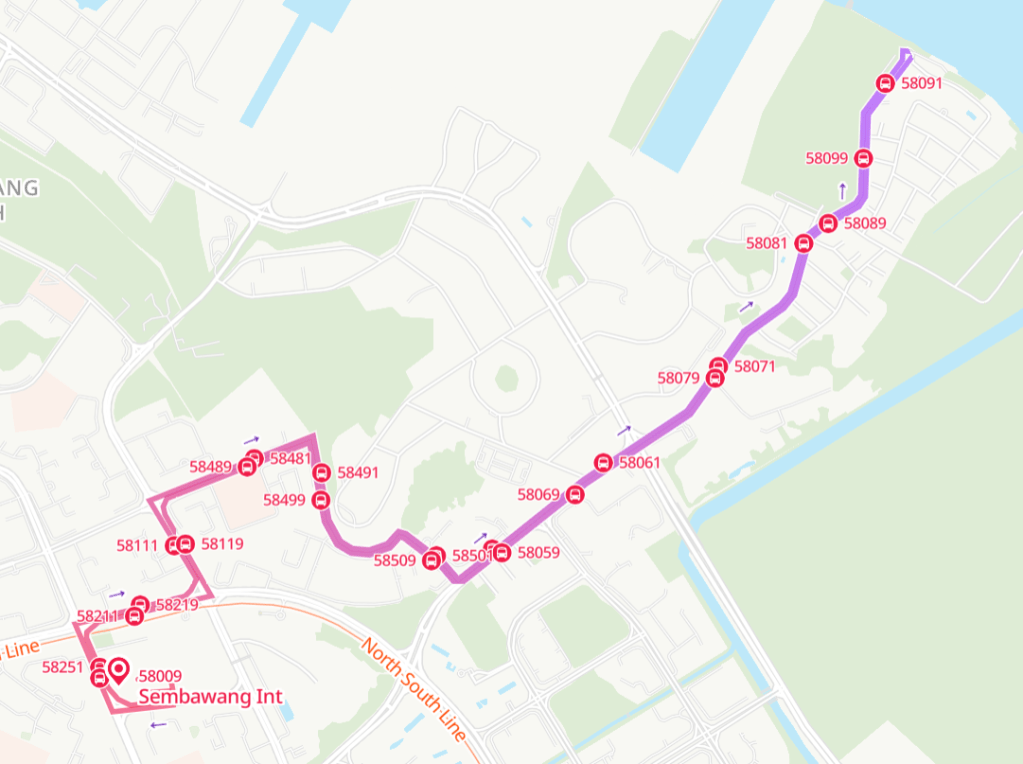
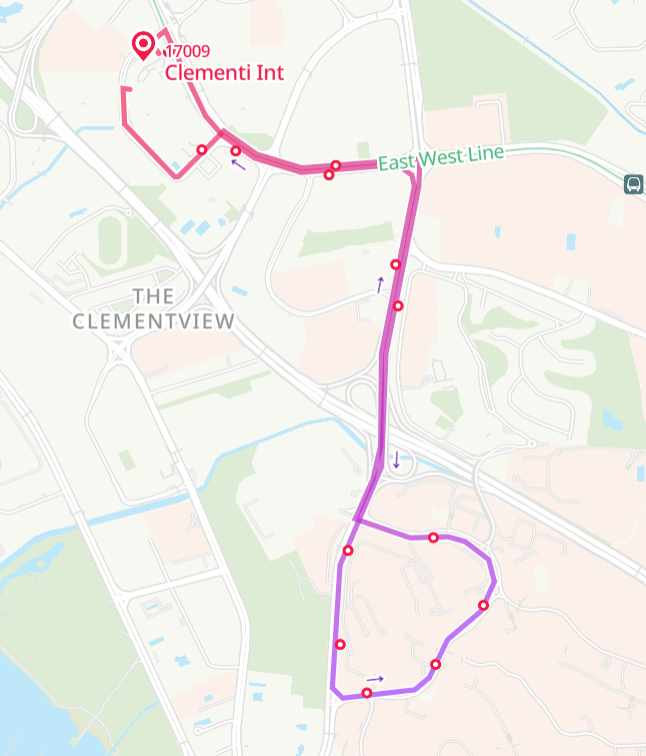
According to Singapore bus planning rules, the following bus services which very obviously serve little more than a last-mile or local area connectivity role where short waiting times are demanded, are/were classified instead as “trunk” bus services:
882 (Sembawang – Sembawang Park)
96 (Clementi – NUS)
181 before 14th June 2026 (Boon Lay – Jurong West Ave 5)
*181 was extended to Tengah from 14th June 2026
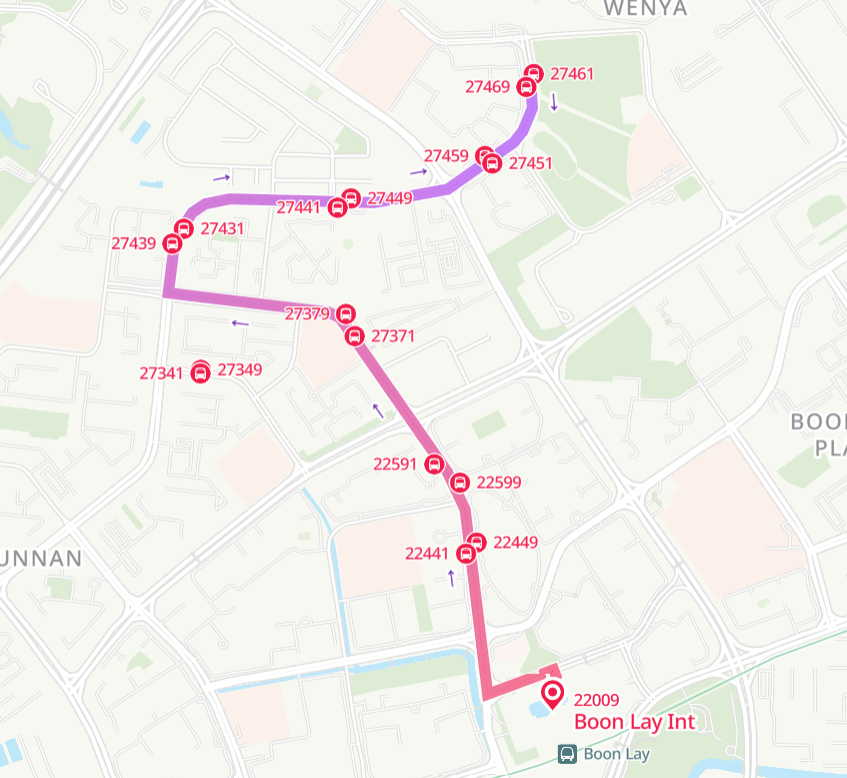
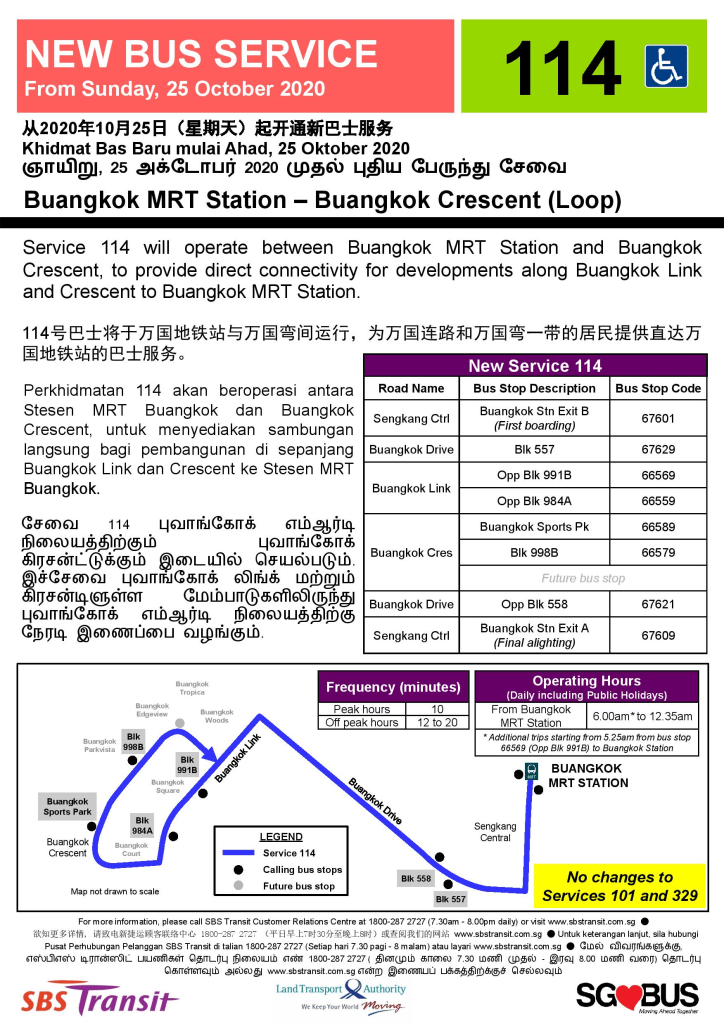
114 before 28th December 2025 (Buangkok – Buangkok Cres)
*114 was extended to Yio Chu Kang from 28th December 2025
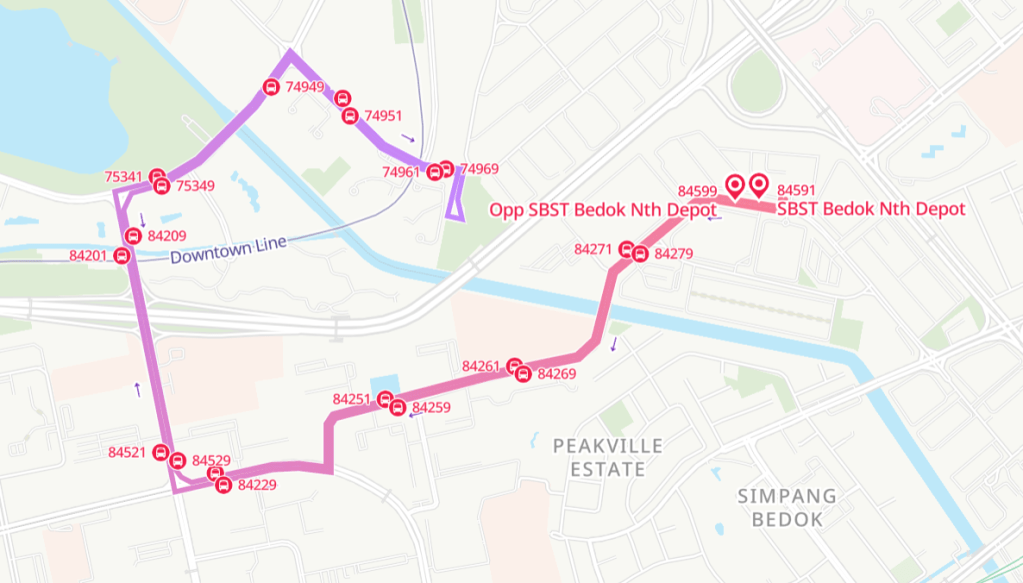
18M (Bedok North Depot – Tampines St 96)
HMs: Service 115 (Kovan – Hougang Ave 3), Service 142 (Toa Payoh – Potong Pasir Estate), Service 84G/W (Punggol – SIT Punggol Coast) Yes, 84 retained its trunk designation even after its extension…
I’ve deliberately excluded all long feeders, whose highly cyclical demand require more frequent service to keep up, particularly where ridership is high. Trunk services that serve as the sole connection of industrial workplaces to rail and bus nodes (such as 975) that have a more obviously “feeder” slant to their operational profile have also been excluded from the above selection. I’m not even addressing the elephant in the room that are industrial feeders, all of which are not feeder-branded. Even if we narrow down to short routes that are anchored only on one end to a hub node, there are still a considerable number of them that are excluded from the “feeder” branding.
BCM-era quality-of-service (QoS) standards stipulate that feeder bus services must not be less frequent than 8 minutes (7.5 buses per hour) during peak hours, while trunk services shall not be less frequent than 15 minutes (4 buses per hour) during peak hours. As the official definition of a feeder matches up very weakly with the pool of bus services that can be considered as such, this leaves more than sufficient room for bus services to slip through regulatory gaps and be declared as providing “good service”, despite chronically underserving the residents, workers and students that rely on them.
Did it matter that the old 181 was the sole bus service connecting Wenya (a part of Jurong West near Bulim and the future Jurong Innovation District) to the outside world? Apparently not, when both SBST and SMRT ran the thing at 15-minute frequencies during peak hours and called it a day. Did it matter that 114 was the highly-sought after convenient access link for Buangkok Cres residents to reach the NEL much sooner than the existing 101 and 329? Well, it never ran any more frequently than 15 minutes ever since it was launched in 2020, or even after the Yio Chu Kang extension was supposed to increase ridership by adding catchment at Fernvale!
The worst part about poor bus service is not when it fails to meet service quality expectations. It’s when it is validated and legitimised by the very frameworks meant to enforce quality standards, because of arbitrary boundaries drawn in policy.
Especially so a set of boundaries derived from a lack of clarity on what’s a product brand name, and what’s scientific classification!
Counter-poisoning the well
The failure to separate the core concepts of trunk and feeder lines from the mountain of baggage that operations, regulatory frameworks and the wider public have heaped upon it over past decades spills back to bite us.
Once again to clear up the room: a trunk line is nothing more than a route that covers long distances in relatively straight lines to efficiently link multiple towns, while feeder lines connect areas outside the former’s catchment to link with said trunk services at hub points in the network. Any other definition along the lines of fares or target service quality is an adjustable parameter that is entirely within policymakers’ control, and where responsibility is borne by an accountable human, not the metaphysical concept.
The different service baselines set for trunk and feeder-branded services under the BCM give rise to an implicit message that is extremely dangerous for bus service planning and management in Singapore — feeders are frequent, trunks are infrequent. I don’t know who needs to hear this, but if this is genuinely what you believe, you’re either a dinosaur from the 1980s (where feeders really ran as frequently as a bus every minute due to the lack of any other available bus connectivity in new towns!) or you are in need of a serious reality check.
Aided by the bane of last-mile public transport connectivity in Singapore, riders are faced with two unfavourable situations: the time-consuming route in the hub-and-spoke model involving transferring between feeders and trunk buses or the MRT, or taking a more direct route along trunk bus corridors. Travel time on the former is longer due to the inherently more circuituous routes in a hub-and-spoke system, especially to destinations located far away from bus interchanges and MRT stations. On the latter, long waiting times (because of the operational model of assuming that trunk services should just be less frequent, despite lacking logical basis) greatly increase uncertainty of travel time, requiring much more buffer time to be allocated to travel. The current set-up is a no-win situation: with very few exceptions unless you’re lucky with origin and destination, there’s no way to ensure a quick journey by public transport, which is why demand for cars continue to remain high despite a decade of “car-lite” propaganda from LTA’s part.
Without massively rebuilding our urban fabric and uprooting entire communities just to shift them, there’s a workaround solution that acts as a sort of compromise in the trunk-feeder dichotomy. A good number of feeder routes have outlived their purpose, with the road network having sufficiently expanded to enable trunk or long feeder services to be routed through in an efficient manner to expand direct access to many more destinations without compromising overall coverage. (There’s only one valid counter to this argument; service reliability, but even that can be refuted by policy-based (BSRF) or infrastructure-based (bus lane/signal priority) interventions that ensure service remains consistent even on longer routes)
Combining feeder routes frees up their resources to be reinvested towards trunk connectivity which typically has shorter overall end-to-end journey times than hub-and-spoke journeys. So far however, this is an idea that public transport discourse in Singapore is largely not ready for, due to the influence of the misplaced idea of certain bus route types having an “inherent frequency band” as prescribed under BCM QoS standards. When trunk routes operate every eight minutes instead of fifteen as is today, the far less uncertainty towards waiting times on buses can be reinvested as disproportionately large time savings for other valuable things in our mundane lives. That benefit is waiting to be unlocked, as soon as we muster the clarity to see past brand baggage and examine public transport for what it is.
And it isn’t not already happening: selected trunks operate at service levels approaching and exceeding that of feeder routes out of necessity to meet high ridership demand. 190 runs in excess of 15 buses per hour (4-minute headways!) during peak hours supplemented by downroutes and short trips, while 74 operates about once every 6-8 minutes (8-10 buses per hour) to serve 30 schools en-route!
Closing call: Sort wisely!
Is a feature an innate characteristic of a particular idea or classification, or merely a descriptive parameter that is fully adjustible without the original subject losing its meaning? How much of what we think defines certain concepts in transport planning is actually irrelevant baggage tagged on to build a certain brand? This is a central question that must be clearly answered for discourse around public transport to be productive and fruitful, and for the conversation to proceed towards more substantial matters of specific real-world implementation. Otherwise, we’re stuck effectively fighting over definitions without progress. I want to talk about how we could bring about faster journeys on buses, not nitpick the specific fare table definition of a particular express branding and its impact on commuters. That is an issue close at heart for many Singaporeans, but fundamentally irrelevant to the idea of enhancing service quality with higher speed.
English language classes in primary school would have taught the distinction betweeen common and proper nouns. A lot of the confusion and friction in discussing public transport in Singapore would go away, if we stopped using the proper nouns to define the broader common nouns that formed the basis for analysing our transport issues. Faster buses are not necessarily Express buses, and they don’t inherently have to slap a hefty $1 surcharge per ride. That shows, above all, a poverty of imagination on the part of the claimant.
Interested in building a better future for Singapore’s transport? Join the STC community on Discord today!


Leave a Reply