

(SG60 National Day special — by shimmyseal. She is an active member of the STC community and is an active contributor towards STC’s Transport Manifesto 2050.)
The recent news on a 2021 sexual harassment case within the bus enthusiast community is simply the tip of the iceberg. While these rifts are inevitable among people-led communities, whose identities are shaped by individual movements, this has also prompted a discussion among people within the community. The majority of our recruitment has been drawn from the well-established community, who are already enthusiasts. While we welcome this interest, we believe that for effective advocacy of this often overlooked issue, there needs to be more attention to grassroots issues. We wish that more public policy forums, with measured and mediated voices, can support public policy. However, negative sentiment may put a spanner in the works, especially for initiatives like ours.
This recent news has been a disturbing development in the subgroup where we have drawn the most support. This community mainly attracts young people – the vast majority men – who like to be in touch with publicly accessible machinery. This interest can easily be picked up among most socioeconomic & racial groups. Transit here is cheap & subsidised by taxpayers after all, as a public good, as it has a large outreach in a first-world dense collection of towns. Being captivating and accessible, why would it not attract people who may be in desperate need for a friend group? It is inevitable that things that can unite, which are integrated with local culture, will attract people who may be looking for an interest group.
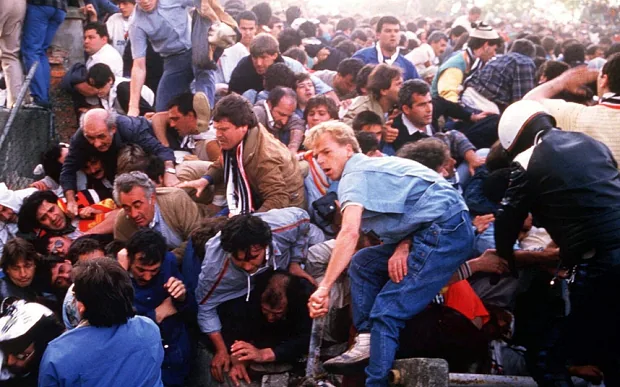
As a transport community, we also call for research on neurodivergence – as there is a strong correlation between that and transit interest – probably even within our ranks. Such people, like most, maintain a greater voice than before through the Internet. In a conservative society like Singapore’s, where disabilities are still frowned upon due to beliefs of self-sufficiency, they may turn online, and may be more easily manipulated by bad actors. The reality of a nascent transport scene is that we are more exposed to people being “pushed around” as pawns in bad actors’ schemes – like the recent case that made the news. With such research, we can advocate for a fairer, more equitable scene for them, as they may provide talents valuable to our society, and deserve dignity. In 1980s London, those disenfranchised by society would assert identity and power in football hooliganism. While this is a notorious phenomenon covered in films like Green Street, the problems in our own transit subcultures are often overlooked. They are spaces for marginalised individuals to form communities, but also where harmful behaviours can fester if left unchecked – and we should pay more attention to this.
To abuse a Zhongtong quote, “Why do we moving forward”? is an easier question to answer than “How do we moving forward?”, not just at TM50, but also in nationwide communities, especially those targeting youth. We should not merely just nod our heads at the situation, and maybe provide a bit of community-based outreach on mental health or economic support, but investigate the root causes. If our progress is like a train moving forward, disregarding the well-being of our constituents is akin to neglecting axle box maintenance, and our initiatives will derail. (Editor’s note: the Zhongtong quote above originates from an infamous machine translation of their website, which has since been removed, but not before it became a meme in the local bus enthusiast community)
It is easy to shift the blame onto young people who did not make headway – maybe in this meritocracy, they “did not work hard enough” or “made the choice” to be rebellious. The perception that the state of our youth is declining may have been amplified by the Internet. As the Internet, particularly mass media, encourages a change in mindset, it may cause rifts between young people and society – in this economic climate, parental intervention is fast becoming a privilege too – which could lead to societal problems, which leave youths disillusioned. This is exploited in the permeable “enthusiast community”.
We need to make people aware of these endemic problems affecting the youth. Previous norms of manners are being challenged. In this changing world, collective responsibility is to promote a good quality of life for everyone, regardless of their job of choice. Globally, we want to stabilize people’s contrasting sentiments, to avoid a culture war. In the local context, we need to prop up the miracle that made us in the first place. We cannot be blindsided by the fact we are a first-world country – we, by nature, are still resource-scarce & trade-dependent. It is important to maintain a good social compact – a livable city where we expect a robust trading scene, and where dreams can still be fulfilled. If we let the “race to the bottom” continue, especially among youths who need support of the whole society, we risk wasting their potential, and sapping even more resources.
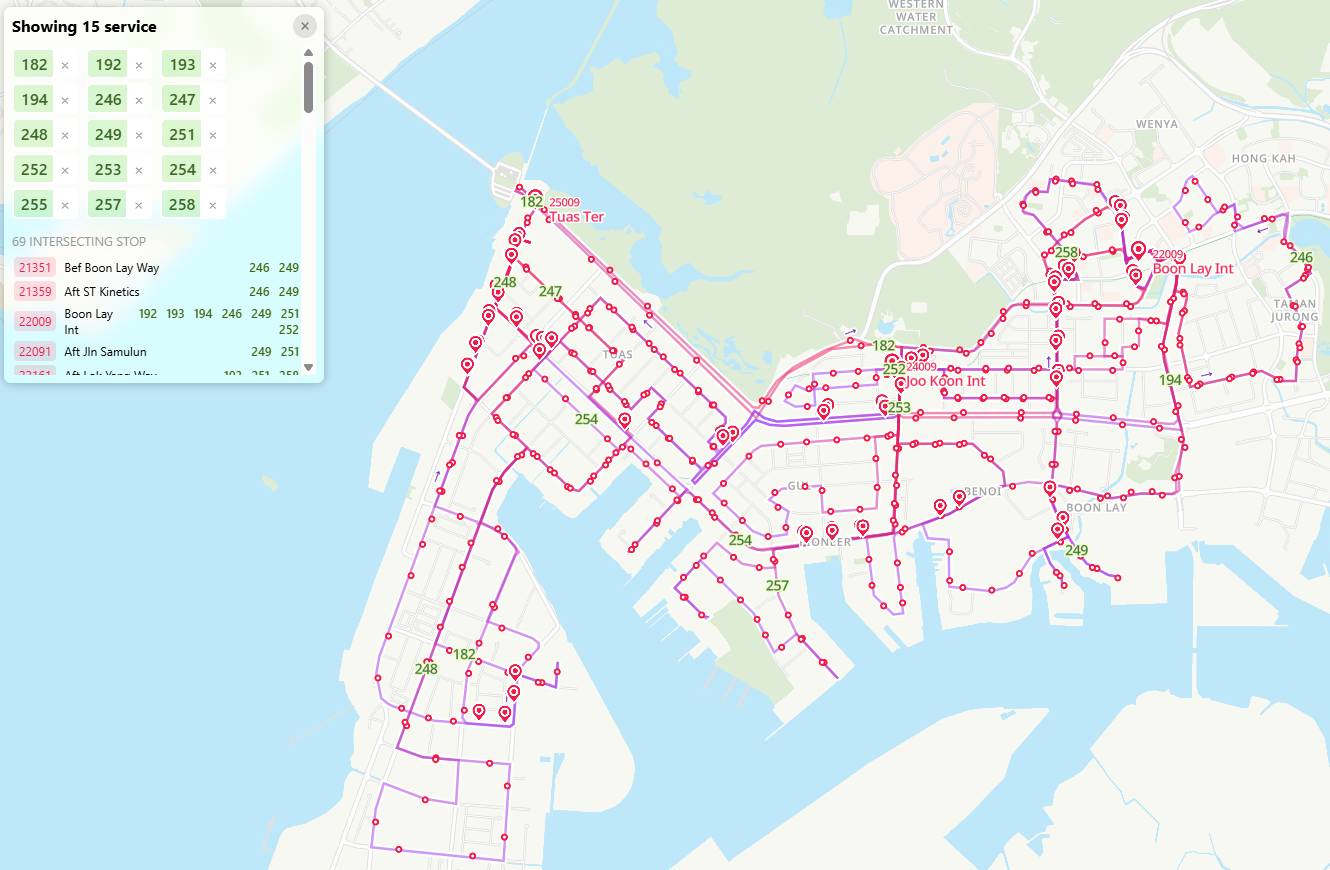
Advocacy of social issues – locally, transport & manpower issues – needs to be done by the commoner, with consideration of the populace at-large. This is especially apparent in the Jurong Industrial region, where a hub-and-spoke network around a few nodes along the nation’s most unreliable train line serves a twelfth of our land area – and most of our industry. In addition to an oil refinery and dormitories for foreign workers, the Far West will also be home to a world-class port governing global trade, soon to be the only one in the nation. However, the bus network in the area is measly – oftentimes, only 1 or 2 services exist in a large catchment, and the only viable node they link to is a designated MRT station – likely Tuas Link or Joo Koon. During the peak-hour surge, the vast majority of commuters going to the Jurong Industrial District are squeezed onto the EWL, due to a lack of alternatives – heavy loads may cause the train faults the EWL is notorious for. Industrial workers change to a local bus at Boon Lay, Joo Koon or Tuas Link, with a designated bus for a certain area – 251 for Pioneer, 255 for Gul, and 182/M & 248 for Tuas South, near the port, among others. Unfortunately, the Far West is often blindsided in our collective consciousness – often seen as a “part of Malaysia”. “Hard labour” is also conditioned to wake up early – a lower sleep quality can cause adverse health effects.
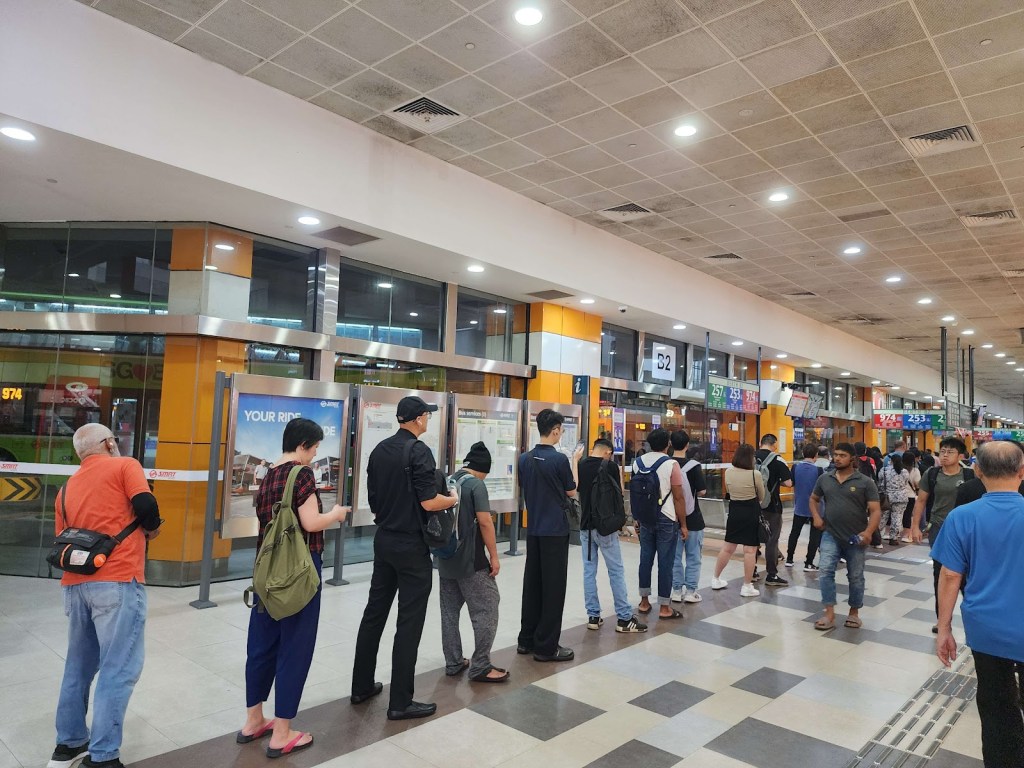
This commuting pattern also does not suit dormitory workers, many of whose residences are in the Far West – they have to endure long commutes from their places to anywhere else on the island, not least because our local-stopping lines covering dozens of kilometres are slow. A cheap way of transporting them, negating the long slogs to work, is on the backs of empty trucks – which may compromise their safety. In a country where unions are illegal to promote stability and development, not as much consequence is given when their concerns are neglected. While citizens have a democratic stake in the government every 5 years, often, employers can cut corners to save money, only offering foreign workers the most rudimentary of needs. This minimisation of spending extends to the transport network in the area – for foreigners and locals alike, there is barely any incentive to care anyways, due to a lack of public pressure. Due to the pressure to “get a good job”, and the notorious welfare conditions of some bus captains, cutting corners is popular – frequencies for some services have been slashed, and simplifying the network for catchment is attractive.
However, in a country which is so dense traffic backing up is unsustainable, and where the government has controlled the market for private vehicles, the hierarchy between the more well-off executives, who can freely use many arteries to enter and leave the area, and the workers, who are forced onto crowded commutes, risking their welfare, and the system’s health. This in turn reduces the attractiveness of jobs in the Far West – and the social stigma thereof. Where our world-class industry should run smoothly, we should ensure everyone has a good state of mind before reporting. Oftentimes, in our “flawed meritocracy”, where your track is determined from early in life, there is a natural fallacy to overlook other socioeconomic groups – the “elites” are trusted, and they typically control. In transit, the first step to planning a better network is to acknowledge that our island is getting bigger – and to increase opportunities for work, school, or play, a rudimentary network that is only permeable everywhere is not enough. We need to be cognizant of the situation on the ground – more grassroots attention needs to be given, and people not earning as high a wage is no excuse to muffle their voices.
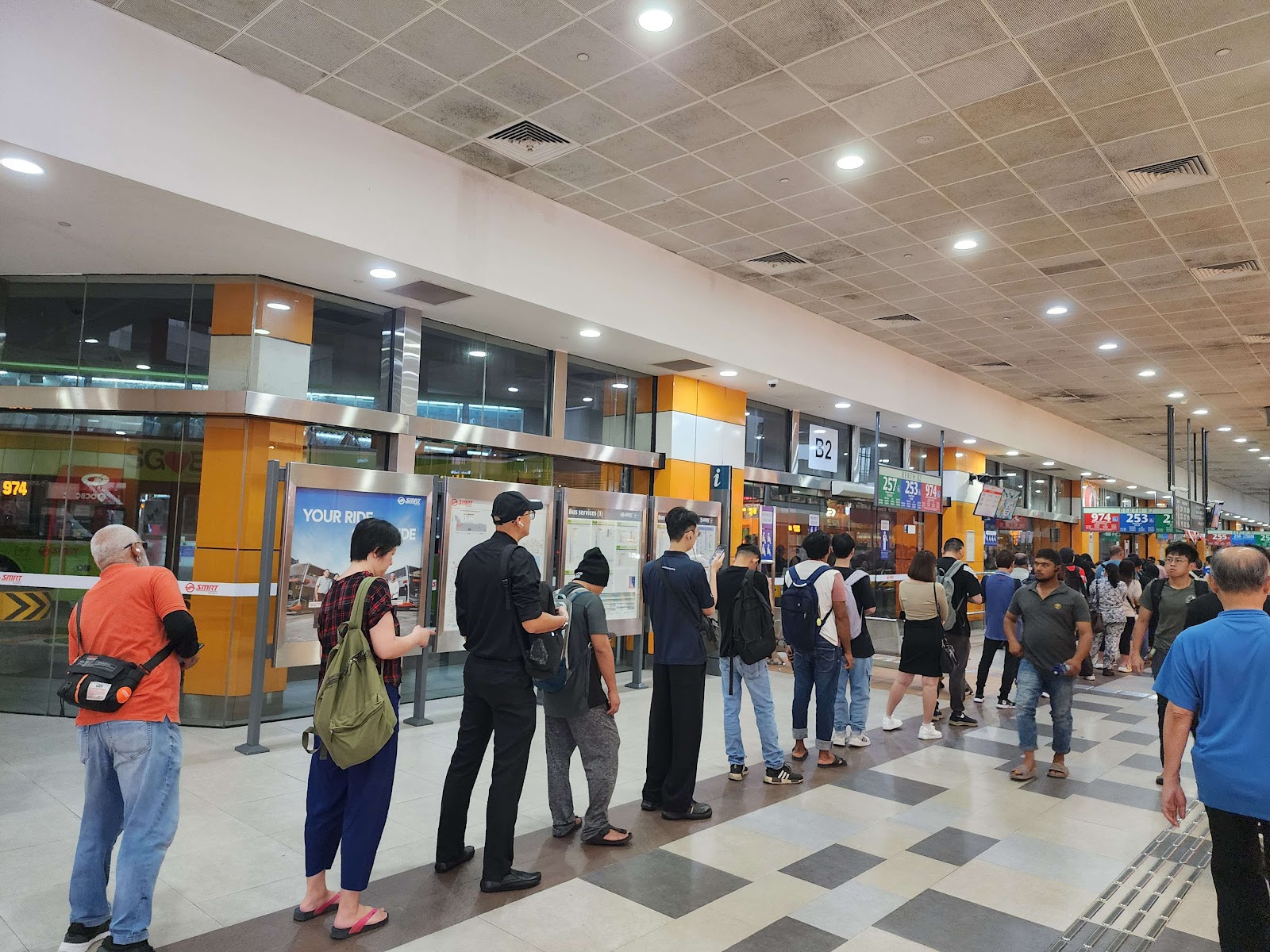
Ground-up advocacy involves willingly providing decent living conditions for commuters & transport workers alike – in addition, we must promote a society where our youth have a future. It is fortunate that the government has recognised issues on young people. However, we need to do introspection: What is the purpose thereof? Are we only doing this to prop up birth rates, or are we conscious that in sustaining the “Singaporean miracle”, we need to dedicate our next 60 years or more towards establishing a cohesive cultural fabric? Are we cognizant of the fact that our city-state is not merely a single entity – that as a collection of densely packed, interdependent towns, our circumstance is unique? In terms of public policy, in terms of balancing the needs between our different groups, we need to change our attitudes – tried and tested methods are to be tweaked. The attitudes of some higher-ups will not fly in attracting workers in various professions without the social stigma. The attitude of forcing youths to perform academically, pressuring them to “make it”, will discourage young people from settling down here. Rather, they try to express themselves in ways that would gather short-term glory, getting into various troubles like vaping or demonising people who are “different” on social media to assert authority. If we do not take responsibility for the hands that construct our infrastructure, we risk losing out in an era of more holistic thinking, outpaced by other places – the doubters of 1965 would be laughing in their graves. As transit advocates, we are also naturally inclined to think about how the landscape of this publicly accessible service would change, and how important it is to us. We truly believe that we as a nation have a right to move forward, to preserve our global identity – and we as people need to mediate with the powers that be, to consider all the stakeholders involved in a situation to do so. And when dealing with a fragile, malleable service like getting people to places, we need to build up a strong frontline.
Happy SG60 to all, and long may we sustain.

 Singapore Transport Collective
Leave a comment