


[Edited on 14 May 2025; Correcting Expression Errors, added LTA 1st half of 2025 vehicle registrations link)
In our “little red dot”, there is lore behind that nickname. It originated from the nation’s miniscule size and how it’s often requires map-makers to mark it out with a small red dot on world maps, thanks to how invisible it is. That should tell you how land-scarce Singapore is.
Yet, in this tiny nation, where the average car costs as much as apartments, oversized personal vehicles are becoming a surprising trend. Yes, you heard that right. Singaporeans have been gradually aspiring to own larger vehicles, this is in spite of rising taxes for vehicles such as COE (Certificate of Entitlement) and ARF (Additional Registration Fee).
CNA: COE prices rise across the board; Cat B and E cross $116,000
In fact, have you wondered what the best selling vehicle in Singapore? One may presume a really tiny car, under the rationale to fork out the most minimal taxes possible, given our country’s stance against car ownership. But to my surprise, it was the Honda HR-V (Or Vezel for those getting grey imports), a kind of car that while cheap(er) to maintain and own than many other models, one would have expected a tinier model, like Honda Fit/Jazz size.
Best-selling car model around the world: Reddit r/Infographics


Years ago however, while the figures aren’t vehicle wasn’t exactly clear. But one thing was for sure, it wasn’t some high-riding (phony) coup-wannabe. It would be something of a more elegant design, the sedan body.
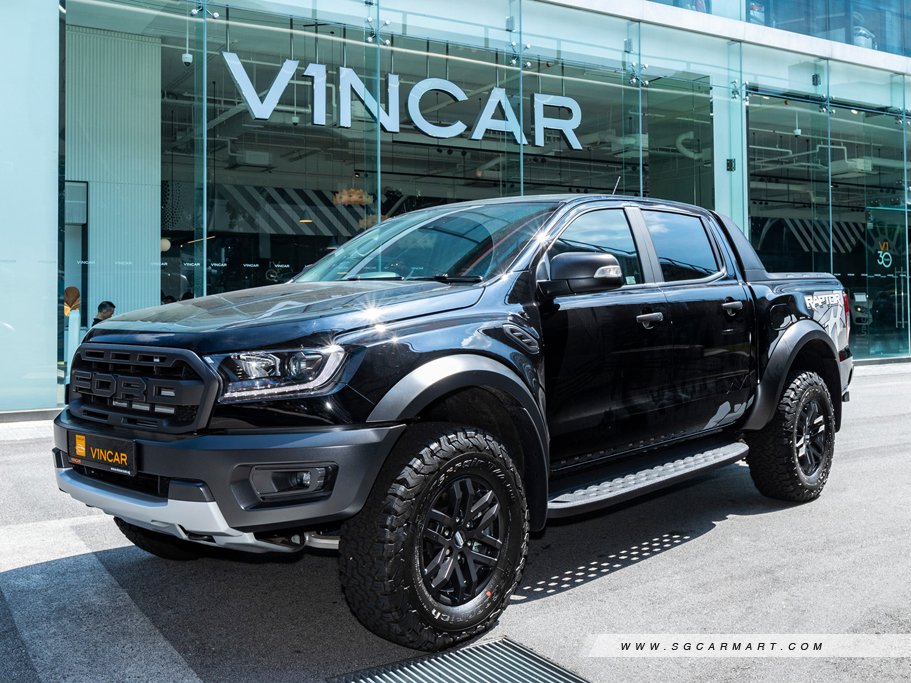
One can notice like obesity rates, cars are also ballooning in size over the years, for seemingly unknown reasons. In fact, it isn’t exactly a Singapore thing, it has been a widespread global issue often swept under the rug.

To add on, in LTA’s recently published numbers of recent car registrations. SUV registrations stand out the most, accounting the highest quantity of vehicle registrations EACH and every MONTH. Highlighting their strong popularity amongst Singaporeans.
LTA: New Registration Of Cars By Make in 2025
So, what exactly is causing the uptake
For simplicity’s sake, I will also count Crossovers as SUVs (Vezel/HR-V and cars similar to it), as they are technically called SUVs according to car rental companies, dealerships, and LTA’s registrations.
Reality Check Please?
So quick rhetorical question here? Historically, why do people need these megaton tanks? A quick summary of the history behind SUVs becoming mainstream are:
- In the USA, foreign car companies were gaining popularity fast, with much of their demand coming from stealing marketshare from American Car Manufacturers.
- During a trade war with European nations (Read Chicken Tax for more details), European Light Trucks (such as vans, lorries) were one of the goods heavily tariffed in retaliation of the EU implementing a US tariff on USA Chickens.
- This left a void in the commercial vehicle market, which incentivized American car-makers to promote their gargantuan SUVs and Pickup trucks to North Americans as “the perfect family vehicle”.
- Further gained popularity worldwide as Carmakers marketed the idea that these vehicles are awesome outdoor recreational machines,
- CAFE requirements hit USA SUVs, that prompted SUVs in the USA to enlarge yet again, and indirectly affected global markets where a few American vehicles are exported to.
- ??????? (Yes, I personally can’t find much link between the SG Market and the US Automobile Market)
- Stonks! Big bulky vehicles are available for sale in SG!
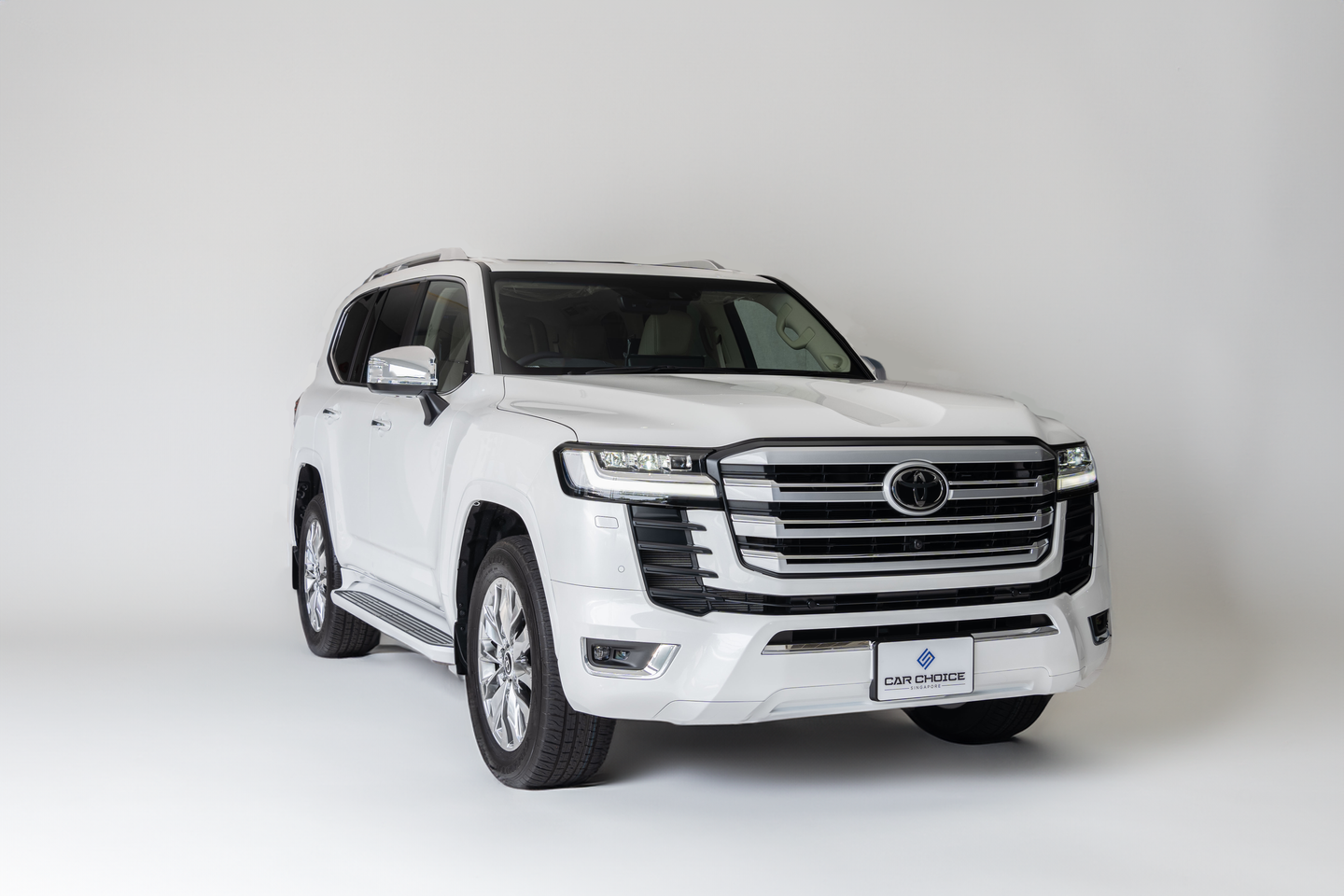
Boring history lesson aside, the SUV has come a long way since it’s popularity boom in the 20th Century, for better but mostly worse. Now in the present time, having becoming a driver myself (since September 2023) and mixing around with plenty of car owners and their discussion groups, what do Singaporean drivers think of when they opt for an SUV-type vehicle (or at least, radically defend SUV purchases being rational)? Let me bring out some of the common arguments.
Hauling heavy loads? – Based on my anecodal experience, most of these megaton vehicles only carry one person, the driver himself. And maybe two people for chatuffured “limousines”. And the items transported around often don’t require much space.


Moreover, the existence of “luxury SUVs” makes this point half-moot. We know for sure anything “atas” branded, rarely are used for their intended purposes (muh resale value, duh).
Larger families in Singapore requiring bigger cars? – It should be noted that household sizes have been on a decline since Singapore’s economic boom. The country’s TFR (from the sources shown below) has reached all time-lows, the statistics suggest that most new households either have one, or no children to raise. So no, families that require vans are still in a minority. If anything, the research suggests that coupe or smaller cars would be more popular than the SUV/ oversized MPV craze we are going through right now.
Marriage and Parenthood Trends – Singapore
Flood-Proof Automobile? -… The argument I heard of is that the monsterously-mounted chassis essentially levitating above the ground, allegedly saves the car from water submersion damage. Unlike these poor sedan chaps pictured below.

However, is it really worth dealing with the additional liabilities using an SUV brings (more on that later)? Moreover, while flooding in Singapore has been common of late, they still mostly happen once in a blue moon (even counting all the mild “ponding” reports). And if they do happen, insurance would cover it under the “act of god” coverage. Additionally, there is no guarantee the flood that stalled a sedan, wouldn’t stall an SUV.
Sure, one could argue to live and let live. However, the presence of SUVs in Singapore has brought upon the island issues. So let’s elabarote on each of them.
The problems with SUVs
(Note; list is not exhaustive)
A regression in road safety standards
One of the most notable things, is with the taller height of the vehicle, it develops a larger, blindspot at the front zone.
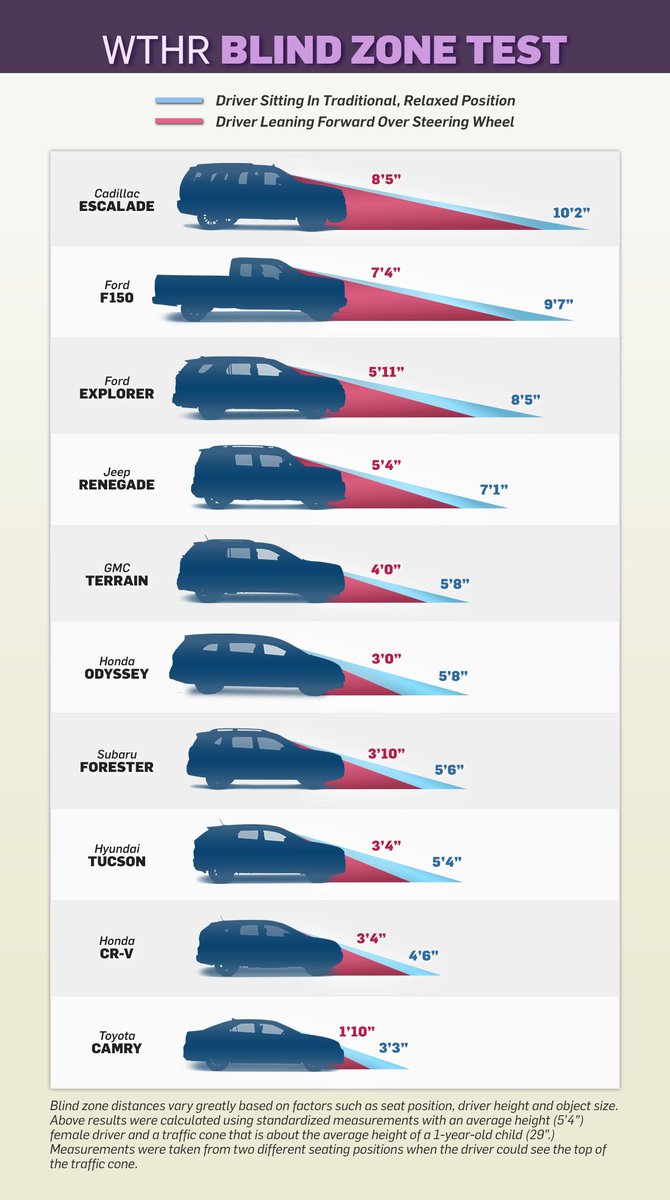
And unlike with the typical “over-the shoulder” blindspots, there is no “easy solution” to resolve it. The driving school method of checking your shoulder blindspots (looking over your shoulder) does not help. The only way to bypass this weak point is through capitalist cronies (cough, techbros), whom would resolve the issue at a price; blindspot sensors and cameras. Classic “create problems, sell the solution” plan. Where did I hear of this before?
Even if this frontal blindspot is magically solved overnight, a taller hood still significantly elevates the chances of fatalities, for both other cars and pedestrians. By mucking up the crash compatibility with vehicles and humans alike.

https://www.youtube.com/embed/MSST-tix9IE?feature=oembedAs shown in the video, both parties walk away with sigificant injuries should SUVs and Sedans crash head-on
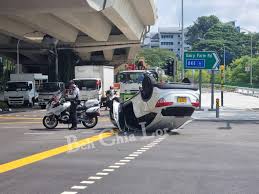
As a driver, another responsibility SUVs bring us is handling its poor aerodynamics. The tall body of SUVs recenters their centre of gravity higher. This means it is more prone to flipping like a pancake; sharp turns ought to be taken slowly, or it could cause the vehicle to topple. And knowing the typical Singaporean driver mentality (hint: kiasu) of always running yellow lights, failing to slowly down at bends, and incessant “need” for speeding, it will not fare well for road safety.
Increasing Congestion

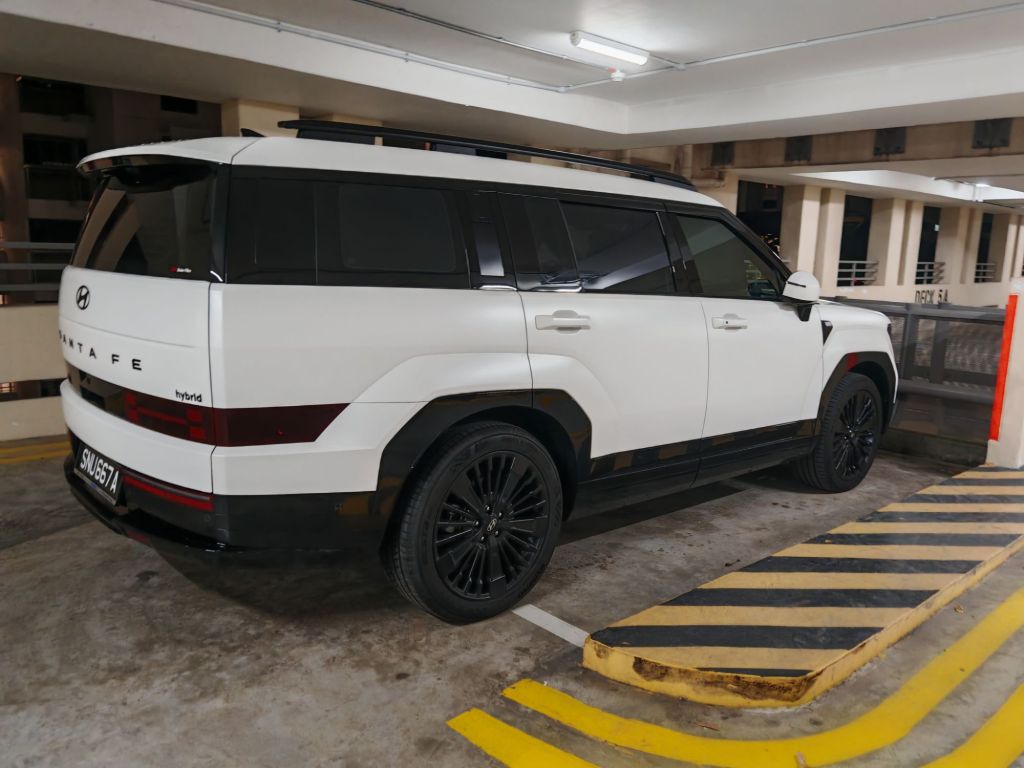
The longer the car, the more space it takes up. That is like saying every 60 seconds in Africa, a minute passes I know. But let me elaborate. Take a full SUV-like vehicle such as the Hyundai Santa Fe. According to the manufacturers’ specifications (Note, click on “brochure” to see Hyundai’s Spec list), it uses a concerningly stretched 4.83 meter body. While it doesn’t look like much on paper. Consider this, cars do not just waste the space, when stopping behind a car, there needs to be a bit of space allowance, which often ends up with well over 5 meters of road space wasted to hold one SUV. And when cruising on faster roads, keeping a safe distance of at least 2 seconds, often means several SUVs worth of space (read; 10-15 meters of a space gap, excluding the space wasted from the SUV itself!) is completely lost.
The mathematics checks out, it is gospel that cars are damned unsuitable for limited land areas like Singapore island itself. Of course, other parties have documented this fact longer than this blog has existed.
Land demanded
Even when these cars are not driven, they passively pose probems. Being elongated compared to the typical car, most of these SUVs cannot fit into existing parking lots. Often requiring to exceed the lines, or else they would collide with an object. One can notice that newer carparks, such as HDB BTOs, have had to increase their lot space allocation thanks to the influx of these tank cosplayers.

An SUV’s truck-like characteristics also make it difficult to navigate tight areas. The taller hood makes it more difficult to look for smaller obstacles ahead of you, and it is difficult to estimate the vehicle’s proximity to collidable objects beside the car. Unless you have forked out money for the 360 degree cameras, good luck meandering through tight spaces!

Fuel Guzzlers
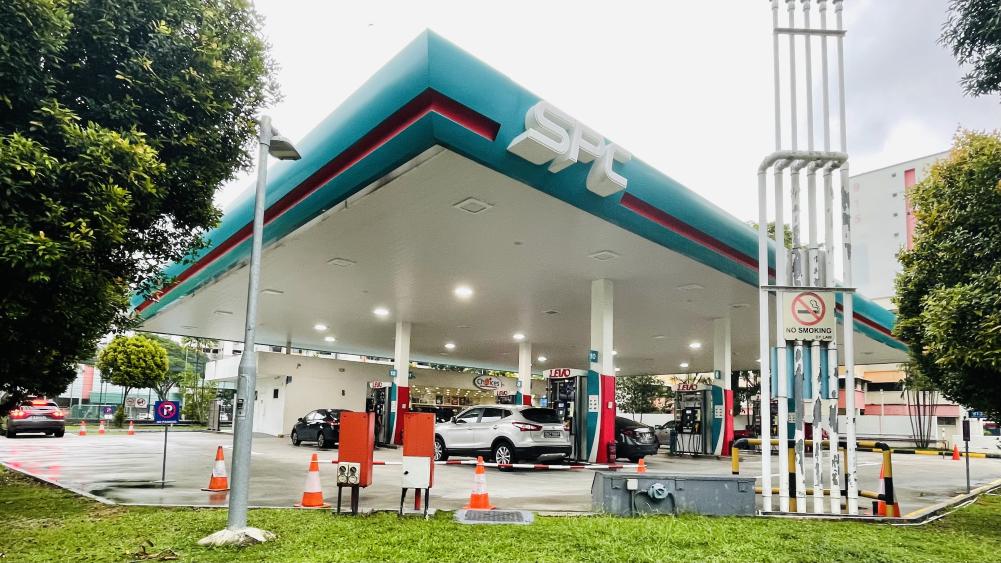
In my opinion, if an individual’s daily vehicle is a big SUV, their privilege to ramble about high fuel prices should be outright revoked. Because SUVs suck fuel like a vampire. And with petrol and diesel selling much higher than MSRP elsewhere due to Singapore’s fuel tax, having a fuel-efficient vehicle is all the more important. And sorry to say to all Clint Eastwood wannabes, the relationship between a bigger and “badder” SUV to fuel economy is inversely proportional.
For references, with my daily drive using a Subaru Forester, my fuel usage is around 9L/100km or more. I suppose the large displacement engines that SUVs come with plays a part, along with the obnoxiously substantial curb (dead) weight I have forced to carry. Even if all the stars aligned for the greatest fuel economy; using a super light foot, cruising on expressways most of the time, air-conditioning and vehicle electronics set to low. The best I was able to achieve was still only around 7L/100km, according to the car’s onboard computer.


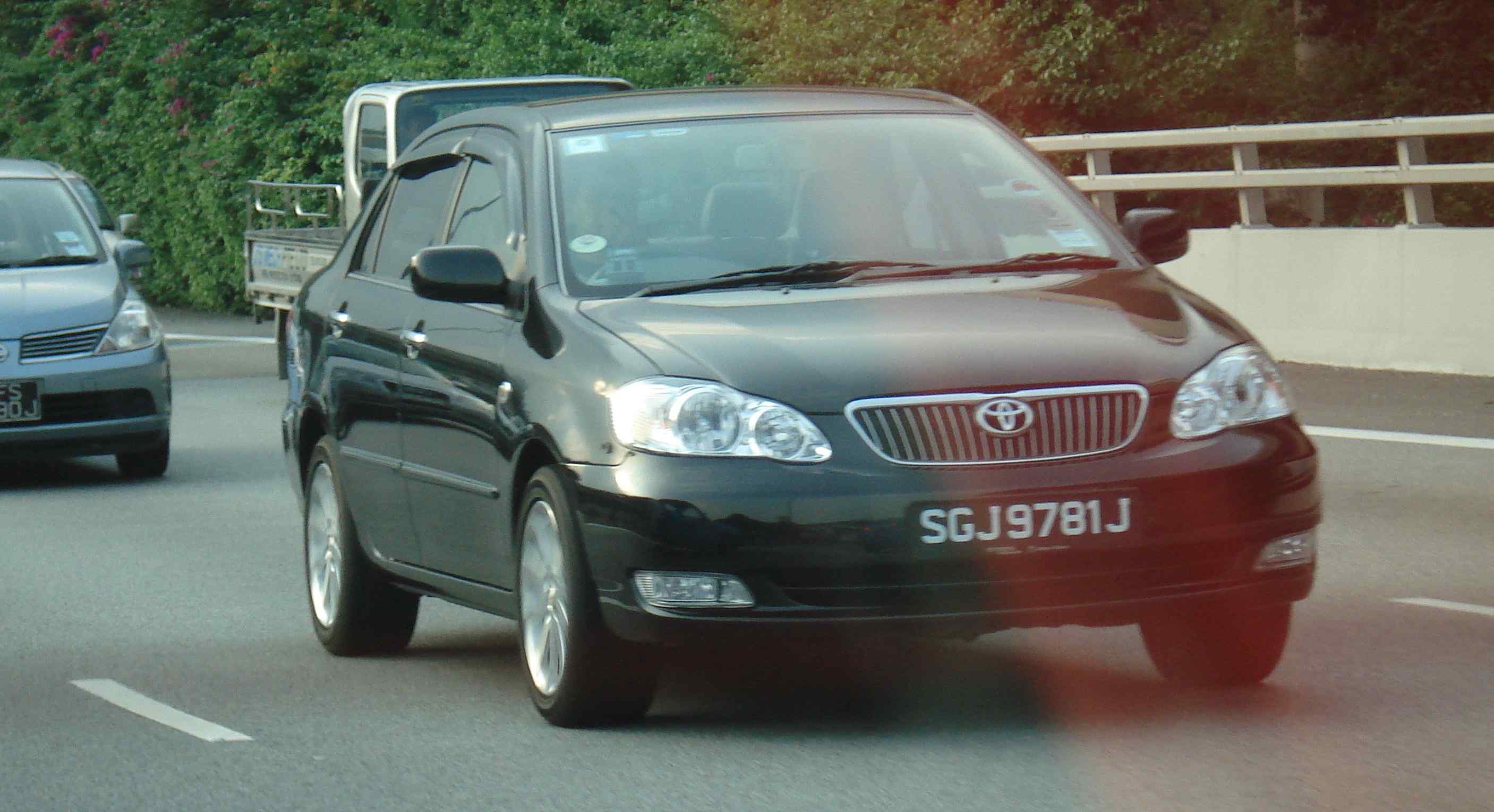
But this number is still pathetic in comparison to a smaller vehicle. For instance, I once rented a Toyota Corolla Altis, and managed to achieve 12.3km/l. That is around 8.1L/100km, without even trying hard. And in the off-chance I were to drive efficiently , I could go as low as 15.1km/L (6.6L/100km) (Unpictured).


While the differences seem minute for those with bigger wallets, the additional fuel costs adds up, not to mention more expensive servicing (even Crossover tyres are more expensive than Sedan tyres for some car models with large rim sizes). It’s like comparing the smartest student to somene only doing averagely at classroom grades. Smaller form factor vehicles with equally moderate engines, have much better fuel economy. Unless one is free enough to battle the congestion to Malaysia frequently (and potential risk of getting fined for bringing your car with less than 3/4 tank), an SUV’s running costs are financial suicide for anyone earning below five figures a month.
Given the endless list of outright terrible downsides SUVs bring, it does feel as if the ones who do choose these vehicles are trying to compensate for their ego (bigger is better! Right?). Which does bring another question, if these vehicles are ridiculously problematic, wouldn’t there be legislative action taken?
Erm, ackshully…”Value” & Outdated preventive measures
On the other hand, some of these issues are caused from the lack of governmental regulation. The prices differences between SUVs/Crossover against comparatively cheaper sedans is not much, given how Singapore’s prohibitively high car taxes bridge the minute price gaps between car prices.
Road tax has also been less helpful at stopping people from gravitating towards bigger cars. If you check on a road tax calculator today, you can see the tax is calculated from two factors, engine capacity, and vehicle age. There is no additional tax on heavier vehicles, car type (i.e kei automobile, sedan, crossover, SUV), or anything discouraging an individual from owning a bulky automobile.

This is how you get this strange situation, which a gigantic SUV would fork out the same road tax as a normal-sized sedan. That is the reality with the Hyundai Santa Fe Turbo (which is a sizable part of my loathe to that accursed model), as it’s engine only has a displacement of 1.6L, which is the same as numerous compact sedans like the ever-popular Corolla Altis.


Lastly, one thing not many point out, the purpose of COE, which forms the main bulk of a vehicle’s taxes, is to limit the number of cars on the road, not so much limit their sizes.
This is how another strange situation takes place, which SUVs with smaller displacement engines get cheaper taxes. For example, the Mercedes-Benz GLB 180, a rather large Crossover, only needs a CAT A COE, whereas the Toyota Prius, a sedan-like hatchback, has to fork out more tax for the COE as it uses the “premium” CAT B COE because whoops, the engine displacement is 1.8L.


If what’s above is too much of a text wall, the summary is; COE and the current Road Tax formula, are becoming increasingly less useful at limiting car sizes.
But while ensuring proper sticks are in place, the carrots used to lure people away from these vehicles are. Ironically, they actually make the situation worse.
Take the EV incentives, that unconditionally are applied to any non-Internal Combustion Engine (ICE) vehicle. With most of the mainstream EV models being Crossover SUVs (e.g. BYD Atto 3, MG5), the incentives ironically incentivize the sales of vehicles anti-thetical to safety, thereby accelerating the effects of the road arms race. It doesn’t help either that the heavier curb weight of EVs (thanks to the battery weight) makes them more deadly in a crash.
Speaking of incentives, the lack of incentives for smaller cars is also to blame. Other nations, such as Japan, incentivized their well-known kei cars by making their ownership costs lower than a typical car, thanks to tax rebates, cheaper insurance, and if one is living in the right prefacture, the vehicle can be even cheaper from an exemption of the mandatory proof-of-parking certificate.

However, Singapore offers none of those benefits. The only reasons I’ve seen people opt for a kei vehicle are:
- If the vehicle is registered as a goods vehicle (CAT C COE), a “tax rebate” should the CAT C COE costs happens to be lower than the normal car categories during a bid.
- Kei car enthusiasts/collectors, need I say more?
Otherwise, a “normal” car would fare better for the money one is putting down in Singapore. As the Singapore MSRP of a kei car is not much cheaper than a typical vehicle.

It’s only downwards from here with the unwarranted upsize
A concerning trend can be observed globally, that car manufacturers are ending production of “human-sized” vehicles like Sedans, negatively impacting the car market by reducing the freedom of choice prospective buyers have.
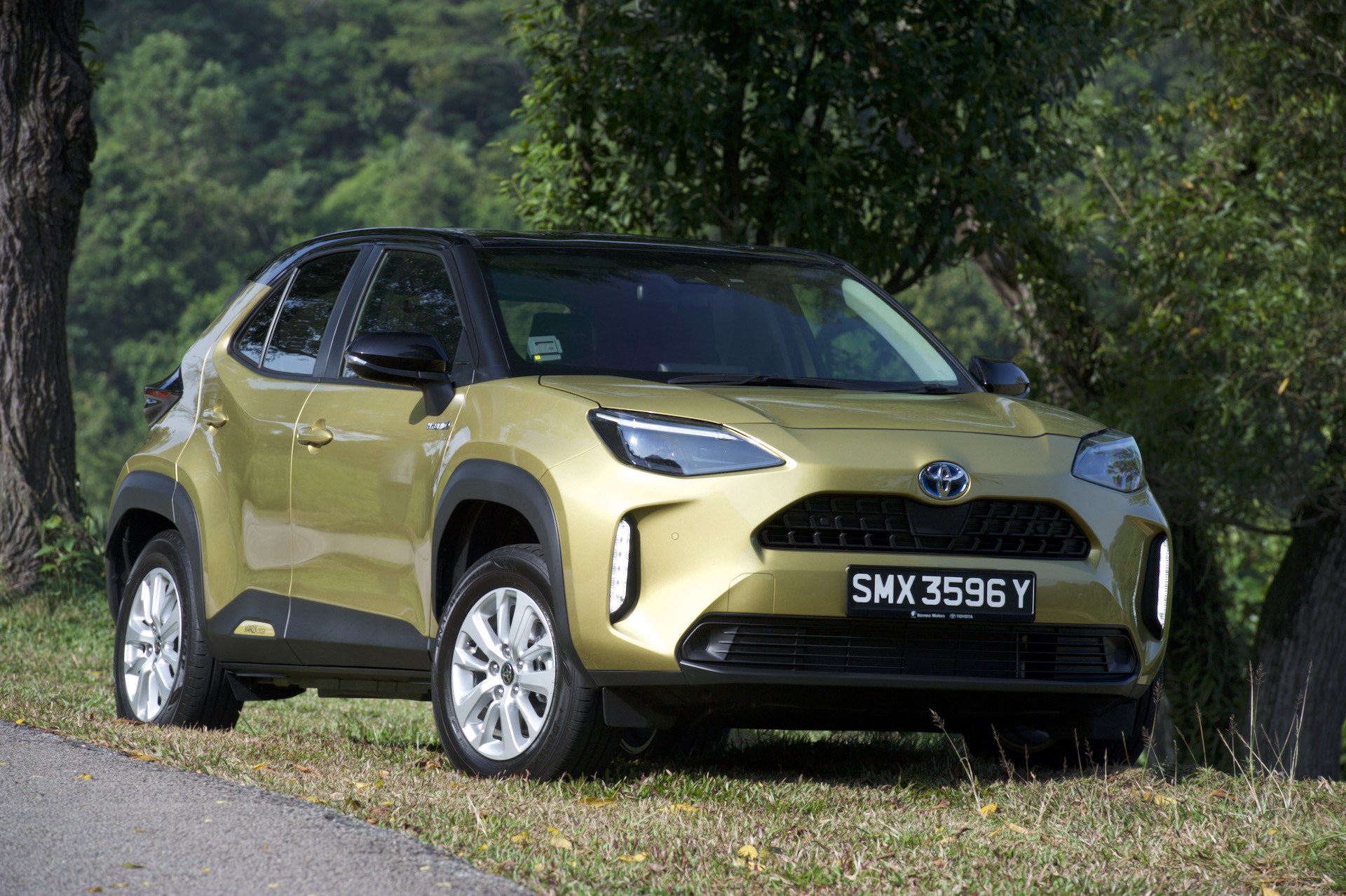
For instance, locally, car dealerships have pulled the plug on most of their low-riding cars. To name a few examples, take a peek at Toyota’s authorised reseller, Borneo Motors. They’ve stopped sales of the Vios, their most entry-level offering, since 2023. Consequently, the next most entry-level car they offer is the pricier, jacked-up hatchback Yaris Cross. Borneo is only a lesser offender in the anti-sedan bandwagon, as they at least still have other sedan cars to choose from.
I say a lesser offender. Because take a look at the other dealerships, which have gone down darker paths, such as the crumbling Nissan and Mitsubishi Motors (cough cough good job Edward Tan Chong Motors!!!!), companies which have dropped support and sales of their sedan and hatchback cars. Nissan’s sedans like the Latio, Versa/Almera and Slyphy have long disappeared of Singapore. Being replaced by Crossover type cars like Qashqai and Kicks.
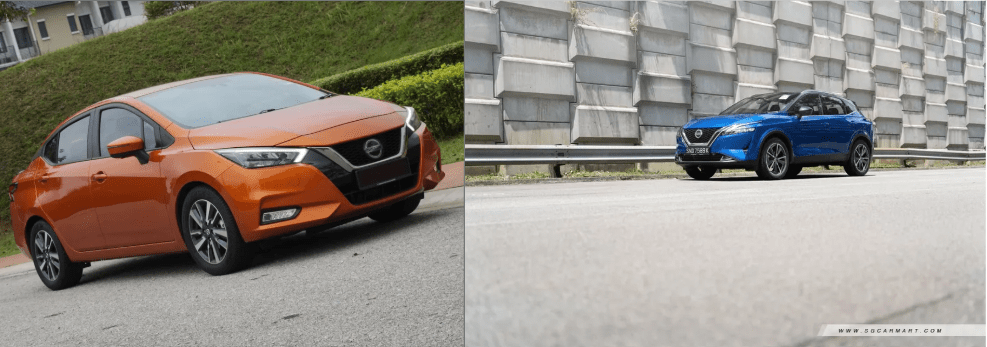
The situation elsewhere, similarly takes a nosedive into car anarchy. Car enthusiasts in the land of the free went Hoohah over the discontinuation of the Subaru Legacy, one of the company’s literal flagship sedan models.
Even in markets which take road safety a tad more sanely, the status quo is now molded to supporting the new normal. Over in the EU, the Volvo CEO himself admits to joining the SUV revolution. And let me remind you, Volvo is the brand that is synonymous with safety based on their track records. Yet they have decided to make deals with the devil, producing the most unsafe passenger cars known to mankind
With Corporate Social Responsibility clearly being thrown out the window. Resolving the SUV/Crossover crisis unfortunately means the onus of the responsibilities fall under a individual’s hands. And no, the solution isn’t to play the griefer on others, a move that I’ve seen many hostile activist groups perform online.
Solutions (Individual Perspective)
Now, for any potential car buyers, you can go against the SUV craze by picking safer, more size and cost-efficient vehicles. There may be fewer choices than the past, but any sedan bought with your money talks. For instance, for those who require a “luxury” vehicle can always choose from any of the premium sedans most carmakers have in plentiful stock. The “editor’s choice” I have at the moment is the (relatively) newly-announced Toyota Camry.
https://paultan.org/2024/08/29/2024-toyota-camry-now-in-singapore/embed/#?secret=D0IDAvOaNV
And for those looking for vehicles with lots of space, do note that SUVs’ curvature and geometry is inherently space-inefficient. Unless your cargo is usually tall, sedans ironically have more space, even the smaller ones!

As such, those looking for vehicles to actually haul items should stick with station wagons (or similar-bodied vehicles), or a Multi Purpose Vehicle (MPV) with ample boot space.
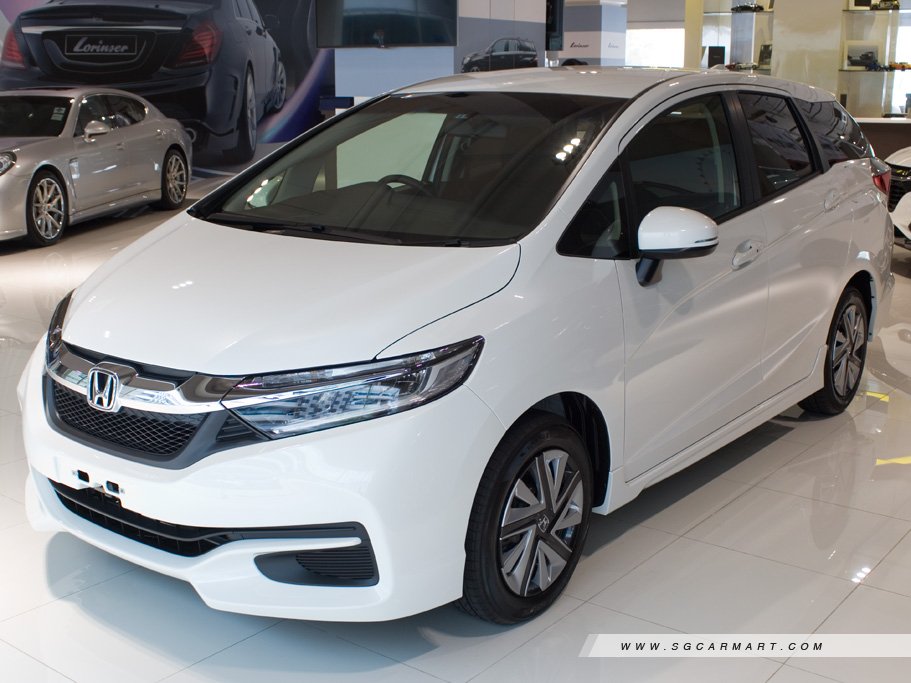

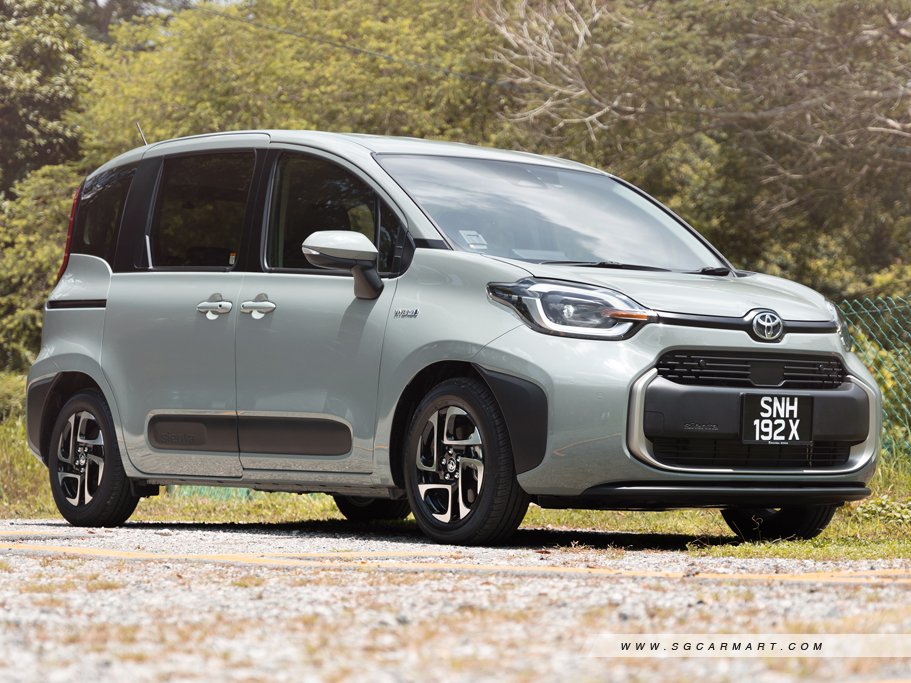

Similarly, if you are in the market for finding a people-mover car, MPVs will beat 7-Seater SUVs ten-fold, thanks to the array of passenger features aimed at comfort (and not well, unnecessary curves and deadweight), such as more cabin space, spacious legroom and automated doors for minivans, which are lacking in many SUV models.


With that being said, at the end of the day, the best car for future sustainability efforts, is to simply not need one at all. But understandably for those whom do need one, make decisions based on rational factors like safety, fuel economy, rather than ego.
Solutions (From a Governmental Perspective)
Of course, LTA and the relevant governmental powers should also be stepping in to halt the growth of these deadly, unsuitable, unsustainable suburban vehicles. There has been many talks around taxing cars outside the COE system, such as distance-based charging for vehicles under ERP 2.0 (which I never liked). But honestly, this debate has been detracting discussions into fighting the wrong battle, as SUV dominance stealthily takes over Singapore.
The main point of contention is how cars are taxed in Singapore, notably on road tax and COE prices. As for too long, Singapore has been using the outdated model of taxing vehicles by only their engine capacity and open market value (OMV). A COE reform could assist in discouraging SUV usage. Rather than the current “blanket” tax on taxing COE type based on engine power, perhaps the taxation system should be amended to punish those with heavier vehicles.

At the very least, road taxes should include vehicle kerb weight in the mix, as road wear and tear is affected by the weight of a vehicle. And charging heavier SUVs more for the additional damage they inflict on road infrastructure, is only fair.
My absolute favourite proposal, would actually be an increase in parking fees for SUV-type vehicles. After all, they often occupy more space than allocated per parking lot. It isn’t a distant fantasy either. Thousands of miles from our red dot, in Paris, France, locals had voted in favour of increasing the parking fees of SUV by 3 times of a normal vehicle. It may have helped the election happened during a car turmoil from the incumbent Mayor at that time.
BBC: Parisians vote for rise in parking fees for SUVs
5 February 2024
This case study also gives a good way to end off, like I said in my last post, remember each of you hold the voice of the people! Much like how the Parisians were able to discourage SUV adoption with enough political pressure, the same can be said for Singapore (or other countries, wherever you are from). With enough people giving feedback of the problematic SUVs, it would become big enough of a talking point, that change will happen. As of writing this, GE2025 had just concluded, so take this opportunity to network (i.e. get to know) with your MP, and bring up the SUV issue as a point of contention. With enough time, we can use legislative action to dismiss SUVs in Singapore.
Join the conversation here, and don’t forget to press the like button! Thanks for reading STC.
Bonus Content:
Below is a list of car models the author (@lemonnarc) has driven since getting his license (updated as of May 2024). In my opinion, it is quite a comprehensive list covering ranging from compact hatchbacks, to large, luxury MPVs, that you can be sure everything I’ve described about the experience driving the cars, aren’t malicious falsehoods.
Honda
● Fit (GR1)
● CR-V (4th Gen, RM1/2/3/4, pre-FL)
● Freed Hybrid (GB7, Facelift)
● Vezel/HR-V (RU, X Parallel import variant for Vezel)
● Odyssey (RC, EX-S variant)
● Shuttle Hybrid
Hyundai
● Avante (4th Gen, HD)
Kia
● Cerato Forte (TD; 2008)
Mazda
● 2 Skyactiv (DJ FL)
● 3 Skyactiv (BN)
Mercedes-Benz
● E200 (R17, W212)
Mishibushi Motors
■ Attrage, A10 First FL
Nissan
● Elgrand (E52, 2014 FL)
Opel
– Corsa
Renault
■ Grand Scenic 4th Gen
Subaru
● Forester (2017, SJ, FL ;2014)
Suzuki
■ Swift (A2L, )
Toyota
● Aqua Hybrid (XP210, NHP10 FL)
● Vios (XP90 FL. XP150, FL and non-FL)
● Corolla Axio (E160, manual)
● Wish (Both AE10, AE20)
● Prius Hybrid (XW50)
● Corolla Altis (E140) (E210)
● Sienta (NSP170, G Variant)
● Yaris Cross (XP210)
● Yaris (XP150 FL)
 Singapore Transport Collective
Leave a comment