

There’s been an interesting spate of collaborations between public transport operators and other mobility lately, and some of them have been particularly intriguing. In particular, the recent collaborations involving SBS Transit have been… interesting, to say the least.
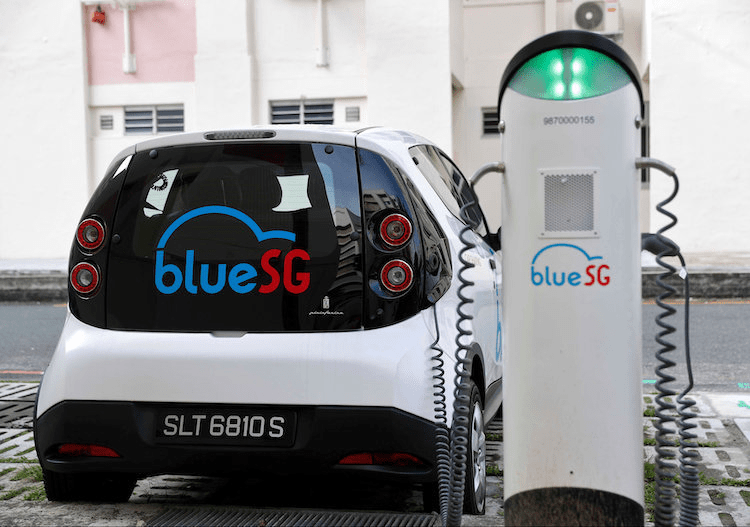
In 2023, SBST inked agreements with Anywheel to support the provision of bike-friendly amenities near Punggol station. (Another agreement was signed this year, giving rise to the “SBST Rail and Bus” events on the Anywheel app) The following year, another MOU was signed with GetGo, to establish a car feeder system around stations of the DTL and NEL, which drew bewilderment from us and the public alike. Just what the heck prompted them to invent such initiatives, which damage the credibility of “car lite”, and undercut their own bottom line anyway? On a side note, nothing has been heard of the SBST x GetGo car feeder initiative, so it’s anyone’s guess what happened since the initial announcement.
But what’s the motive behind these borderline inexplicable first and last mile initiatives in recent times? I suspect, it has got to do with yet another attempt at cutting losses, because of the way our fares are structured.
For those less acquainted with our fare structure, it’s basically a logarithmic distance-based fare system, comprising a relatively high base fare segment, followed by “steps” — increments to fares per additional km travelled. Based on a revenue allocation system where fares are allocated based on directly collected amounts, this also means that routes serving the first legs of major commute patterns will inevitably receive the lion’s share of fare revenue, despite often not carrying passengers for long distances. This explains why feeder bus services frequently rank near the top in terms of farebox recovery — most commuters who do not live near MRT stations tap on feeder buses first in their morning commutes. Under the current fare system, each adult passenger on a feeder bus automatically pays $1.09 (as of Nov 2024) out of a maximum possible $2.37. (If you’re reading this after 28th December 2024, it’s $1.19 out of a max possible $2.47) Concession fares are discounted of course, but this principle of a large base fare still holds true, if not more so than adult fares.
It seems weird for SBST to want to throw away feeder fare revenue through introducing what’s basically substitutes for feeder bus services. Understanding our fare structure, and the way it’s split across various modes however, gives us an inkling as to their motive.
This is merely a guess, but what if the real intent behind these collaborations was to engineer a shifting of fare revenue to the rail network? By having commuters tap in for the first time into the MRT directly (because they reached the station using some form of other transport), the base fare is paid to the rail network instead of the feeder bus. Considering the PTC’s famous gaslighting phrase “every public transport ride is subsidised a dollar”, it’s a pretty lazy and managerial way to go about countering that comment — simply by moving the figures around to make things less ugly on paper. So maybe, they were just going after the potential extra $1.09 per rider to be had from getting them to tap directly into the MRT? Would it hurt feeder services to prompt service reduction interventions? Hardly, but it definitely would make the rail lines perform better on financial sheets.
Perhaps that’s SBST’s way of wooing LTA to award them rail packages (brief reminder that rail lines are now tendered on a similar basis to the Bus Contracting Model, using the gross cost contracting model framework), such as the recent announcement of them winning the Jurong Region Line. These initiatives would give SBST the most benefit on the JRL too — buses in Jurong West and Tengah are mostly not operated by SBST anymore (after SMRT won the bus package), making it truly a matter of clawing fare revenue from SMRT and TTS to sustain the JRL on the limited finances their bid asked for. It’s no small amount — shifting the base fare from buses in the west to the JRL would mean an additional $100,000 in revenue a day (initially, to increase to about $350,000 a day if the 500,000 projected daily ridership does materialise). Would this huge bet pay off even? Time will tell.
I’m merely hazarding some guesses about the bizarre initiatives of late — have I missed out something? Regardless, we’re getting shafted anyway — be it bike-share or car-share, they’re not cheap (because their fares aren’t integrated with trains, unlike feeder buses), and it’s at least a good dollar or so more per direction travelled. Yikes.
Join the conversation here, and don’t forget to press the like button! Thanks for reading STC.
 Singapore Transport Collective
Leave a comment