

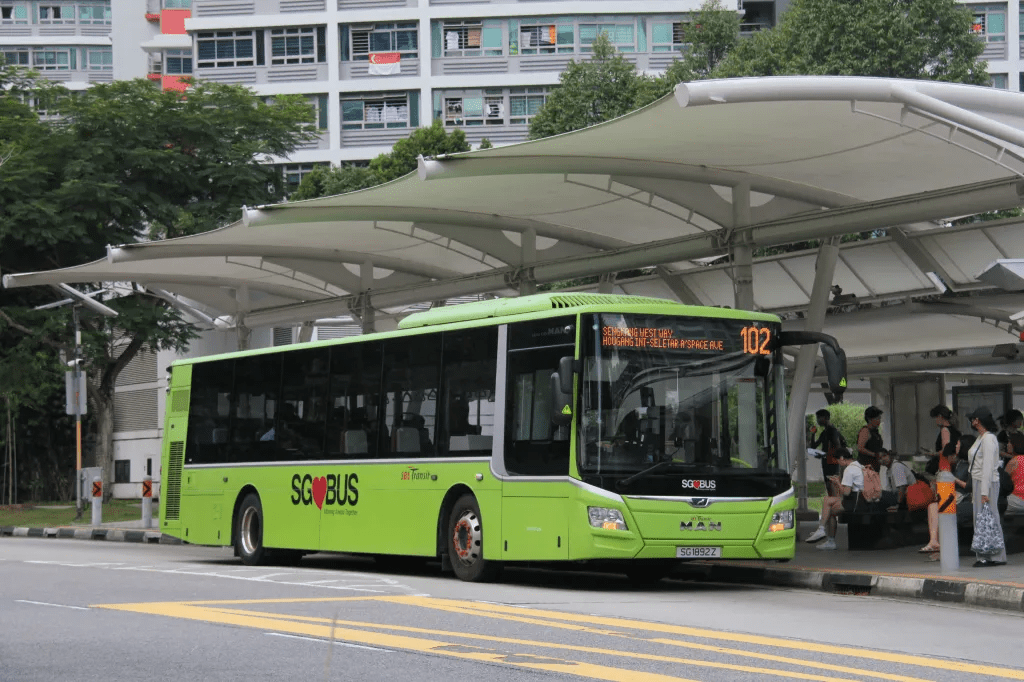
cover photo by @averagematcha
What do the recently-launched Service 298X and the generous spread of new City Directs (recently rolled out, with even more to come) in the northeast have in common? Besides both of them taking on an “express” route profile, with one being an express feeder and the other being a peak express service (as the name “City Direct” implies), their other commonality is the root cause of why the recently-announced Bus Connectivity Enhancment Programme (BCEP) is bound to flop. By the way, this problem isn’t new — its damage can be traced back to when the Bus Contracting Model (BCM) first began, but while it’s been a “hush-hush”, “under the table” thing back thens, there’s no running from it under the BCEP. It’s simply so in-your-face with the new season of bus planning, that it would be highly disingenuous to disregard it, or not talk about it at all.
With 298X having been memed sufficiently especially among enthusiast circles, let’s talk about the bigger fish in the northeast, the recent rapid additions to the City Direct network there that is best described as spam de deluge. On the surface, it really looks like Christmas came very early this year for the northeast — aside from the new Buangkok bus interchange (opened Dec 1) and Punggol Coast station (opened Dec 10), a whole slew of upgrades and expansions to the City Direct network in the northeast are underway. Just to give you an idea of how extensive these upgrades are, here’s a list of City Direct upgrades in the fourth quarter of 2024 alone:
- CDS 673 (Punggol North) introduced, commencing 14 Oct
- CDS 671 (Sengkang West) and 672 (Hougang) extended to Suntec City, effective 11 Nov
- CDS 660M (Buangkok Cres) introduced, commencing 11 Nov
- CDS 654 (Sengkang East) extended to start from Anchorvale Cres, effective 11 Nov
- Additional trips for CDS 666 (Punggol) and extension to Suntec City, effective 25 Nov
On top of that, even more is to come: Four new City Directs will begin operations on 2 Jan 2025, serving Yio Chu Kang Rd and Buangkok Green (675), Hougang South and East (676), Buangkok East (677) and Punggol East (678). This is on top of further enhancements to existing City Directs in the northeast made prior to 4Q 2024, with 671 and 672 receiving additional trips in May 2024, while 660 and 671 received more trip adds the year before. Besides that, another major development (across City Directs in general) is the extension of some routes to Suntec City, where most routes would have traditionally ended (and began) at Marina Bay, beginning with 673’s introduction and subsequently the extensions of 666, 671 and 672. Combined, the northeast has the highest intensity of City Direct coverage (and service) of any region in Singapore — a whopping 31 City Direct departures across seven routes in the morning! (By January, this will be 39 departures across 11 routes!)
Paired with the recent expansions of the Travel Smart Journeys initiative, the intent is clear. It’s all part of a concerted effort on LTA’s end to decongest the NEL, which has been severely overcrowded for years on end. Similar to their counterparts in western Singapore, residents in northeastern towns such as Hougang, Sengkang and Punggol pretty much have to rely on the NEL to get anywhere, because it’s the sole line serving the northeast. One disruption to it anywhere and three entire towns with nearly a million people are pretty much left stranded. Unlike their compatriots in the west however, the 2003 bus rationalisations also mean that no real bus alternatives exist for a good number of them too. This “worked” for a while when the northeast had a negligible population (the 2003 irrationalisation was conducted on two grounds: bus-bus duplication between local services and insufficient demand to justify additional trunk services on top of the NEL and APM lines back then. Remember that Punggol was practically no-man’s land even a few years after the NEL first opened!), but as the population shot up over the years with HDB’s relentless launch of new BTO projects there, it was pretty obvious it was going to fall apart. And it did.
Today, the NEL is the most frequent line in the MRT network (consistent 1m50s in the morning, and 2m15s in the evening*), and out of necessity. Despite this consistently high frequency that comes close to stress-testing the limits of the signalling system, as any resident of the northeast can tell you, it doesn’t stop them from being unable to board the train in the morning anyway — even outside the worst of the peak hours, it’s still common to have to miss a train or two as long as one is travelling in the peak direction on the NEL, and delays snowball into an immense backlog of left-behind commuters on the platform — while more passengers continue to swarm in, from the APM/feeder buses in the morning, or from the other rail lines in the city in the evening. The revived TSJ in recent years, coupled with some hearsay of a “great north-east relief program” being orchestrated within LTA’s bus planning department, are an indication of LTA at least recognising that the hub-and-spoke approach has been pushed beyond its limits, at least in the northeast, with alternatives in the form of additional City Direct routes necessary to offload the pressure from the NEL.
There’s another significance to encouraging new bus connections in the northeast in general — as much as the NEL is bursting at its seams (with 1 million daily riders and counting), the population growth of the northeast is not abating — even more homes are expected to be built in the coming years, right where the NEL is at its most saturated:
What’s wrong?
Does it sound self-contradictory to oppose the new City Directs planned, when they could potentially become alternative travel options for northeast residents heading into the city? Yes, on a surface level, but as anything that’s too good goes, sometimes the caution is worth it. On the most surface level, the planned expansions to the CDS network in the northeast are… mediocre at best.
You see, while it’s great to hear of City Directs being extended to Suntec, as well as having new routes being introduced, the reason why they exist is because northeast residents want to get to their downtown workplaces faster than the hub-and-spoke route via the NEL. Unfortunately, when it comes to adding new routes, a few critical blunders mean… sure, the money’s been spent and the buses are running, but ridership doesn’t appear despite promising potential demand.
Take the case of the new CDS 673 connecting Punggol Northshore to Marina Bay and Suntec. While calculations to demonstrate travel time disadvantages in other situations often involve complicated math around transfers and non-IVTT, 673 loses to the NEL/TEL option in IVTT itself! What would be at most a 75-minute ride with a feeder bus, NEL and then TEL or DTL to the city takes a whopping 90 minutes by 673, according to its schedules. It’s more than just a failure of the OTA metrics used to evaluate express service standards — it’s also a failure of 673 itself to become a serious travel option for Punggol North residents wishing to skip the NEL. As it stands, they vote with their feet — two months after 673’s introduction, the buses still hardly get enough demand to fill all seats, despite its heartland catchment being a sufficiently populated estate. This is before we even mention the sort of demand these City Direct extensions get to Suntec.
Past The Sail, the penultimate stop for most City Directs (in the Marina Bay group) prior to the recent Suntec extensions, demand on Suntec-bound CDSes like 673 drops to practically zero, insufficiently significant to be recorded. According to some accounts, there would be at most one passenger on the bus after discounting bus enthusiasts joyriding on board. How long is the ride to Suntec? A whopping 18 minutes from Marina Bay to Suntec City! For comparison, trunk 106 that takes the exact same path between Suntec and Marina Bay covers the same distance in 8 minutes, assuming red lights all the way. If that sounds bad enough, wait till you hear of the schedules on the 671 and 672 extensions — it’s said that 25 minutes is given to cover this measly distance in the city!
Frankly, the Suntec extensions to City Direct routes already make no sense, and these atrociously slow schedules only drive home that point further. Heck, with such loose schedules, a bus captain on CDS 671 or 672 could afford to take a massive dump inside MBS, and still depart the CBD area on time! (Schedules for OTA-based expresses are loose in general too, but so far not to the extent seen here) Who in their right mind would ride a bus that still doesn’t exit the downtown area after half an hour, when they could be already halfway home on the train? Which Suntec worker would use these City Directs for their commute, against LTA’s expectations for these route extensions?
Let’s put this aside and return to Tampines, the site of Singapore’s first “express feeder”. Launched on 9 Dec 2024, service 298X is intended to “enable faster connections to Tampines MRT for Tampines North and Tampines West residents”. Has this really been the case however?
Even a surface-level analysis of 298X’s performance concludes in the negative. Unironically, 298X barely offers any travel time advantage over its parent 298 — with a full trip on 298X scheduled to be merely 4 minutes faster than on 298. For context, a full trip on 298 typically takes 60 minutes. Perhaps it’s because of the ridiculously loose schedules. Perhaps it’s the red lights holding up the bus anyway. Perhaps 298X wasn’t even intended to be fast. Whatever the case, it’s baffling how a route branded as an “express” variant of its parent manages to attain such a title by being merely two minutes faster — in the world of manually-operated transit, that’s merely a statistical anomaly. Even on the Chinese HSR network for instance, it’s not uncommon for instances of the same service with identical stopping patterns to have runtimes differ by more than 10 minutes! On what basis does a service saving only 2 minutes each way compared to its parent qualify to be labelled “express”?
The absurdity of 298X doesn’t stop there. Buses on 298 and 298X are scheduled to bunch out of Tampines North, meaning the increase in buses wouldn’t mean shorter waiting times, on paper at least. Luckily, the bus captains appeared to ignore schedules and depart as they fancied, enabling Tampines North residents to exercise the option of just boarding whichever bus arrived first, thus enjoying slightly improved bus frequencies.

On the far longer nonstop segment comprising the west loop of 298/X, the “express” bus inexplicably stops behind the local, despite a lane being open to overtake along Tampines Ave 3. One wonders why 298X buses even attempt to trace the parent route on its nonstop sector, with at direct route via Ave 1 being much faster due to fewer traffic lights present.

Worse still, it’s plagued by unscheduled stops left and right.
While skipping Our Tampines Hub, a key demand driver across Tampines town, effectively limiting demand for 298X to little more than the peak commuter attempting to reach the MRT station.
To the agnostic commuter uninterested in fluff hype over “express feeder” branding, the introduction of 298X might as well be an addition of special trips on 298 itself that merely call at select stops at the extreme ends of the route besides Tampines MRT. And frankly, that’s about as useful as 298X gets, against the official hype of it being the “next big thing” in buses here. It’s really just a frequency improvement to 298 only for residents living at the extreme ends of 298’s route, headed only for Tampines station. Little can be said about it getting them to the town centre faster than they would have previously.
The rolling pork barrel
To an outsider seasoned in transportation management, but not the numerous shenanigans in local politics, all this just seems so absurd! Who in their right mind, would create an express route that not only is slow, but also wraps around the rail line it’s intended to relieve, such that it reaches the far end of said travel corridor first, before backtracking in a manner that’s equally excruciatingly slow? Why would a feeder service that doesn’t get you to the town centre any faster than its predecessor be branded as an “express”? Besides both being initiatives under the BCEP, both are designed to fail from the very beginning, against even the best intent from LTA and other stakeholders planning the various BCEP initiatives.
Simply put, inexplicable peak express routings and express feeders are the product of putting politics before science in transportation planning. As mentioned above, this isn’t something new from BCEP — through various other means such as institutionalised silo culture within its bus planning department, LTA has slowly eroded its ability to conduct coherent network-based planning in a way that maximises access without necessarily having to resort to spamming buses. During the early BCM era, this meant route amendments and plans being drafted and changed on the whims of local MPs, while still maintaining that semblance of LTA being an “independent”, “neutral” arbiter of local interests in planning the bus network. Those days are no more.
The political element of the BCEP is painfully obvious, it takes one to be blind to miss it while dishing out skepticism for its questionable initiatives. Wind the clock back a few months, and one may recall ardent requests for more bus services put forth by various MPs for more bus connectivity in their respective constituencies. From Amy Khor in Tengah to Sun Xueling in Punggol West and Louis Chua in Sengkang East, each of them have put forth various legitimate grievances in connectivity in Parliament at some point or another, and each time our beloved transport minister has invoked the BCEP to suggest a promised improvement in the works. Let’s not forget the elephant in the room too: the clock is counting down fast to the next general election, which should happen around early 2025. If you will, do remind yourself which party has been dominant in the towns along the NEL too. (Hint: it’s not the one with a lightning bolt)
Casting election chatter aside, it’s surreal to note the nature of initiatives such as the deluge of City Directs in the northeast and express feeders like 298X — almost as if they were conceived out of a political pressure to answer to local politicians hastily. The irony is strong here — do these initiatives under the BCEP not mirror that of the Bukit Panjang APM in the late 1990s, itself born out of political pressure to link Bukit Panjang to the MRT network then? For the lack of a better word, peak expresses appear favourable to the LTA bureaucrats steering the BCEP because it is cheap. Unlike full-day services which typically consume at least a dozen buses or more each, peak expresses can be cheaply operated by simply interlining a couple buses from existing routes during the peak period! Because the fallacy of counting routes is still widely prevalent here, a peak-only express carries the same weight as an all-day trunk, and thus the mentality is simply to spam as many peak expresses to artificially inflate the “number of BCEP routes”, thus improving optics for the bureaucrats and politicians with stakes involved!
In fact, this is why City Directs make up nearly half of all new routes introduced under the BCEP so far — why go through the trouble of planning the resources (or even shoring them up in the first place!) needed to run new trunks when one can simply divert a couple buses to achieve the same effect of “new service number”, right? The extensions to Suntec happen in the same vein — despite being obvioustly useless, they make LTA look like something is being achieved, when honeslty nothing is. I imagine the most enthusiastic users of these CDS extensions are most likely sporadic visitors to various exhibitions held there, who stand to benefit from a direct bus connection at the bus stop downstairs. That’s not particularly stable demand one should be building upon though…
One could explain the taxonomically inappropriate “express feeders” by similar logic too. It’s really just extra trips for 298’s extreme ends, which could have been equally well-achieved by simply improving 298’s frequency (hot trash even by LTA’s own standards set in 2016, with peak hour intervals up to 15 min)! If you think from the perspective of a politician, inventing these hot air initiatives is the more desirable choice by a long margin, especially with the introduction of the “X” suffix for this new category of routes.
A new “298X” is something a politician or bureaucrat can cut ribbons for (even if not literally). Increasing frequency on an existing 298 isn’t, and in current local transit discourse, isn’t newsworthy either.
But the results of placing politics above science in transit planning are predictable: empty buses, unserved demand, worsening service on actually well-utilised routes. Loads of wastage, the exact antithesis of the “judicious use of finite resources” promoted by cost-cutting bureaucrats in LTA’s upper management.
In plain sight
What does it mean to adopt a scientific approach in resolving transit problems? Simply put, it’s by identifying problems as they are, and adopting the appropriate solutions without shoehorning them into any political agenda of the day. After all, political winds are fickle, but conjectures of transport planning (eg branching divides frequency, re APM locally) stay constant as long as the core technology doesn’t change. Often, we’re digging ourselves into holes with all the politicisation around buses — non-problems are suddenly problems because of politically-motivated initiatives making life difficult for passengers and planners alike along the way. So why bother?
The easier can of worms to tackle here is our beloved “express feeder” in Tampines. On the cursory level, 298X should have just been additional trips to 298. Yes, I know 298X and other “express feeders” are introduced on the basis of enabling those staying further from town centres to get there faster. The word faster however, comes in many more dimensions than meets the eye. What express feeders are doing is to hyperfixate only upon the IVTT portion of total travel time. Even so, it’s the part on individual stopping times that express feeders target, without considering other factors such as transit priority, which arguably can be a larger game changer for feeder routes that go through a higher density of traffic lights on average.
I distinctly recall an observation made by the ISB Man on Singaporeans’ perception of travel time — we ascribe too much importance to vehicle speed itself, and in the process miss out other ways in which seconds and minutes are cut. Principally, the value of frequency in reducing travel times seems to be forgotten here, largely because everything is taken to be so frequent we can “show up and go” by international standards (except 167). The far easier, more rational and scientific thing to do to address Tampines West residents’ needs in getting to Tampines MRT faster would simply to run more buses on 298 anyway. In fact, this is how the new 298X is being treated by local residents — take whatever comes first!
If we delve a little deeper, we come to realise that the problem 298X answers is that of getting Tampines West residents to the MRT quicker (aka fulfilling a hub-and-spoke connection). Why not consider strengethening connections to Tampines West station on the DTL instead? It’s closer to 298X’s catchment anyway, so it costs less to operate than the express feeder that is probably asking to get withdrawn by LTA’s internal metrics in due time.

Perhaps, if we’re imaginative enough, this connection could be part of a new trunk route beginning from Kovan, plying Tampines Road before passing through 298’s loop sector bidirectionally, then looping within Tampines East, bridging Tampines East and West. (Does the route look odd to you? Well, the room to truncate or amend it through the future PLAB town always exists….). It is this sort of bus connections that enable residents to go places, rather than the very narrow view of just the nearest town centre espoused by express feeders under the BCEP!
Why the cycles matter
The problems of the northeast can be boiled down to one problem: The NEL is the only sane way out, barring the TPE expressway bus connections. Unfortunately, this also means the NEL is a route that must be traversed regardless of destination for northeast residents. With the nearest interchange station only at Serangoon, the bottleneck effect is obvious, and extremely pronounced. Against the CDS-centric approach from LTA for NEL relief, the scientific approach to solving transport capacity issues in the northeast relies upon understanding demand cycles. Allow me to illustrate this with an arguably oversimplified analogy:
Imagine a tiny Japanese kei car, with only room for three passengers, plying along a narrow back alley. (Ignore the need for a driver in this analogy) Punggol, Hougang, Serangoon and the city are various points along this alley. Two passengers are waiting each at Punggol and Hougang to get in the car, of which one is heading to the city, and the other alighting at Serangoon to change to the CCL to head west. The duo at Punggol get on without problems — there’s more than enough room on the car.

The problem arises when the car reaches Hougang — there’s only 1 space left on board, but two people waiting to get on.

In real life:

In the analogy, the last person at Hougang would have to squeeze in the boot until Serangoon, which reflects the overloaded nature of the NEL along this stretch in real life too 😂😂😂. After that however, the NEL is actually not too congested, with the crowded cabins being more bearable than the mad cram jam beforehand.
Described in the above are the two conflicting demand cycles on the NEL competing for limited space on its six-car trains — between cumulative demand by commuters headed downtown, who take the NEL all the way, and somewhat cyclical demand from the enormous group commuting to employment and education clusters in western and southwestern Singapore. Of course, the latter group also congests the CCL, but that’s an issue addressed in the post on the CCL’s troubles already.
Herein lies the problem with throwing peak expresses with the expectation of resolving overcrowding: not only are they ineffective at drawing riders away from the NEL, they also target the wrong riders. Regarding the former, the proof isn’t just in the absurdly circuitous heartland sectors (another sign that they were designed to maximise catchment at the cost of utility, an obvious slant of politically-driven planning), or the ridiculously loose schedules — lesser-known to many is the fact that three City Directs were withdrawn at some point due to lackluster demand, as these CDS routes were designed to be uncompetitive against their parallel rail option! CDS 658 (Bedok Reservoir), 659 (Tampines) and 662 (Yew Tee) failed due to the hyperfixation of the CDS network on those few roads in the downtown core, which the DTL conveniently called at, on top of their heartland catchment. Why take 658 and pay more when the DTL gets you there in half the time?
Even if the new peak expresses of the northeast succeed, it doesn’t bode well for the overall health of the public transport network around the NEL — the removal of cumulative demand means a much emptier NEL after Serangoon inbound, thus giving LTA a convenient excuse to axe the few NEL parallel trunk buses that survived the initial 2003 rationalisation (107, 147 etc) on the basis of “insufficient combined demand”. As these routes form important connections beyond the direct catchment of the NEL, not only does an “emptier” NEL hurt network resilience, it damages the structural integrity of the overall network too!

By contrast, the scientific approach to the northeast’s connectivity problems targets the large cyclical demand pattern between Serangoon and the northeastern towns, running perpendicular to the NEL rather than parallel to it. In part, this is also motivated by a desire to relieve the CCL at its most congested in the peak, where trains are simply too crowded to board at downstream stations. Frankly, the NEL’s capacity shortage isn’t as acute as many make it to be, “on its own”. The 6-car heavy rail capacity of the NEL was designed to handle long-term projected cumulative demand into the city only, and as Singapore’s decentralisation kicked off around the time of its launch, a sustainable equilibrium of northeast-city demand could be reached with current service levels even in the long term. It’s the additional crowd that crosses to the other side of Singapore that pushes the NEL over its designed capacity, giving rise to the status quo. If robust alternatives are made available for this significant wave of commuters travelling from homes in the northeast to schools and jobs in the southwest (eg NUS, Bukit Timah, JLD, one-north etc, not to mention those further reached with a connection to the EWL), it’s tantamount to resolving arguably the largest headache in our transport planning, save perhaps the time bomb of the EWL-reliant west, which went off earlier this year. By introducing perpendicular trunks instead of parallel peak expresses, it moderates NEL demand (instead of crashing it, as is the aim of CDS spam), enabling it to do best what it was intended to do — quickly whisk people from the northeast to the city and back, while maintaining sufficient demand density along the corridor to justify bus redundancy for a more resilient network.
The most straightforward answer, and also the long-term solution planned, is the CRL coming next decade. But the 10,000 BTOs in Sengkang West will be populated long before that happens, and so will many similar housing projects sitting on vast undeveloped northeastern land in Buangkok and Punggol East. And who knows how the situation on the NEL would evolve for everyone (who isn’t in SIT or the PDD by then) too, with capacity expansions for the NEL in fleet or headway having hit dead ends for the foreseeable future.
It was a great pity to witness 74e and 151e being withdrawn in early 2019 on grounds of insufficient demand. Had they survived to this day, they’d have been good candidates for “perpendicular access” — except their failure was the result of the same things that will doom the horde of new northeast City Directs. Namely, their “heartland” sectors picking up residential demand was too slow and windy. 74e pretty much functioned like a local-stop 74 trip between Hougang and Marymount, while 151e went on a long winded detour to Kim Chuan before actually heading west properly. For this “bus bypass” between northeast and southwest to reach its potential, it’ll have to be a lot faster than this, and direct. The ORRS MCC and PIE are powerful pieces of infrastructure that enable buses to quickly cross large distances (especially if there’s bus priority!), if routes are well-configured to take advantage of the flyovers in lieu of traffic junctions along these major roads. 129 for instance uses underpasses along Bartley Road to skip junctions, forming a sort of semi-rapid service between Tampines Ave 1 and Braddell Road. It’s also the secret to its success as a MRT bypass between Tampines West and Bartley/Toa Payoh too — it’s simply fast enough to convince riders to switch from rail! With a similarly favourable road network, northeast-southwest trunk services can also repeat the miracle of service 129 as an astonishingly quick bus connection that is deathly effective at offloading excess demand on the NEL, all day and every day!
These buses have an advantage of being direct — the fact that areas west of the NEL will be more populous than those east should be capitalised upon to enable journeys with a lower distance-displacement ratio than routes requiring access to the NEL, thereby giving our new trunk routes an easier time being faster than the option requiring NEL and CCL too. A win-win for operators (who fork out less to run faster routes) and passengers alike.
With the CRL in the picture by 2032, NEL decongestion efforts are greatly augmented, as westbound cyclical demand patterns along the NEL are shortened to end at Hougang, freeing up space for citybound commuters boarding at later stations. There’s more that can be done to further improve capacity with limited rail infrastructure available in the northeast still. On the principle of diverting orbital demand away from the NEL being the main demand management strategy, why not link up the west loops of the Sengkang and Punggol APM networks with each other, before extending directly south to meet the CRL at Serangoon North? With Punggol Northshore, Punggol West, Sengkang West, Fernvale and even Buangkok Green all linked to Serangoon North, it enables residents of all the aforementioned areas to connect to the CRL without ever touching the NEL, completely removing themselves from the NEL demand equation! That’s how you truly raise the capacity of the rail network if your hands are really tied!

It’s important to note another key distinction where genuine transit improvements stand out from the political gimmicks — the latter comes with lots of flash and bang, but comparatively a lot less substance to show. Typically, peak-only services is the result, if that can be afforded given the infrastructure. On the other hand, building up robust perpendicular trunk services (note route type emphasised) itself creates healthy all-day demand for such routes, necessitating full-day service. By no means is it as glamorous as a “special” route with a distinct peak express branding, but its beneficiaries number countless times more. Real upgrades backed up by science also focus upon delivering upon tangible benefits to passengers like access, which passengers will continue to value regardless which way political winds blow, which is only achieved by improving on the all-day network, not just what’s available during peak hours! In fact, even if we insist, for the NEL’s case, on parallel bus relief, all-day rapid buses running alongside the NEL (albeit not in direct duplication) could potentially be a much more valuable offering to more people than a peak-only express service!
To put it in an extremely cynical manner, if the peak is all the BCEP is going to focus on (with peak-only express feeders and CDS being the main offering), it essentially implies that only white-collar office workers at Raffles Place and Shenton Way exist! The rest of us who rely on all-day, multidestinational routes to get around… I suppose the message is for us to suck thumb? Like, the BCEP hasn’t done much for non-peak-oriented public transport users, besides one long feeder in Yishun (861)…
The BCEP has given us 800 million dollars to go about bolstering the bus network. To misappropriate Chee Hong Tat’s words (he meant it in the context of eventually clawing back the gains in bus service eventually), the gap between investment and returns should be narrowed — but that’s only achievable with solid science in network planning, and not the political quackery and KPI distortion that has plagued bus planning locally since the start of BCM. As much as politicians should vouch for their constituents interests — it’s probably a lot better if the residents have direct access to the planners’ office, because every layer of abstraction in between (LTA executives, politicians, grassroots committees etc) opens up opportunities for political manipulation to interfere in the planning process. Itself, said process isn’t already sound due to certain internal factors. It doesn’t have, and it shouldn’t have to get worse for the vast body of public transport users in Singapore due to political meddling. Listen to the science!
Join the conversation here, and don’t forget to press the like button! Thanks for reading STC.
PS This post shouldn’t be taken as an opposition to City Directs in the northeast — rather, it’s a call for more rational planning, accounting for the specific needs of each locality, instead of the blanket spam approach currently espoused under BCEP.
 Singapore Transport Collective
Leave a comment