


Background
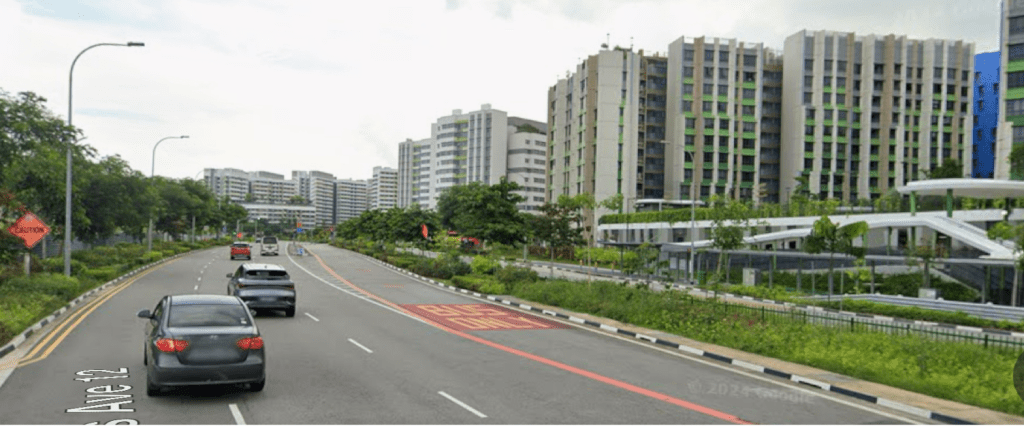
For the benefit of those whom are less in the know, on the 14th of August 2024, the Minister of Parliament (MP) of the Tampines constituency shared on his social media platforms important news regarding those living in the relatively new Built-To-Order (BTO) areas of Tampines North. A report that he had worked closely with the Land Transport Authority (LTA) to agree to make certain amendments towards nerfing a bus-only turning lane in favour of cars.
Basically, the plan is to convert two full-day bus-only lanes, into peak-hour bus only lanes. The benefit of this arrangement is to allegedly and I quote “motorists will be able to turn right from North Drive 2 to go to Tampines town, and from Ave 12 into their estate. This change will save traveling distance and time for residents. ”

If the ball hasn’t dropped on the sentence’s interpretation, this statement clearly shows the implementation is meant to benefit motorists, which is very much against the “Car-Lite” rhetoric espoused by LTA themselves!
We are disappointed with you
Somewhat unexpectedly, rather than seeing everyone calling out this move as the anti-thesis of car-lite, the move was widely praised by people living in the district, celebrating the fact they can now drive on what was previously dedicated rights-of-way for buses (nevermind the fact that it’s pretty insignificant in length, existing only at the junctions).
Transit Evolution (TE), an urban mobility and public transport channel on YouTube, made numerous messages on his social media channels, to explain the long-term negatives of this car-centric move.
However, rather than people also seeing through with him, most mocked and shunned him, calling out TE as a “keyboard warrior” or some slur about being a smart alec of a transit advocate, any negative connotation gets thrown straight at him.

Others are more neutral, but one can sense they are still too ingrained in car-centric planning cognitive-wise, unable to think outside the box.

And who else can forget? The actual car brains revealing their true colours, there were people who were not shy in showing how much they were subscribed to auto-industry propaganda, of course bashing TE with yet more negative terms. This racked up so much attention that an account supposedly representing one of the BTO estates also went on a rampage against “online noise keyboard warriors”.

That being said, we don’t have a clue as to who actually runs this account, and this could well be an astroturfing attempt in the name of “authoritative” sources linked to HDB or grassroots committees to influence residents’ opinion to oppose improvements to bus priority in their estate. Chatter through the grapevine indicates the account is linked to someone in the Residents’ Committees for the area abusing the account for social media traction, so make what you will of that.
Now, co-author here (@lemonnarc) was in the midst of writing a deep Town-by-Town review of Tampines. And it is sad to say, the presence of such lobbyists boycotting what is good in the long-term deeply saddens me. Without spoiling too much, I was writing on how Tampines is close to becoming the poster boy on “How to design a good Singaporean Town 101”. And now that I am seeing people abhorrently object to a relatively unique feature beneficial to their town in the long term, it unfortunately means tanked impressions of Tampines town.
Food For Thought
Rants aside on netizens from hell, something to think about is the relationship between resident profiles in new BTO estates and the given transport infrastructure (and more importantly, service).

There is a feeling that there’s bias involved in the lobbying for extra car convenience, this is more pronounced in Tengah, the ghost town of a BTO “car-lite” district. In which car owners (or leasers, long-term renters or whatever) move into a new estate first, well ahead of transit users. Hence, in the early stages of development for a new residential estate (which can take a few years, as amenities slowly move in), the overall opinion of its residents may appear to be pro-car.
Immediately after a BTO estate in a “new area” opens, such as those in Tengah, Tampines North and Punggol North, car users tend to move in first, because they have transportation secured from day one thanks to the already available road network. Public transport users tend to wait a while more before choosing to move in to these new estates, or even wait years for the initial residents to resell their flats before moving in due to a lack of good connectivity by public transport in the area! Infrastructure such as bus-only lanes provisioned for a far-flung future where much more bus services are available (if LTA is even planning for such) become flashpoints for a great majority of residents who rely more on car-based transport modes (driving, taxi, Grab etc) that such infrastructure inconveniences. That’s where the “pro-car” slant in the discourse in Tampines North arises from.
Complicating this is the fact that new towns built from scratch are highly disfavoured in LTA’s current public transport planning — the hub-and-spoke (HnS) model espoused in LTMP 2040 results in these new towns getting two short ends of the stick at the same time. Public transport options from these new towns is highly limited in access due to them being predominantly feeder-based, and LTA is heinously slow in introducing them due to the proven-false belief that demand for such routes must be “justified” before launching them.
Of course, this is all institutional and systemic failures from subscribing to the HnS model as if it is some silver bullet to solve our transportation woes. We’ve talked enough of that in numerous previous posts, so we’ll spare you the text walls. Instead, let’s take a look at the case of bus development in Tampines North, as an example of the pro-car bias fostered in new towns by inadequate public transport.
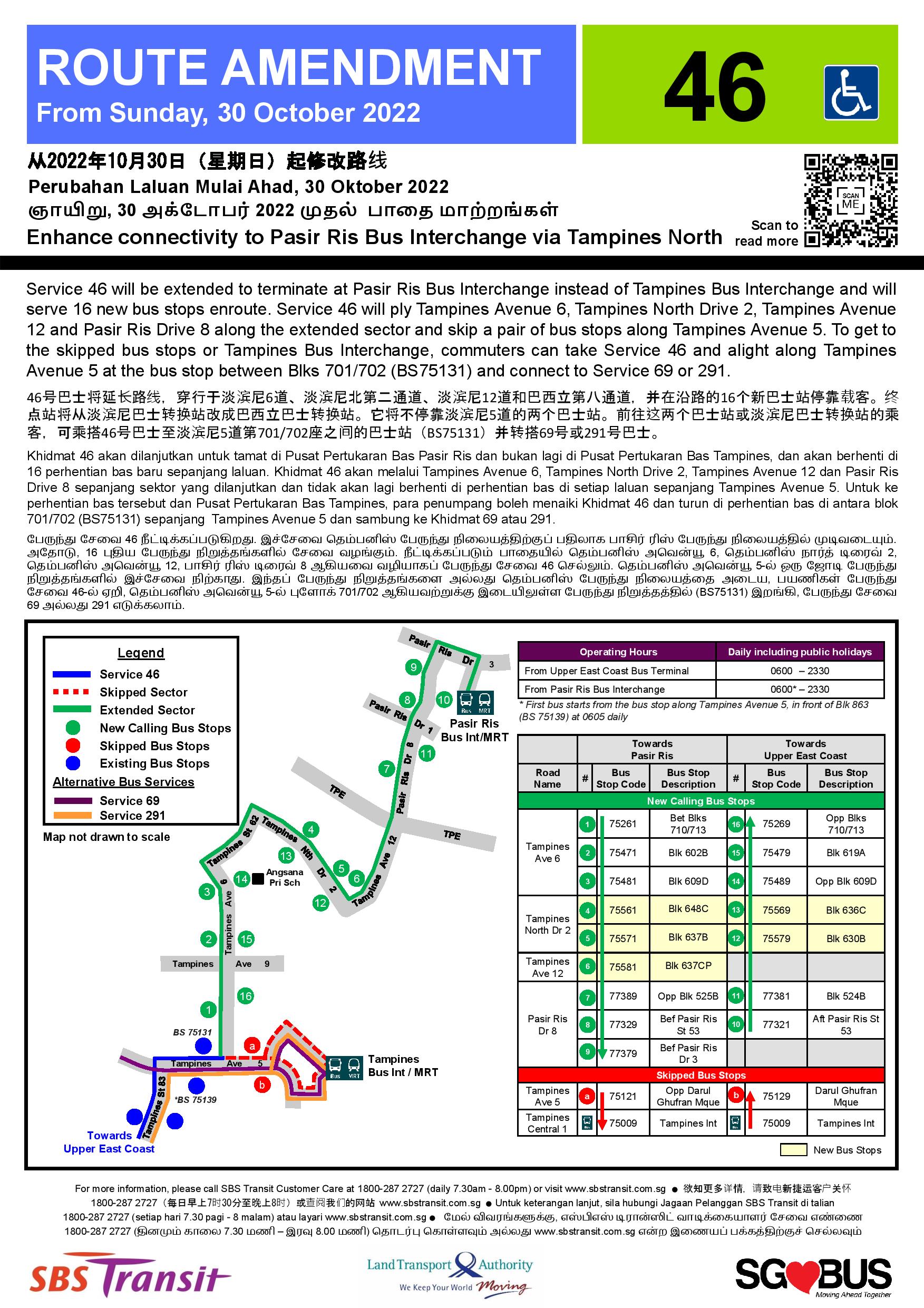
In Tampines North, Service 46 was extended to Pasir Ris by re-routing through Tampines North in VERY LATE October…a full five months after the first residents moved in. (Tampines GreenVines, the precinct home to the suspected astroturfer account on IG, had its TOP, or in layman words the earliest move-in date on 1st June 2022)
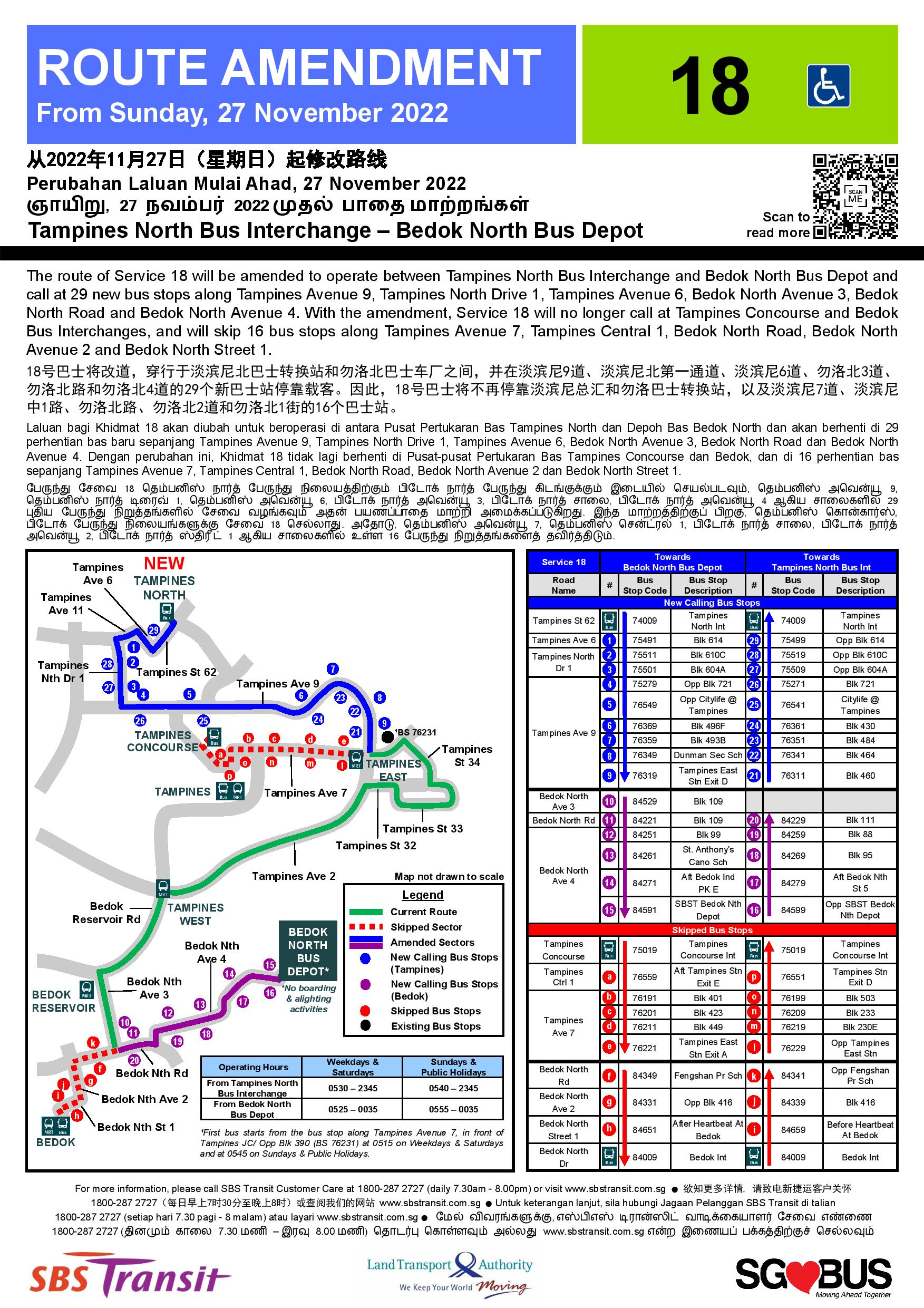
It was only until end November, did LTA open Tampines North Interchange, and extended 18, 129 to the district to finally provide slightly better bus service. However, do note that 18 does not serve Tampines Central, and the frequencies of 46 and 129 proved futile to be reliable feeders for the residents.
Tampines North Interchange was opened only in end-November, together with the extensions of 18 and 129 to serve the new BTOs there. This was a full six months since the first residents began moving in. While public transport users in Tampines North were still adapting to new routes that were introduced at a reluctant pace, their car-owning neighbours had long adapted to the commute routines driving in and out of the estate, albeit inconvenienced by said bus lane.
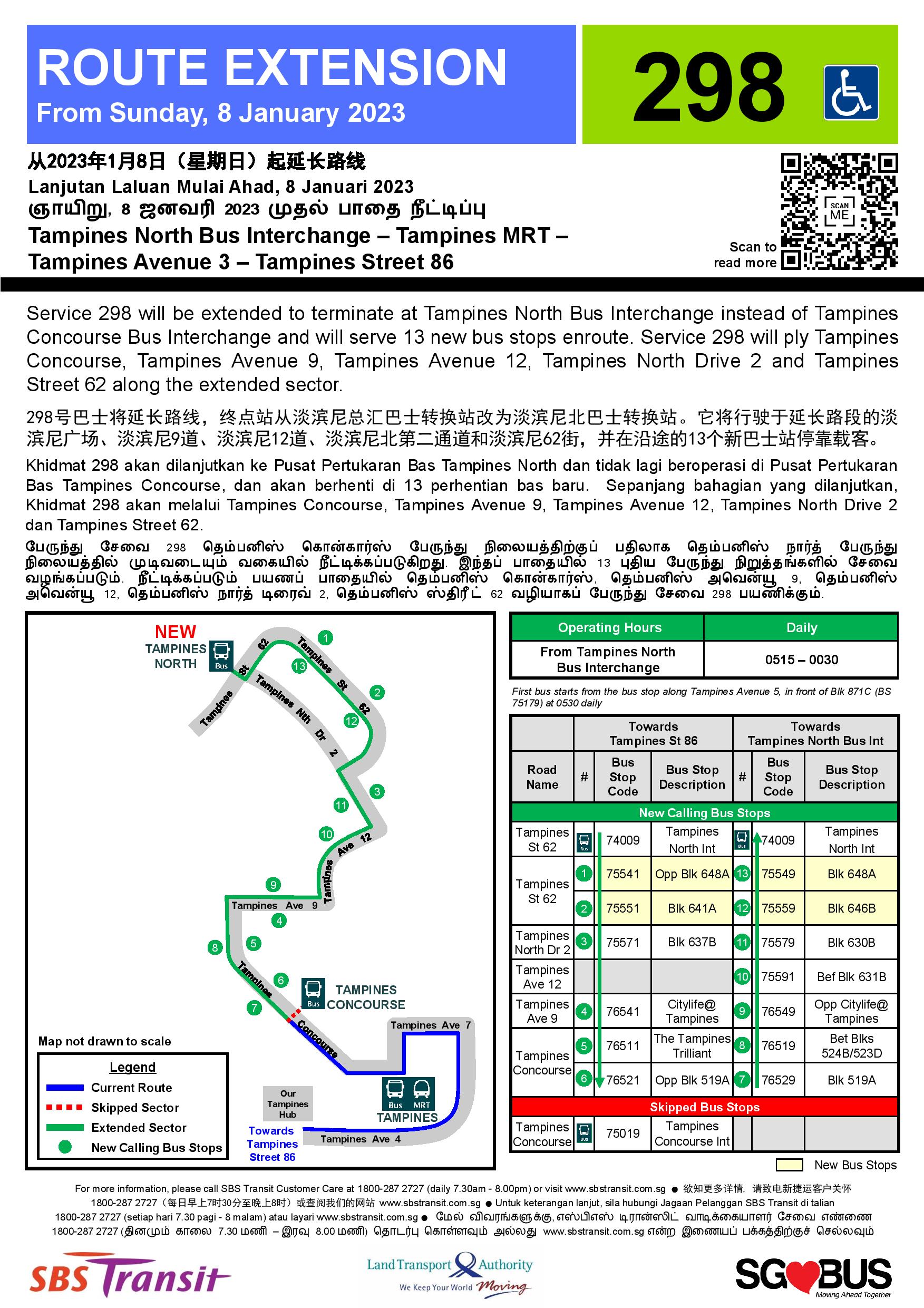
It took another five weeks for feeder 298 to be extended to Tampines North, finally bringing a semi-decent connection to the MRT network for residents. In total, it took seven months for a basic hub-and-spoke connection to the MRT, the bare basics of public transport “connectivity”, to be established.
It’s just seven months, you say. What’s the big deal?
Well, Tampines North residents using Public Transportation had to wait months for a semi-decent HnS connection via PT while car residents could start moving in, drive freely, and making car-based transport the main mode in these towns, resulting in, you guessed it, the majority of the town growing their lives around private motor vehicles. And why wouldn’t car users move in first? It is notable that car parking tends to be free as the gantries for BTO sites are usually in the midst of installation. The roads being wide and empty from initially low population, means drivers can speed down residential roads without a concern about traffic congestion. And as said above, initial public transportation being lacklustre due to OTA requirements and unacceptable frequencies just serves as icing on the cake; the final push factor away from riding the sluggish feeder bus to MRT HnS combo. (One little detail we missed: None of the aforementioned four bus routes ran more frequently than 15 minutes back then, and even today only 1 service (the feeder — 298) operates above this baseline, at a mouth-watering 12-minute peak frequency.
Don’t even get started on cycling — not in those initial months, when half the housing estate is one giant construction site wasteland. Want to experience what attempting alternative transport modes for non-car owning Tampines North residents was like back in 2022? Visiting Tengah today provides an accurate guide.
Anyways, the ill-provided public transportation service AFTER NUMEROUS MONTHS meant most would suck their thumbs and buy themselves a used car, or use Grab enough to notice that the aforementioned bus-only lanes are slowing down their commutes by many minutes over their lifetime.
Additionally, the car-first, public transport last mentality in the build codes of BTO sites, distorts most of the outgoing residents into cognitively viewing private transport as the king of the transport hierarchy. Becoming so normalised to put it first and foremost ahead of other options, that any inconvenience is too strange and dangerous of a change to the status quo. Hence, the strong backlash to TE’s stance (which the STC shares) against the bus-only road nerfs. The residents have been exposed to terrible public transit services and car-oriented developments, that they wholly embrace private motorised mobility.
The final consequence of such actions from the past, means that car-centrism takes precedence as the norm.
Closing Words
Anyways, 14 August 2024, is a day to be commerated, a significant, (terrible) event for us, witnessing car-brains winning one step at a time with developments becoming more car-oriented, while we are progressing into hardly half a step into our car-lite goals.
If there is one takeaway you can learn from today, it is that your voice is important, and using it is paramount to making changes. For far too long, car-brained development has been the vocal minority that is making the loudest noise towards the powers at LTA.
Allow me to close off with an anecdotal exchange with a lead planning director at the LTA. During a closed-door session, he shared about how residents would typically stick to the car-centric status quo of development, to oppose car-lite proposals, such as the example of converting part of Woodlands Ring Road to be bus-only as part of the Kampong Admiralty pedestrianisation project. While the latter did eventually go through and the road narrowed, the bus-only road was eventually compromised to allow general traffic to pass through after violent objections from some motorists.
So I strongly encourage everyone, to also let our voices be heard, and defeat the status quo of car-centrism! More importantly, the onus is on LTA to ensure adequate provision of bus service that actually brings people to places beyond the nearest MRT station as soon as residents begin moving into new residential estates! Already, this hasn’t been done very well in the initial stages of Tengah (with shuttle buses provisioned to the same level of service as paratransit in the US before 944 became 992). Hopefully, these mistakes don’t repeat elsewhere in Tengah, as well as upcoming developments in the redeveloped PLAB and Jurong Lake District, especially if bus priority infrastructure in these places are to stay for their long-term benefit.
Join the conversation here, and don’t forget to press the like button! Thanks for reading STC.
 Singapore Transport Collective
Leave a comment