


(Welcome to the second of the two-parter series. I advise one to read the first part…or not. You don’t actually need to read up about it.)
Ahhhh yes, benchmarks. Putting LTA and standards together always produces mixed results. Think about it, you may have seen promotional material of statistics that produce material to be taken with a heavy pinch of salt. And asked yourself, ‘do they have some sort of hidden agenda?’

Rhetoric question aside, now that we have covered on what are delivery gaps in Singapore’s transit, it is time to move on, to a topic that LTA muddies a lot for the sake of satisfying some arbitrary checklist. What is that you may ask?: Standards! Specifically, referring to hard and soft standards.
Wait, what are hard standards? And what are soft standards?
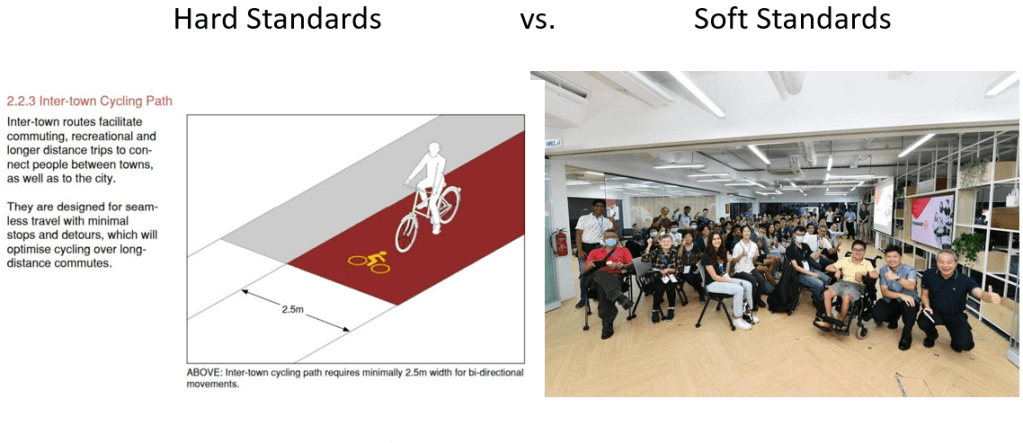
To start, let us begin with introducing hard standards. According to definitions circulating around the internet, are strict, specific, and quantifiable measures that must be met in order to comply with a particular regulation or to achieve a certain level of performance.
But in simpleton terms, I use Hard standards to refer to Service standards that can be:
• Counted
• Timed
• Measured
Where credit is due, the Land Transport Authority (LTA) actually takes this job very seriously, for better or worse. Some examples of Hard Standards already used in the industry include…
Rail Network Length

It is pretty amazing how much progress has been made on this front since 1987, we started out with a rather meagre 5 stations in the maiden phase spanning from Yio Chu Kang to Toa Payoh, to having over 140 Mass Rapid Transit (MRT) stations in operation daily, with 200km of track length(Measured) covering our Little Red Dot. This is a great example of how hard standards can be measured correctly for improvements.
Mean Kilometer Before Failure (MKBF)

This is a benchmark that records how long our rail network in Singapore goes without a major disruption (Measured and Timed hard standard). With the MKBF in place, our train operators have a measurable gauge on when their train maintenance is fine, and months or years when it is sorely lacking (such as during the 2011 Saw Phaik Hwa Management saga). For the LTA to appropriately dish our financial incentives or penalties to the companies running the MRT Oligopoly.
Now that you reader have an idea of what hard standards are, we can move on to our next talking point; soft standards!
Elsewhere, the general definition refers to more subjective or opinion-focused and can’t be quantifiable measured. In simple terms, Soft Standards are service standards that are
• opinion-based measures (Customer-defined standards)
• cannot be easily observed and measured (means a stopwatch and numbers are likely to be worthless)
• required to be collected by talking to customers, employees or others (on perceptions, beliefs)
Oof, yes, quite a mouthful of a statement. But here are some examples used in transport speak in Singapore to measure soft standards.
Focus Groups On the state of Public Transport
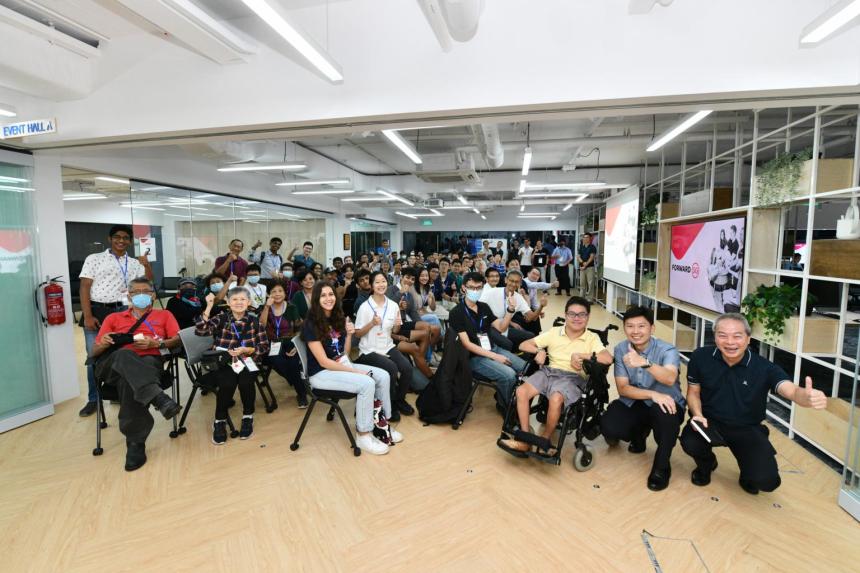
Obviously, in order to gather the opinions of public transport users, one needs an interactive audience. And there isn’t any better group other than hosting focus groups to share their opinions, in this case, on general opinions on how commuters would rank their experience using transit.
SAFE Silver Zones and School Zones

Discounting the “strict” build codes for these zones. Like the previous example, numbers cannot draw any conclusions, numbers cannot differentiate between a car-centric stroad or a traffic-calmed pedestrian zone, or at least not in the core ways we expect. Only the people “playing Crossy-Road” on a daily basis can give their opinions on whether a certain street feels safe to them. Is it safe? Is it comfortable? Can crossing the road even be done by the young kids and seniors alike?
Ok, so what is the issue?
Now that you have a general idea on what each standard represents, you may start to realise, that countless LTA achievements the Government Agency keeps touting itself for having, may look rather meaningless in reality. For Instance:
Problem A: Overlooking Soft Standards
In most cases, LTA often priortizes making their quantifiable standards look better on paper than bolstering hard and soft standards uniformly, even when the soft standards are clearly a weak link. The elephant in the room for such manifestations is the state cycling infrastructure in Singapore.

Going back to my maiden post on benchmarks, recall some of the things LTA touted or otherwise. Marketing Jargon such as “1,000km of cycling paths by 2040”, as you can tell, form the basis of hard standards as it is quantifiably measurable. To the average person, it sure seems unbelievable!
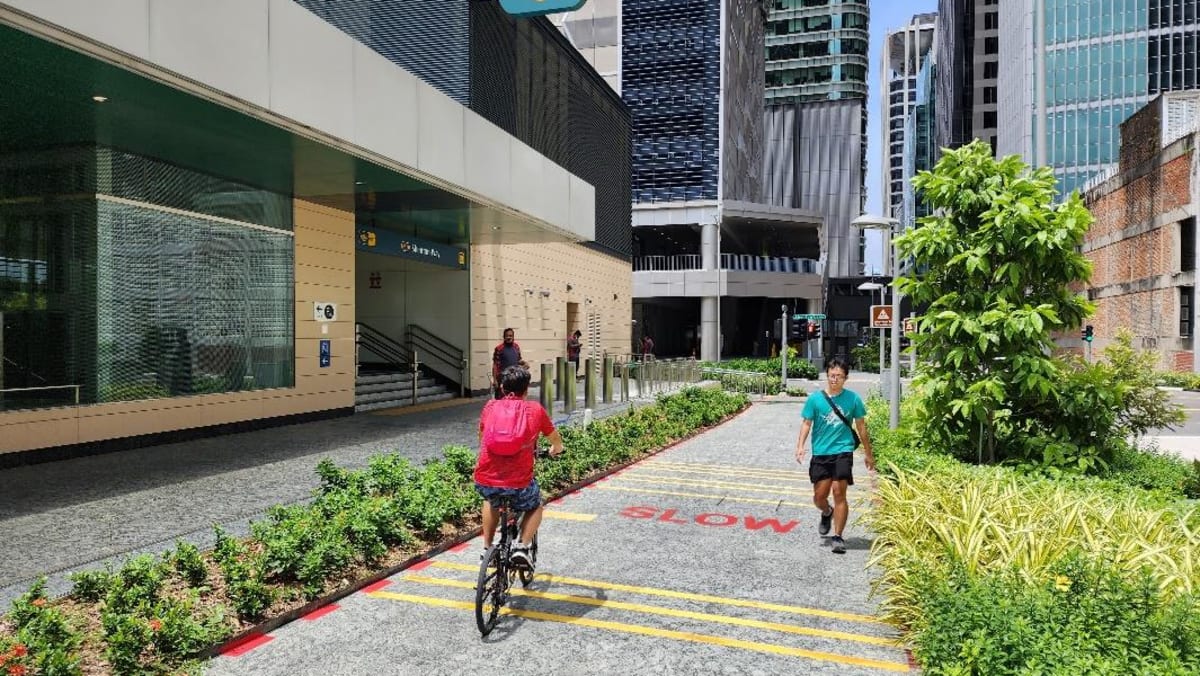
But anything more than a recce visit to virtually any of Singapore’s bike paths would expose the façade behind those impressive number.

In this case, LTA has indeed built lots of cycling paths…that are too skinny, unwieldy and uncomfortable for a user to cycle on, which is an issue of ignoring your soft standards. Since the user experience is never mentioned in any documents as it is difficult to quantify, its importance is omitted from the books of LTA.
It does not take a genius to resolve such issues, the LTA should have designed the paths with any potential pain points of users prevented, maybe half a meter wider? A physical barrier in between the pedestrian and cycling path? You get the point.
Problem 2: Hitting Key Performance Indicators for the sake of it
Same-same as the issue above, but on the other side of the hand. The last example was about ignoring soft standards. In this case, it is about only putting all effort into buffering the hard standards. You know that one guy in your class that does the easiest part in your group project just so he can chime he “has meaningfully contributed” in his lunatic report? That is the attitude LTA has in simple terms. Doing things for the sake of it without putting any hard work and soul behind it.
For example, when (cough, cough) private organisations intend to solve any pain points of the user experience. They would go all out with useful methods to assist customers, that seem unorthodox to the pubic. An experience map to identify customers’ touchpoints (interactions with the company) and any pain points (See below), listening to the Voice of Customers (basically listening to complaints with a willing ear), risk assessment to gauge a customer’s safety.

But LTA, well considering how most government processes are secretive and are less likely to be researched on by external companies. I can only infer as much as I think and feel; I think the folks at Hamsphire Road do not commit to their standards for quality, but only care about quantity.
How so? You may curiously ask. One that is rarely brought up today would be storage buses. Back in the BSEP days, people may recall the well-liked move of LTA to fund an additional 800ish buses into the bus fleet back then. Which is a welcome prudent use of money to many of us.

However, today, are we really still reaping the full benefits of the BSEP and subsequent Bus Contracting Model? When a sizable chunk of the BSEP fleet are kept in mothballing status as said so by our dear transport minister? While some buses are unquestionably better than none, it makes LTA and other relevant parties look shameless for exaggerating claims, and leaves the pain point of extended waiting times for buses sometimes unresolved. With the solution 50 meters from any LTA-owned bus depot.

But hey! With these buses, it can cause naïve people to be fooled into thinking Singapore is a “Bus-Haven” without it necessarily being one (as not many countries can boast having 5,800 public buses). Which is exactly LTA”s intention. Look good without doing much.
Another relevant example would be the TPCs and the length of the PCN network I keep flogging on like a dead horse, so I will save the explanation.
So how do we go about it? I would say there isn’t really any easy answer to changing mindsets of the LTA management. But there is definitely a need for projects in improving standards for customers to be less about hard standards, and more about putting the emphasis in enhancing the user fundamentals.
Conclusion
Likewise with Service Quality gaps, Hard and Soft Standards are not some optional add-on, an Organization cannot willy-nilly cherry-pick setting their standards for the sake of completing work, they should be instead genuinely striving to refine a lackluster part of our transit system.
LTA, in their current form, endlessly obsess over the less important part of benchmarking, resulting in severe service quality gaps and soft standards with too much room for improvement. I can only hope that the “lazy” attitude of the organization changes.
With that, we have come to the end of the two-parter series on Standards. I hope that you all learnt something, and I shall now make my leave.
Don’t forget to follow the STC for more car-lite content, and join the conversations in our discord server!

 Singapore Transport Collective
Leave a comment