


This unofficial National Day Special article is co-authored with ameowcat (and landtransportanalyst to some extent), or I would go insane.
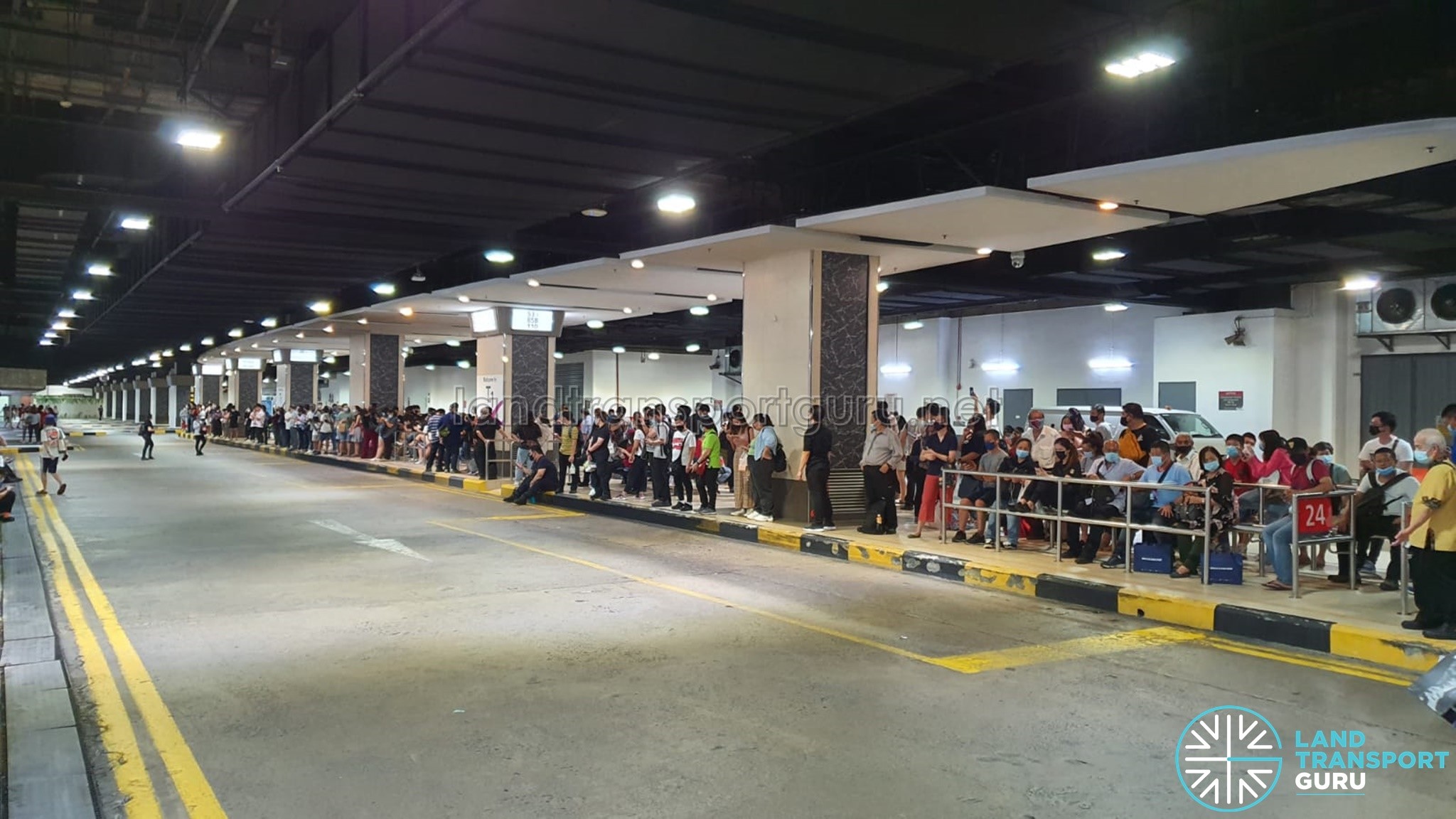
Changi Airport (CGA), Singapore’s only airport to travel around the world, an entrepôt to some parts of the world, and pretty much the finest case of silo culture materializing between LTA and an external agency, the Changi Airport Group (CAG), the government agency that runs Changi Airport. Severely overcrowded during the peak hours, mini platforms that are extremely hazardous with people literally balancing on the tiny island platforms to not fall over and die getting run over by a Shitaro. A ridiculous grid-lock when there are many vehicles, and an MRT line that travels nowhere useful. As NotJustBikes or Strong Towns would put it, a car-centric environment!
Also, given that safe distancing measures in a few years to be more relaxed, I expect travel abroad to surge and thus, cause overcrowding on the Penang Komtar Terminal-esque bus bays. It’s high-time to pull an attempt to fix it.
Unlike the first two fixes at Jurong East and Serangoon, this one I reckon will be the toughest nut to crack, as CAG is not exactly the most cooperative, or transparent government agency known to Singaporeans. And for once, LTA (probably) does not have full internal control of the infrastructure and practices on-site.
Changi Airport demand patterns
Disclaimer, I wasn’t born in the 20th century, information presented here is likely inaccurate and incorrect as it compromises of mostly my outdated anecdotal experience, if there is a history source better than SGwiki and LTG, please let me know :)
Back when Terminal 1 first opened (with a fatal engineering flaw I will get into later, called a lack of Bu_ _er_____al), there were not too many jobs and travelers for the six 39X-series bus services to handle. That would all change in the coming years with upcoming bus irrationalisation efforts, and more jobs and passengers using Changi Airport.
In 1990, Terminal 2 opened, and crowds were noticeably higher, and the merger of bus services meant there were less bus services serving Changi Airport around this time. So these crowds were to be expected. (As well as the lack of construction of a something)
At least finally in 2002, the Changi Airport MRT station opened as a separate branch of the EWL. Which finally brought an MRT connection to the busy Airport.
With Terminal 3’s opening in 2008, all of today’s airport services except that BCM one were overloading with passengers! That was when buses were starting to really feel the heat. As more terminals = more jobs and travelling activities. Luckily, for a few years everything was disguised from the additional capacity SBST’s Scania K230UBs brought over their Volvo B10M MKII/Mercedes O405 predecessors.
Oh and at some indefinite time, buses were installed with speed-limiting hardware and torque restrictions, I suspect to be around the time when SBST mass-procured KUBs. Which significantly increased the runtime of all buses in Singapore. The kneecap it gave to Airport however, was more pronounced, as most services there are loop services. The loss of faster speed and acceleration increased the run-time of the services exponentially, and made bus bunching more prone to happen.
More trouble erupted when 858 was amended to (quoted from LTG) ply Woodlands Ave 7, Sembawang Way, Canberra Rd and Sembawang Rd and Yishun Central 2. Which worsened 858’s frequency and reliability. Remember that back then the 858 buses were (high-quality) low capacity Mercedes O405s.
858 then absorbed some of the demand for 27 and 34 in 2014 with the TPE bus stops’ opening, suddenly Punggol and Sengkang Changi Airport commuters seeing the time stonks flocked to it. Same can be said that 858/969 are now the fastest connection between Yishun and Punggol. At least it was slightly alleviated a year later when 858 got the green light to use the (new at the time) MAN NG363F buses. I know I ramble endlessly about 858, but it’s hard not to when it is the worst affected service and worthy for a dedicated article.
In 2017 was the opening of T4, and the launch of service 110 in conjunction with it. Several services were amended to ply it and now, even lower demand services are full-to-the-door during an unlucky peak hour. Often, a single bus is insufficient to deal with the queues, similarly to cross-border bus services serving the Woodlands Causeway, causing SBST and SMRT to SPAM buses and causing a bus traffic jam.
Finally, a killing blow on the already strained bus services was the opening of the Jewel Changi Airport. Now, Changi Airport was no longer an atas industrial district, but instead playing a dual role as a domestic tourism destination. This has resulted in thousands of Singaporeans commuting to and fro Changi Airport. It also changed the demand patterns from a once heavy peak-commuter flow into all-day high demand on the Airport bus and train services.
Despite the high demand of the majority of services, most airport bus services could not upgrade into high-capacity buses for reasons I will get to later, in case you haven’t visited Changi Airport by bus. (Spoiler! The bus facilities were “cargo facilities” in disguise)
Tiny Theory I have
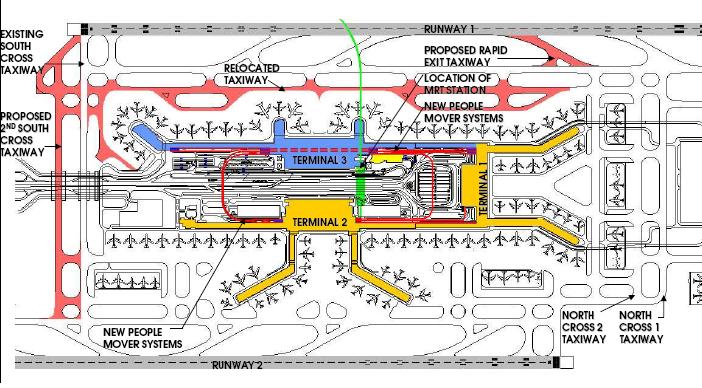
Looking back at the expansion of Terminal 3 today, I couldn’t shake the feeling that something was fundamentally wrong, as seen in the blueprint above, apart from the stores and restaurants, ask yourself: What is missing? Here is a picture of a sign to show you something is wrong with public transport in the Airport premises:

In case the introduction, picture and history section wasn’t clear, “A BUS STOP/TERMINAL/INTERCHANGE!” is missing from the old maps/blueprints. Trust me, I’ve searched hard for any blueprint/renders that include the construction of a bus terminal, to no avail. The fact that the signs to the basement (pic above) don’t indicate the bus stops as bus facilities should be an immediate red-flag to this theory. Clearly, due to a lack of space putting a bus stop in other areas include invading the runway zone or plane lots that CAG cannot profit off (iirc airline companies pay the airport for laying-over like a car parking system), the bus terminal was “integrated” as an afterthought with…(in case the security checking every bus isn’t a hint, which I will get to later), you guessed it, the cargo bays! At least LTA didn’t go around touting the “secure world-class” bus terminal as an “ITH”. Although Terminal 4 is a proper bus stop, the first 3 terminals use low-height cargo bays, which not only ruin the image of Singapore’s public transport, but also give a fatal blow to the carrying capacity of CGA bus services; the restriction of double-decker buses, the main high-capacity bus option of Singapore. Buses are always crowded to the door as SDs are just insufficient, bendies are too occasional, inadequate and tied to a single bus service. Moreover, frequency is a mixed-bag on a normal day, and absolute dog-water when traffic jams occur, as the mere fact all the CGA services are loop routes means that there is no opportunity for bus operators to stabilize bus intervals.

Let us analyse each bus service in detail, ignoring the fact all of them cannot use double-decker buses, in descending numerical order of their current situation throughout their route:
858:


This service is undoubtably the most jialut out of all the services. Longest route in SG, sole “breadwinner” bus connection to the north, route extension to serve feeder roles in the North, frequent bus bunching, the list of things contributing to its poor service is endless. Thankfully, it has bendy buses to cope with the high demand, courtesy of SMRT (and also TIBS) for believing in bendy buses. However, its demand levels are the kind that warrant a full high-capacity fleet much like service 147, 2 among other full DD fleet bus services. Hence, it still faces overcrowding as it has only 7 bendies at most (TTS loves to surprise bus enthus way too much by deploying them elsewhere), LTA making/amending bus services that duplicate 858 is keeping the service levels barely from hitting the breakpoint. The loss of Citaros since the Mandai takeover did slightly improves things in terms of capacity.

110:

The service’s reason of existence is pretty much to be the 858 that serves T4, and to complement/take over as much of 858’s North-Eastern demand. Being an SMRT bus service, frequencies are fine and dandy in comparison to a Punggol feeder. Majority of its fleet consists of Citaros, but then again, barely anybody travels short distances on this service so it hardly matters. The lack of bendies however is a bummer, given that Compassvale bus interchange still is hollow and empty and wouldn’t hurt to have some of them.
53:


Apart from bridging the Changi Airport – Pasir Ris gap. It is pretty much an 858 of North-East and Central-North Singapore, hence also having similar problems to that service. Providing important town connections between Bishan and Serangoon sectors, a partial feeder role between Hougang Avenue 1 and Serangoon Station. And it has a high-demand expressway sector shared with 81 between Defu and Pasir Ris (Almost like 969 and 858). Ang Mio Kio Depot (AMDEP) is also rather horrid at bus maintenance like TTS. SBST rejection of bendy buses in the late 20th century also is rather condemnable given the demand levels are also eerily similar to 858: People travelling short distances in the town segments (858: Woodlands-Yishun sector, 53: Bishan-Serangoon), and people heading to Airport onwards at the last town served (858: Yishun, 53: Pasir Ris)
36:

Funnily, I don’t see many foreigners using this bus service despite being the obvious choice for city-travelling, actually, the MRT covers that, so now tourists will never find out how crap public transport is outside train station premises! That aside, it serves the Marine Parade and Katong districts that other services at CGA (or MRT, yet) don’t cover. It’s frequency and reliability is atrocious, given its standalone terminating point is Terminal 2 itself! Which rivals Serangoon “ITH” in terms of space, frightfully laughable considering 36 is the literally the only service that terminates in the terminal premises, which is just another subtle hint the basements were never made for buses.
34:

As the sole bus service from the infamously clogged Tampines Avenue 7 (WHY TF did LTA expand the road? Induced demand exists dammit) to the airport, and from Punggol Central to Tampines, demand for this service is fairly high throughout the route. 34A supplements the higher demand of the two segments, the Punggol-Tampines sector, but the hourly frequency of it isn’t helpful. The frequency of parent 34 itself is enough ammo for me to persecute GAS for bad bus services.
27:

Demand for this service throughout its route from Hougang to CGA is…grueling, most of its demand comes from Sengkang/Punggol at the TPE bus stop to Tampines during the peak, buses in the Tampines/CGA direction are full to the door, and the short-working trips 27A are just as overwhelmed. Because most people aren’t actually travelling to CGA on this service, it would be advisable to at least let 27A use double-deckers as it doesn’t cover anywhere in CGA or even higher capacity KUBs (Fleet restriction from parent 27 applies, see below), if not for LTA’s complacency to give the green light for DD-certification…-_-
(At least 168 somewhat complements it from the TPE interchange if not for it already bursting from Woodlands and Jalan Kayu I guess)
24:

Pretty much the best case scenario, has an MRT that complements (Duplicates?) the long haul travels, now 24 mostly handles crowds not served by the MRT (aka a grid filler role), such as Simei residents transferring from the sus 5, or Upper Changi Road East. The upgrade to E6 A22s in July this year is also pretty useful, given it has the shortest expressway sector to the airport, so seats matter less (See Commuter behaviour below for clarification). I do wish it could use bendies though, SBST Seletar definitely has enough to spare at least one unit for the service.
Notice something readers? Bus services plagued with problems can be attributed to their inability to use high-capacity buses, which delays buses as drivers fumble to squeeze that last person onboard.
Now, let’s take a look at the MRT station

I doubt the sole train station of Changi Airport gets overcrowded, because the point I am trying to put out is, the MRT does little to alleviate the overcrowding woes in the bus bays. The MRT only remotely duplicates service 24 and 36, in the Upper Changi Road/Siglap Bedok and Expo sections, and Marine Parade regions. Also, I am pretty sure no airport staff, the main riders of the buses, are willing to go through numerous transfers (Tanah Merah station) for their ride back home. Mind you, the main conglomerate of airport transit traffic come from the North (Yishun), North-East (Punggol, Sengkang) and East (Pasir Ris, Tampines) of Singapore. Hence why bus services serving those sections face severe overcrowding (cue 858, 110, 53, 34, 27 in my top 5).

Further notes:
Airport security: There is this thing I need to address. Before buses enter the bus bays, they need to go through a security check (unable to get photos of it for legal reasons). In the procedure, buses have a CISCO guard entering the bus to “inspect”/catwalk to ensure the bus is “clean”. The point I am trying to put is, that inspection is completely unnecessary for public transport services (The MRT does not have such checks conducted), and that 1 minute layover wastes precious time.
Unofficial Fleet Restriction: Something notable to point out is that the CAG put in a fleet guideline, to use buses with in-stop speaker systems (To play ear-rape sus announcements) . Hence why back in 2017-2021, Citaros were the fleet choice for all the operators then. Nowadays, there are other models used (Thanks TTS for once for not using Citaros) as the regulations get relaxed, or because CAG has no bus enthusiast to tell buses with speakers apart. And TTS is too stingy to lease the storage E6 A22s they should have if not for SMRT Buses selling their AMDEP fleet to LTA However, about 65% of the buses that come are still Citaros, which while a bad thing for capacity, could also be a blessing in disguise (See Commuter behaviour).
Commuter behaviour: One thing I noticed on my visits to Changi Airport is that there are cases which some people refuse to board, most noticeable during the off-peak, even when there is plenty of space on-board for standing. It seems that many Airport staff don’t intend to board if there are no seats left, especially for 858 and 110, with meanders at a snail’s pace of the entire stretch/a large portion of the TPE. So I am sorry if I sound like a Nazi…for advocating bus models with many seats and ignoring standing space on these two services (eg. Citaro, MAN A22 batch 1)
Possible quality of life requests
“Subtle” to mean no destructive changes, or Michael Bay-esque budget required, that can still go a long way in improving the provision of services.
CAG: I would like to request to give a security check pardon to public buses, if you don’t meticulously check trains on the MRTs, is there really any point inspecting the buses? The chance of a bomb in a bus is near-impossible anyways as expensive crowded air-conditioned MRT station is always a better target to bomb than a cheapo third-class “integrated” bus terminal.
LTA: Please allow the SWTs/route variants of Airport bus services to use higher-capacity buses (27A, 53M, 858A), that way, they won’t get that “overcrowded phenomenon” as much, which the bus captain has to fiddle with the doors and shout at commuters to move to the GODDAM EMPTY REAR, which delays the bus by a considerable amount of time. This doesn’t affect Changi Airport services by much, but a delayed SWT = Parent overtakes = Parent takes more passengers = Parent Prone 2 delays, any help the services can get will go a long way.
Oh and please redo the rulebook for SBST Seletar Depot to put bendies on 24, before its capacity hits the fan.
TTS: Have some restraint to refrain from throwing B5LH cameos on 858 during the peak hours, nowhere to stand, or sit! I can understand throwing bendies on 169 or 969 (double nice) though
Significant (Destructive) Possible solutions:
- Waiting for a new MRT line
- Get more bendy buses
- SPAMMM MORE BUSES
- Relocating the bus interchange
Unviable solution: Waiting for a new MRT line
According to the projected MRT maps, the only new MRT line to serve Changi Airport would be the Thomson-East Coast Line Extension, it would serve both the U/C Terminal 5 and existing Changi Airport station. I expect people to continue siding with the buses despite the new MRT line, as it fails to properly complement the already-bursting bus services by diverting some of their demand away as it doesn’t travel near their routes.
Moreover, chances are, the MRT line will only open in the early 2030s, in conjunction with the opening of the (overhyped) T5, which is unacceptable given the current service provided is likely to be insufficient to cater to the growing demand in only a few years. So suggesting a new MRT line is just not in line with our ideology at STC.
Oh, and did I mention that the line does not even cover North Singapore quickly? Or the fact it has to make a detour around the CBD area thanks to LTA’s unhealthy radial public transport obsession? And the fact that the only bus route it complements is the not-so bursting 36 in the Marine Terrance area? (858 in Woodlands doesn’t count due to the fact most people headed to the Airport board from Yishun). This basically means the top 5 routes I mentioned are unlikely to get more breathing room on-board in the “near-future”. Needless to say, whatever MRT project in the works, will be barely useful in easing the crowds. So we need some proper solutions to increase capacity ASAP.
Quick-fix solutions:
Getting more bendy buses: As much as I love bendies, this is very much still a “quick-fix” solution as critical thinking puts it. We cannot deny a full bendy fleet for all bus services in the CGA cargo bays can result in unintended consequences. When 858 received the upgrade to have bendy buses, CAG relocated its boarding berth to the front so that bendies would not hog the berth of other buses entering the other sawtooth berths. Getting bendy buses for all bus services would perhaps make the gridlock situation worse in the CGA, and perhaps result in a few flight delays. (remember! the area is shared with cargo trucks, if they are stuck in a traffic jam in the bays, no food or whatever for the airlines).
SPAMMM MORE BUSES: Much like how our cardinal MRT lines can only be upgraded in terms of frequencies, why not just spam buses? Well reasons are pretty similar to the bendies: worsening the gridlock. Moreover, I doubt we have enough drivers at the moment to run CBTC frequencies uniformly. And that pesky, protocol CISCO and CAG enforces on all public buses is like an unwanted version of CBTC, it bottlenecks the frequency of the buses felt most during the acute peak hours. At the end of the day though, don’t forget T2 bus terminal was and is never designed to be what its name implies.
Long-term solution
Relocating/Improving the places buses travel to is going to be the only practical long-term solution I can foresee, to a place that allows high-capacity buses (double-deckers) to traverse, and putting an end to the undesirable airport road checks, here are some potential candidates:
- Airport Departure Halls
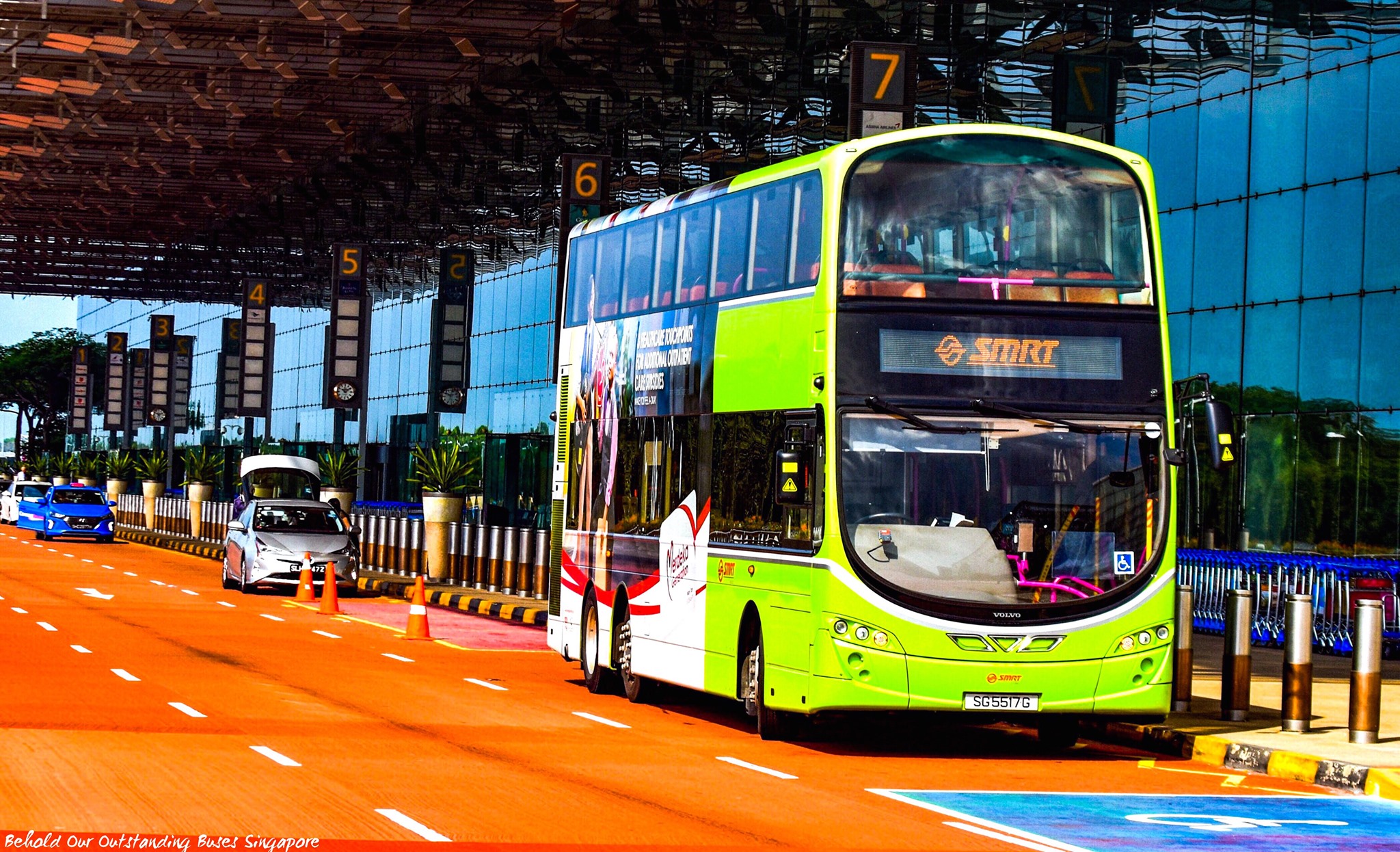
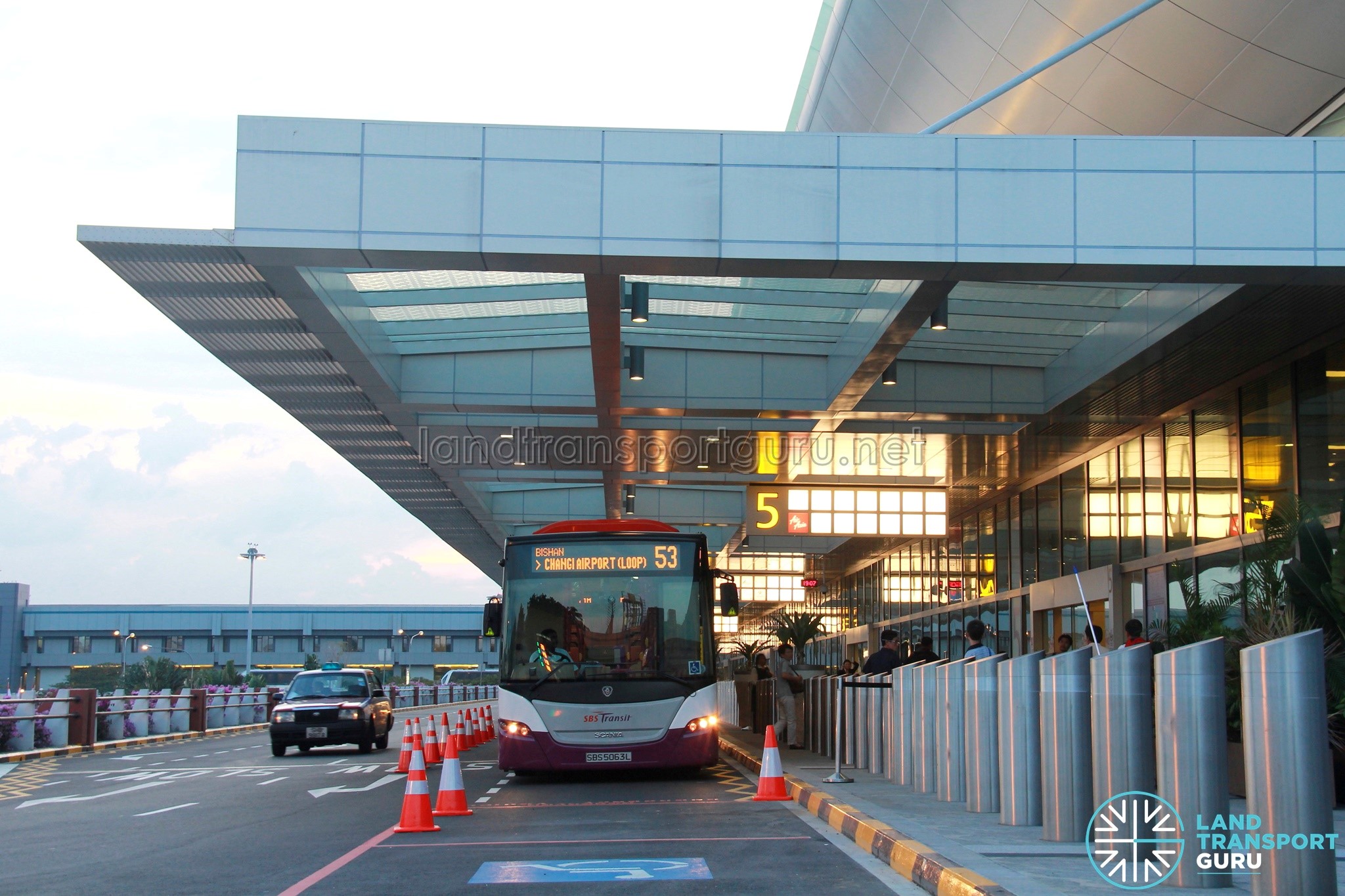
This one is the obvious candidate, train disruption, bus breakdown, T1 upgrading, buses would instead ply circuitous routes to these boarding halls, which have, or lack thereof height restrictions to be more exact save T2’s departure hall. Heck, the pic by NAZphotography shows SMRT and LTA did trial it out (Silo culture meant LTA obviously did not disclose the results in details and further actions, just like this, this and of course, this). Anyways, this is in favour of LTA so double decker buses can be deployed. The multi-lane roads also mean bus services won’t be compromised when a bus casually goes spout in the tunnels. And I cannot ignore that it also means no unnecessary CISCO checks that cuts frequency!
[Update, according to a LTG’s source, @boobsingapore, CAG rejected the DD trial execution due to “operational inefficiencies”, those automobile pundits…tell me what makes forcing buses through narrow circuitous tunnels and the bus breakdown incident not “inefficient” then!]
Cons: Possible problems I foresee with this as an everyday setup is that it would be questionable if 36 can layover without the CAG complaining to start. And also, unless CAG sets up perm/porta-toilets in the vicinity, bus captains will need to spend more time marathoning for the toilets (Don’t you dare force 858 bus captains to Tahan a 3-hour ritual no peeing session CAG), and consequently increase the lay-over time of buses, which may or may not cause another gridlock of the departure halls worthy enough for CAG to gag at LTA for. And perhaps less pick-up points for car users.
2. T5 “ITH”/Relocating bus routes
What if, instead of getting buses to twist and turn through the fugly “terminals”, we instead get all bus services to terminate at a dedicated bus interchange? I can forsee building one most likely at T5 as it is still under construction. Built to accommodate DDs and bendy buses alike, overcrowding will be solved! And if CAG is furious a dedicated place is needed to be built where it can’t earn money from, just mix the public buses with coach bays and booths, @Larkin Bus Terminal style! Private bus companies to profit off!
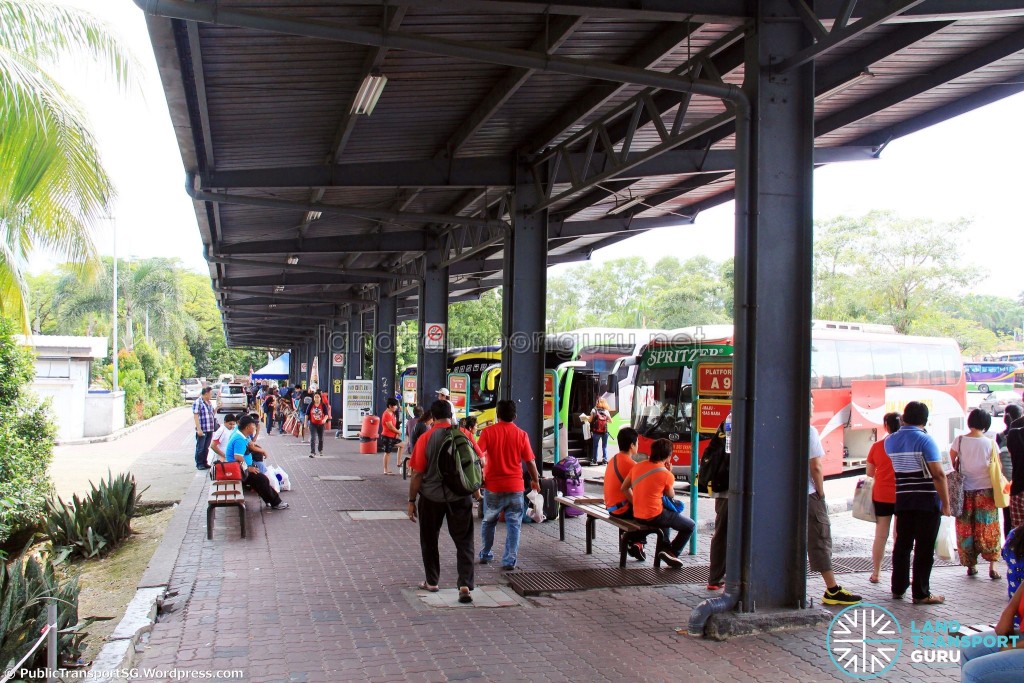
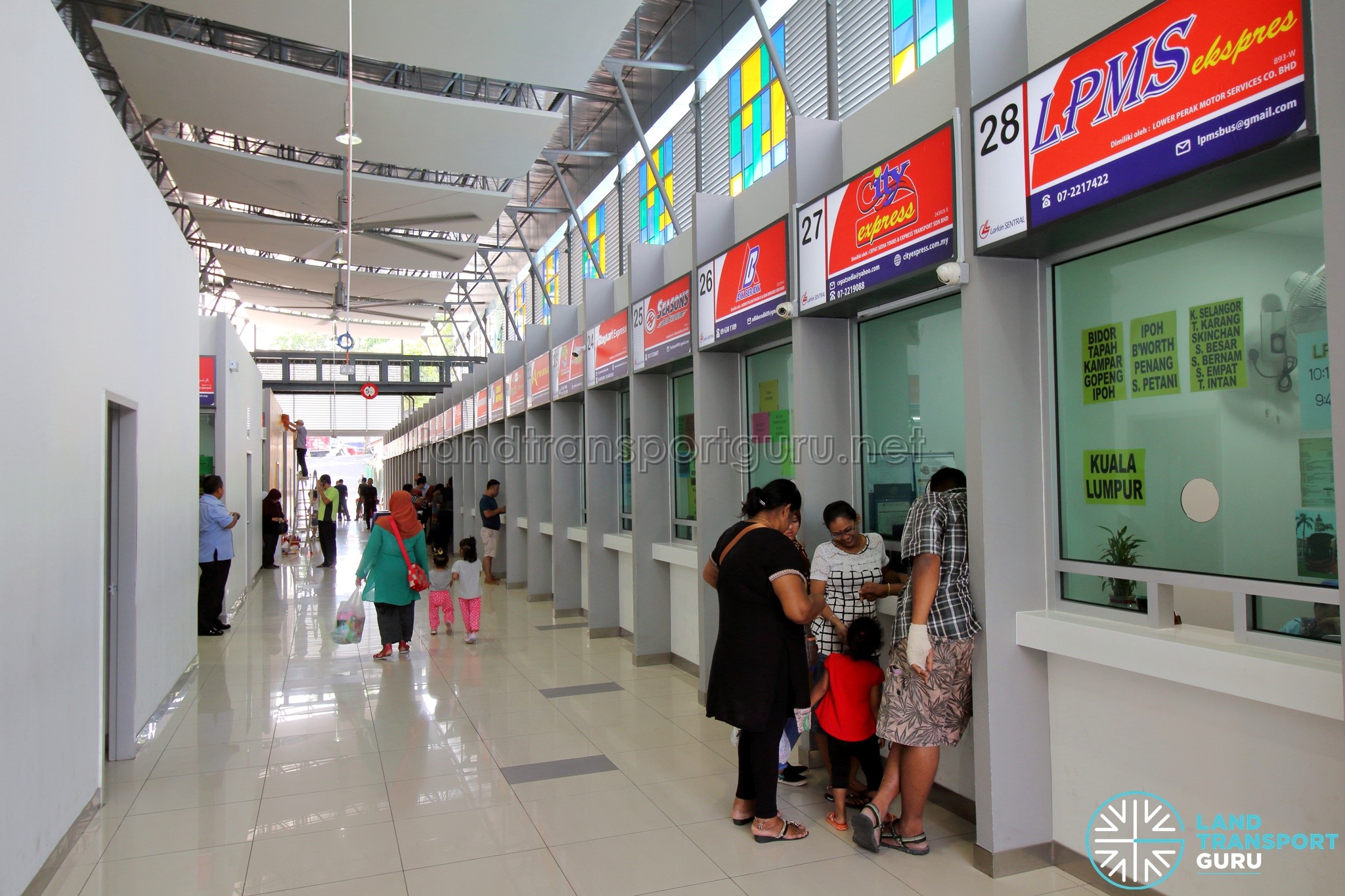
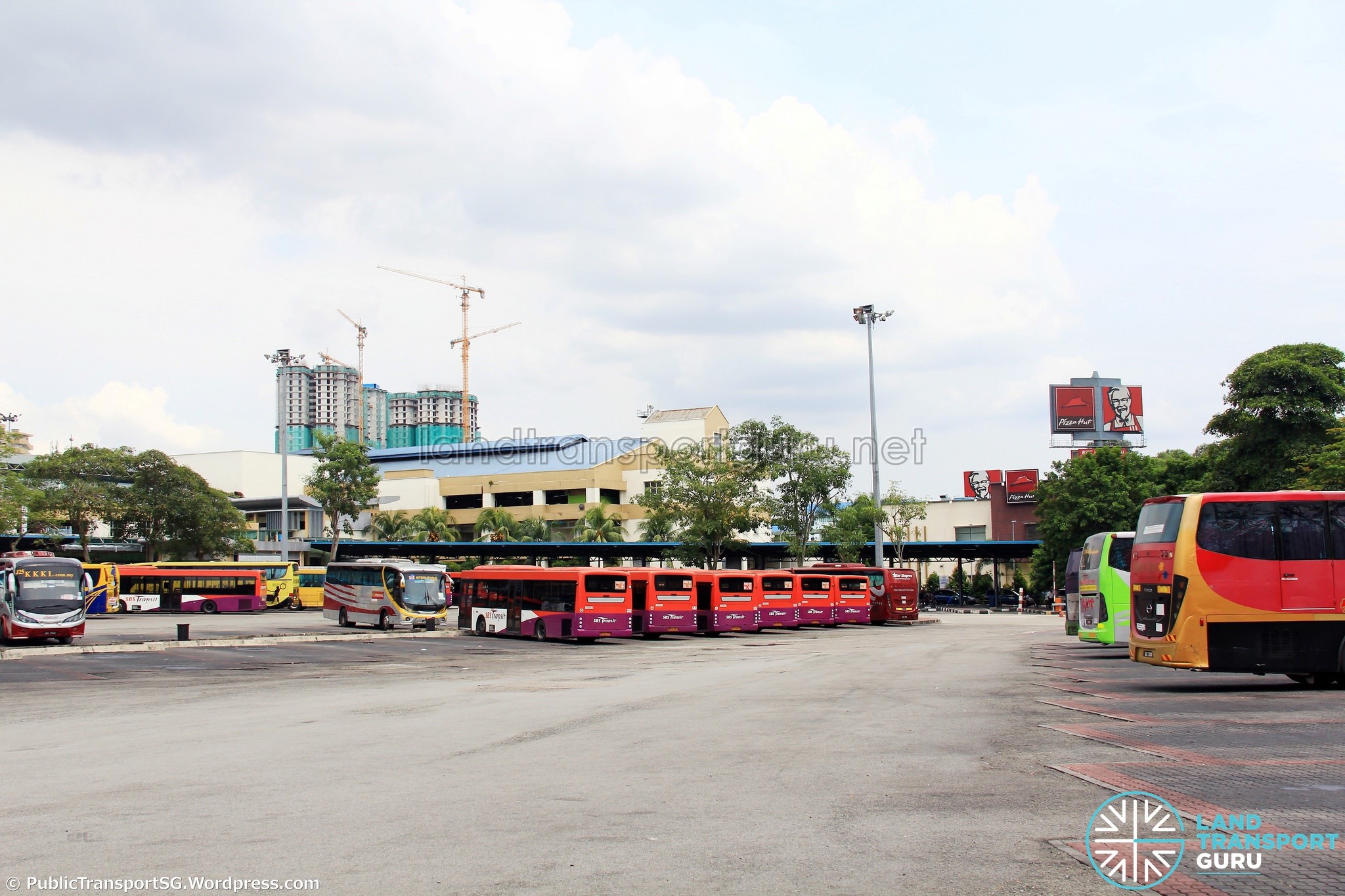
Luckily, it appears to be the case, as the upcoming T5 allegedly has a “Ground Transport Centre”, it will take the next eternity for is completion in conjunction with T5’s opening, but at least unlike the TEL, bring people to places where they actually want or need to go.

However, the facility only opening in the 2030s with T5’s opening, means something today still needs to be done. And we need to still cover how people will get to T5 from the other 4 airport terminals. Of course, there is no need to reengineer the wheel to make a temporary bus-centric facility, something the powers of LTA are fond of to get a promotion, just like remaking the tip-up seats. Visitors of Changi Airport T4 may recall a certain dedicated bus area across the T4 bus stop.
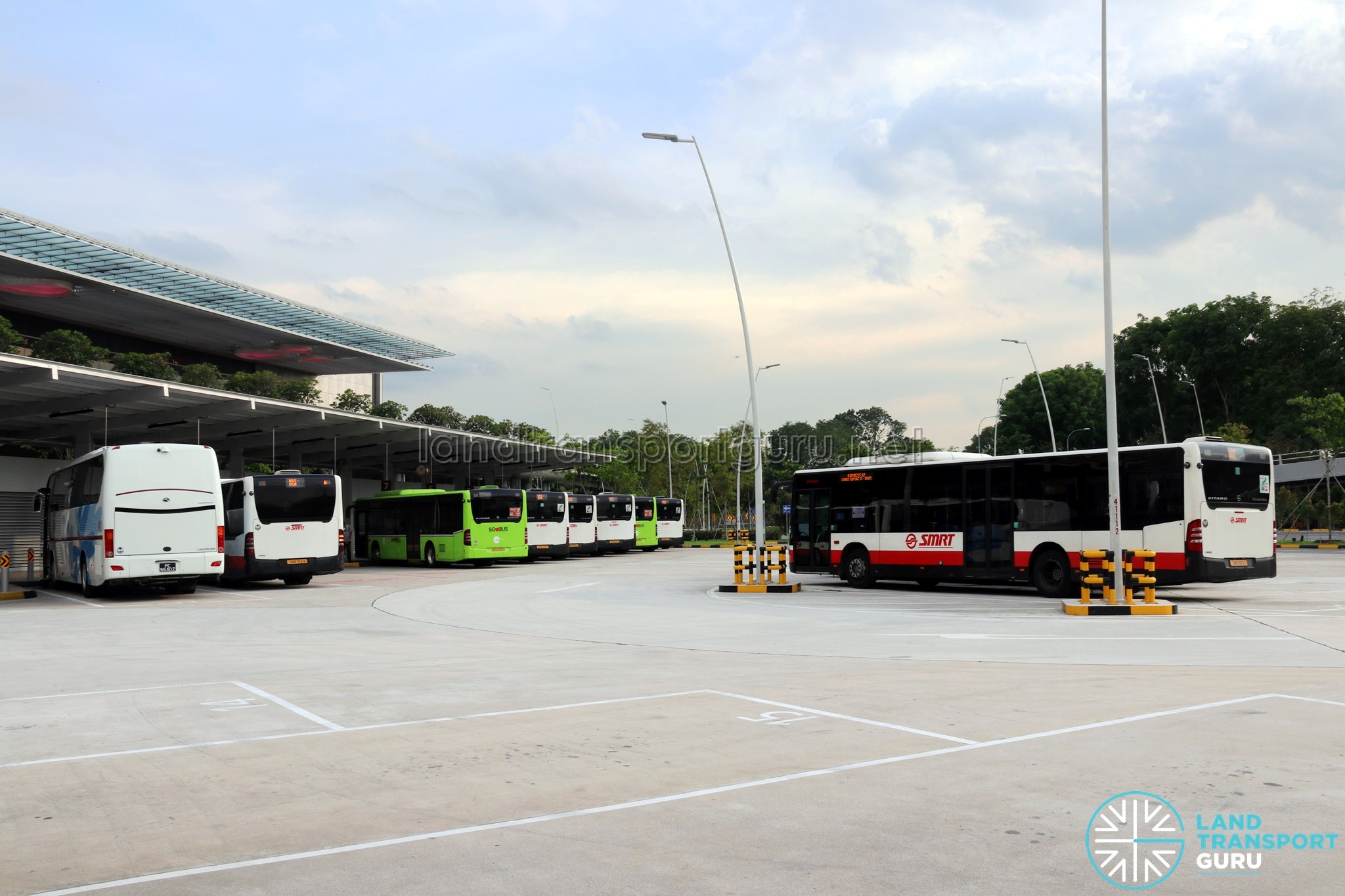
Here are POV shots from the bus stop


If the powers at CAG could simply, raise the roof height of where those Citaros in the picture are parked under shelter, the premises could prove to be a great place for all buses to simply move to, and make a pronounced substantial increase in bus capacity when double decker buses can finally advance into the Chang Airport premises on revenue service! Rather than zig-zagging through the serpentine lanes never made for hold heavy numbers of vehicles at once. Picking-up and dropping-off passengers can all be done at the T4 bus stop itself.
Cons: The trade-off is that is will inconvenience every bus rider at T1-T3 (and T4 if the interchange is at T5), with an access penalty as they would need to take a shuttle (Or Skytrain), add an extra transfer, and waste even more time. The airport staff all pek chek ready to throw pitchforks and torches at Hampshire Road with the last of their aching, feeble and frail bodies from endlessly working. Access penalty is admittedly not funny if you have to go through it every day.
3. Consolidated stopping
[Cross-Posted from Transit Ideas For National Day, as this is AMC’s take]
Consider a relatively large (in terms of area occupied) destination, with “sub-destinations” that see roughly equal amounts of demand across the board. Typically what is currently done would be to route all existing bus services through most, if not all of the “sub-destinations” to increase access to all routes from any sub-destination.

For instance, all airport bus services are routes to serve Terminals 3, 1 and 2 in that order, with some heading towards Terminal 4 as well.
While this seems fine and dandy, it does create problems such as congestion (which already sort of happens in the narrow PTBs of the airport terminals), the need to route buses through small roads/loading bays that exist to the detriment of key success factors such as capacity, as well as time wasted meandering through all the sub-destinations in a loop.
Instead of doing this however, we could take on a consolidated-stop approach — having all buses call at a common station first, before having different routes divulge in different directions towards different “sub-destinations”, and having passengers transfer to the corresponding service at this common station. That is one of the ways we could possibly remove the need for buses to necessarily go through the PTBs and be able to call at the airport drop-off points, thereby permitting the deployment of double-deckers and other high-capacity buses on airport routes with high demand (yes, 858).
4. Upgrading existing tunnels to accommodate double decker buses
This option, I have to place last, all the cons save no DDs and access penalty apply here. It would take a temporary interchange and a diversion of the cargo lorries for a not-so brief time (If it was a real option, it should have been done during the circuit breaker, much like making provisions to the Causeway). And while it wouldn’t punish people with the access penalty of a huge-ass transfer in the long-run, it still does not redo the fact that the tunnels were never engineered for commercial city buses, or remove the “need” for security checks. The CISCO security checks may predicably worsen as airport police will climb up and down DDs to inspect the buses. And need I explain what happens if a vehicle (un)expectedly malfunctions in the narrow alleyways? Unless road expansion is also earmarked in the upsizing contingency.

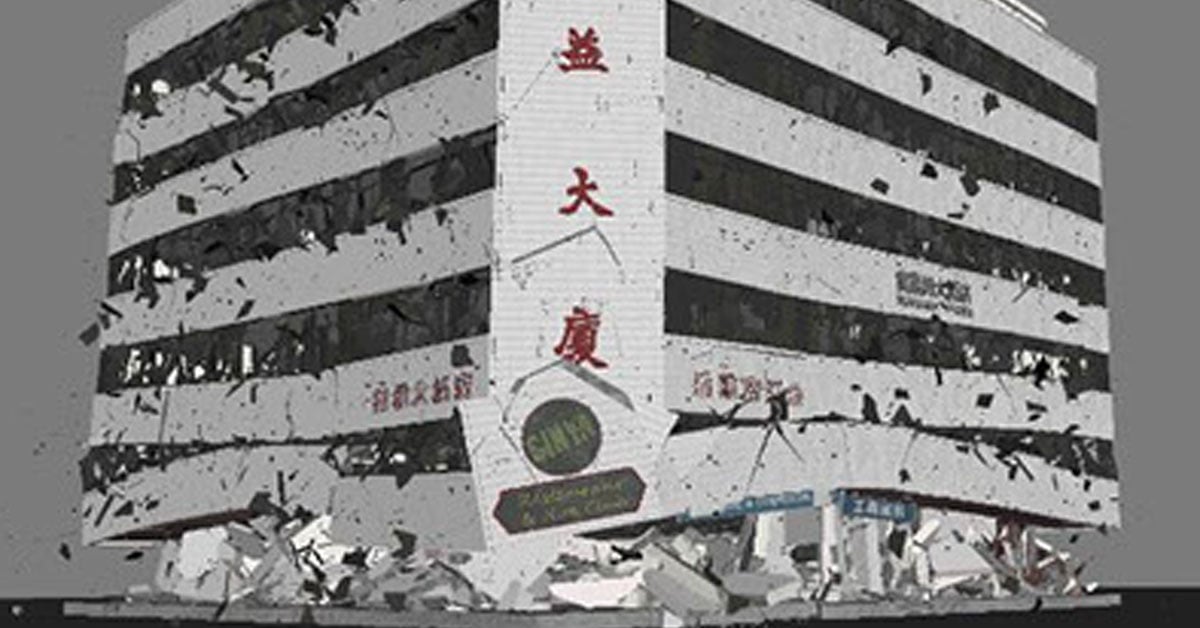
Also, I am no architecture, or engineering student, and neither are the rest of the authors. But apart from annoying construction works in the premises, it could be very possible that recklessly upgrading the tunnels, by widening and height increases, could make Changi Airport a potential candidate for Hotel New World 2.0. And unlike an obscure and forgettable hotel, it would hurt and kill a bajillion more people. As well as dragging down half of SG’s economy as T4 becomes bottlenecked with 4 terminals worth of flights.
Ending
At the end of the day, we need to realise, CAG and most government agencies are more into pleasing non-Singaporeans. With beautiful structures that lack practical use, there are roads to the airport everywhere, and only a measly bicycle path integrated with the Dino park visitors for people without a car that refuse to smell people’s armpits on public buses. The government agencies are not afraid to put Singaporeans through everyday inconvenience as seen in how buses are relegated to “third-class transport”, just so that the views of Changi Airport background photos look prettier without an “eyesore” transport hub photobombing.
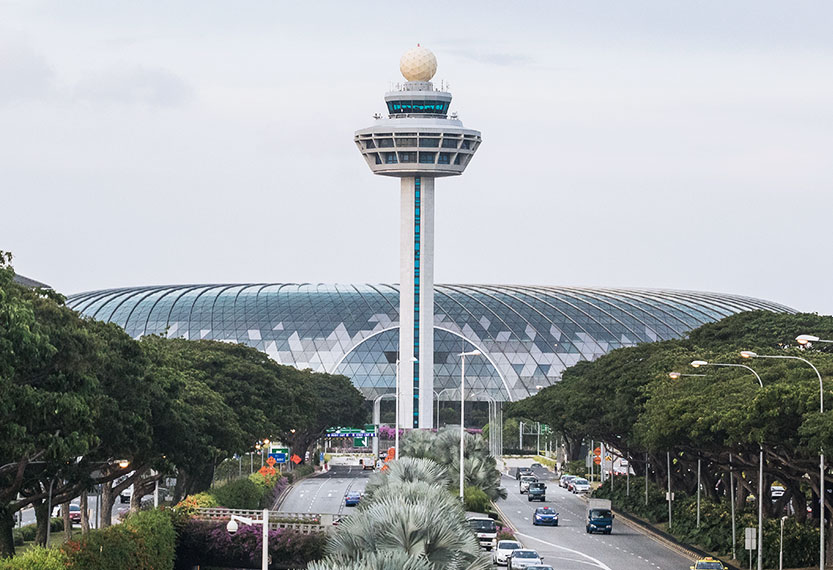
I am pretty sure I heard this somewhere: “Removing public transport from grade level just to please the minority of people called “drivers” is a terminally (pun intended) car-centric approach to transportation.” But more importantly, throwing public transport into dumpster-class cargo bays makes our claims and touts of a “first-class public transport system” LTA and the PTC won’t shut up about, look and feel more like a nation-wide fallacy than a fact, if cars continue to get the high wing called prettier looking dedicated alighting/drop-off points.
CAG, your prestigious world-class airport has already lost the World’s Best Airport Awards, to car-centric places with much more financial backing called The Emirates (And I guess Tokyo Haneda Airport as well?). Rather than try to take back such a meaningless award from regions that hate public transit, have no problem with “slavery” and worship exorbitant sports cars, why not we, at STC, and the LTA gang start working together to find ways to keep people’s world moving at Changi Airport without a private vehicle? We can win the most “Inclusive Airport Awards” and other good-hearted awards! Remember! “Charity Starts from home”, you should not be giving tourists a disillusioned image of “Singapore is a perfect country” if you flunk at serving those closest to you; the average car-free Singaporean! Singaporeans get the short end of the stick at Changi Airport by being strangled by tiny buses. This matter is of increasing importance, especially now that Singapore is trying to sell itself as a “car-lite” society, I shall now see myself out…

TL;DR:
– Changi Airport buses pre-covid, both infrastructure and buses themselves, are overcrowded (and still are today). Additionally, the crowd is not peak-only
– Problems are revolved around the fact the bus terminals is a chicken-and-egg situation, designed without consideration of future demands
– A new MRT line (which isn’t happening anytime) can ideally solve the problems in the long run
– Most importantly (in the short-run), there is a need to relocate the bus stops to a more suitable location to act as a terminus point (to stabilise bus intervals), and allow double-decker deployment for improved capacity (long-run.
Bonus Content!
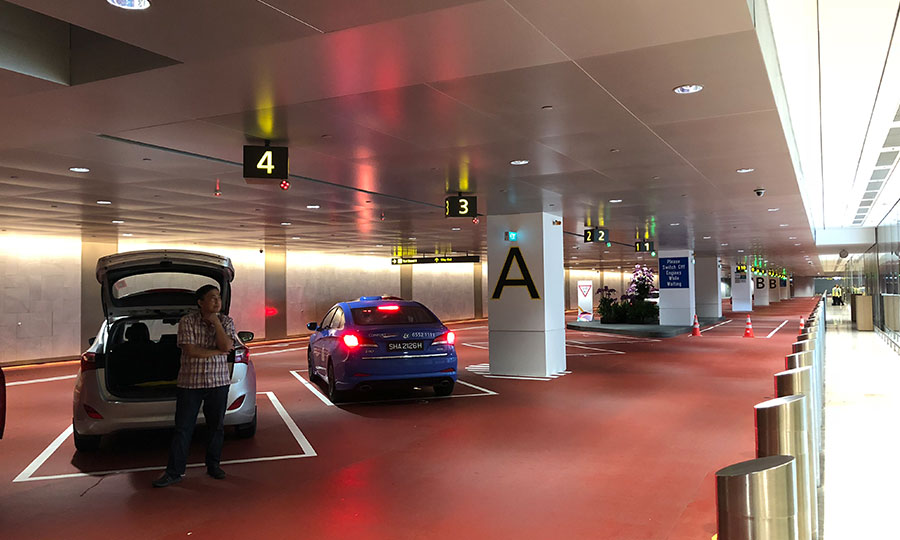
Oh, and if you scrolled down here, here is some bonus content! STC lead author ameowcat, prior to me writing this blog, thought of relocating all public bus service activities to Jewel/T1’s taxi stand (pictured above), of course with a height expansion to allow double-decker entry. And I can definitely see the appeal and rational. Access penalty wouldn’t be as punishing as some MRT transfers on the NEL/DTL, and the fact Jewel was likely still under construction while I wasn’t an author yet. Reasons why it isn’t the best of ideas are similar to upgrading the tunnels (after construction of JCGA of course). Miscellaneous vehicles (taxis in this case) could cause a gridlock and delay bus services in a similar vein to CISCO, nobody wants to hear construction noises when getting a cab, and of course it could compromise the structure of the building causing it to collapse, but this time Instagram girls overseas will be pissed at the powers of CAG/LTA/BCA that “Almond Shopping Mall, Livingston” is no longer a place they can easily snatch likes from.
A subscription and like to this article is a step to promote a car-lite SG!
 Singapore Transport Collective
Leave a comment